
The complete guide
Choosing a Rechargeable Fly Swatter, A Practical Buyer's Guide
The problem with flies, and why sprays are not the answer
Flies and mosquitoes turn up at the worst time. You sit down to eat, you open a window on a warm evening, you unzip the tent after a long walk, and there they are. The usual responses all have a catch. A rolled magazine leaves a smear on the wall. A spray can fills the kitchen with chemicals you would rather not have near food. A plug-in device only works where there is a socket, which is no help on a campsite.
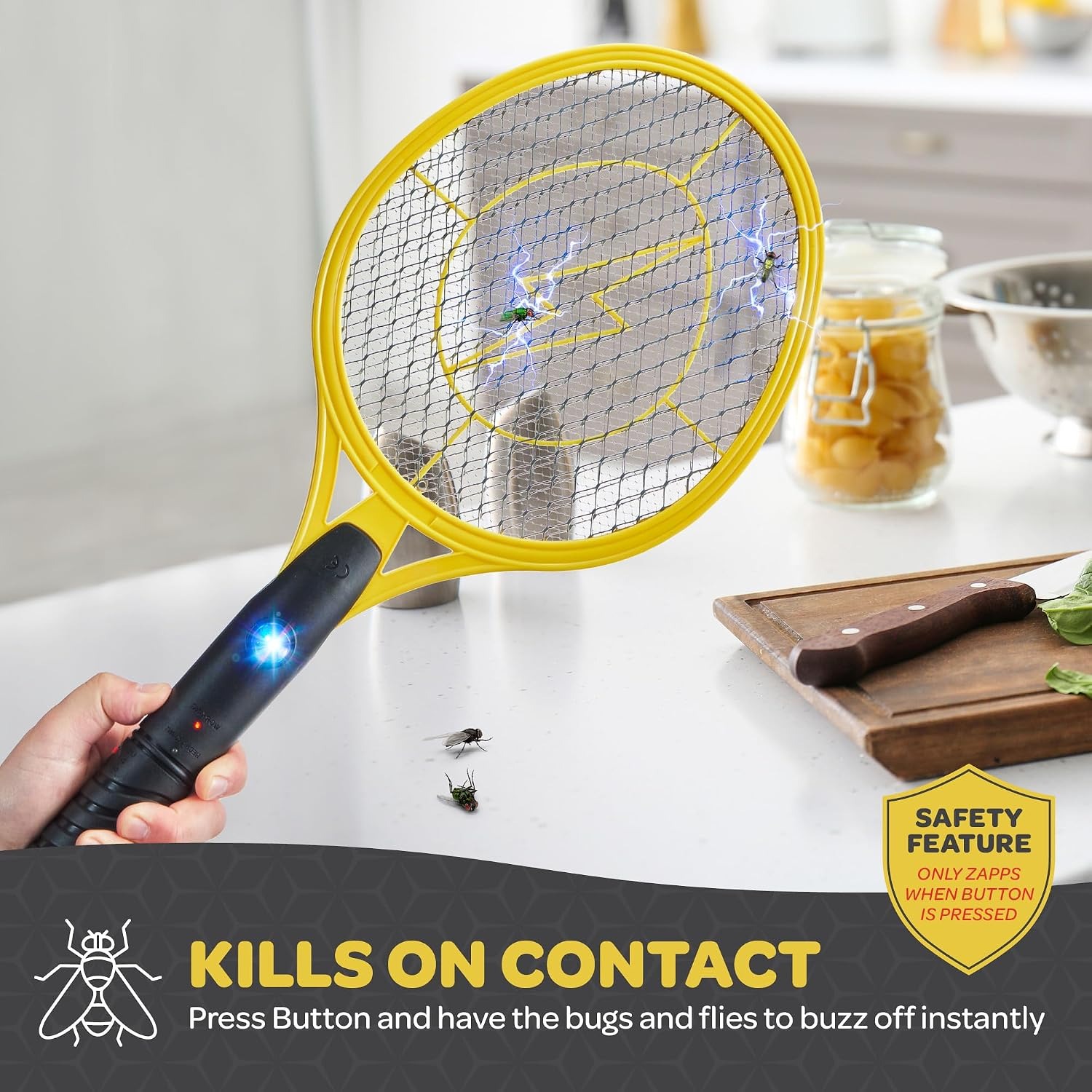
An electric fly swatter solves the problem in a different way. The insect is caught in a charged mesh and dealt with on contact, which means no residue on surfaces, no smell, and nothing to wipe off the paintwork. You stay in control of where and when it happens, and you can do it one-handed while still holding a drink.
How a bug zapper racket actually works
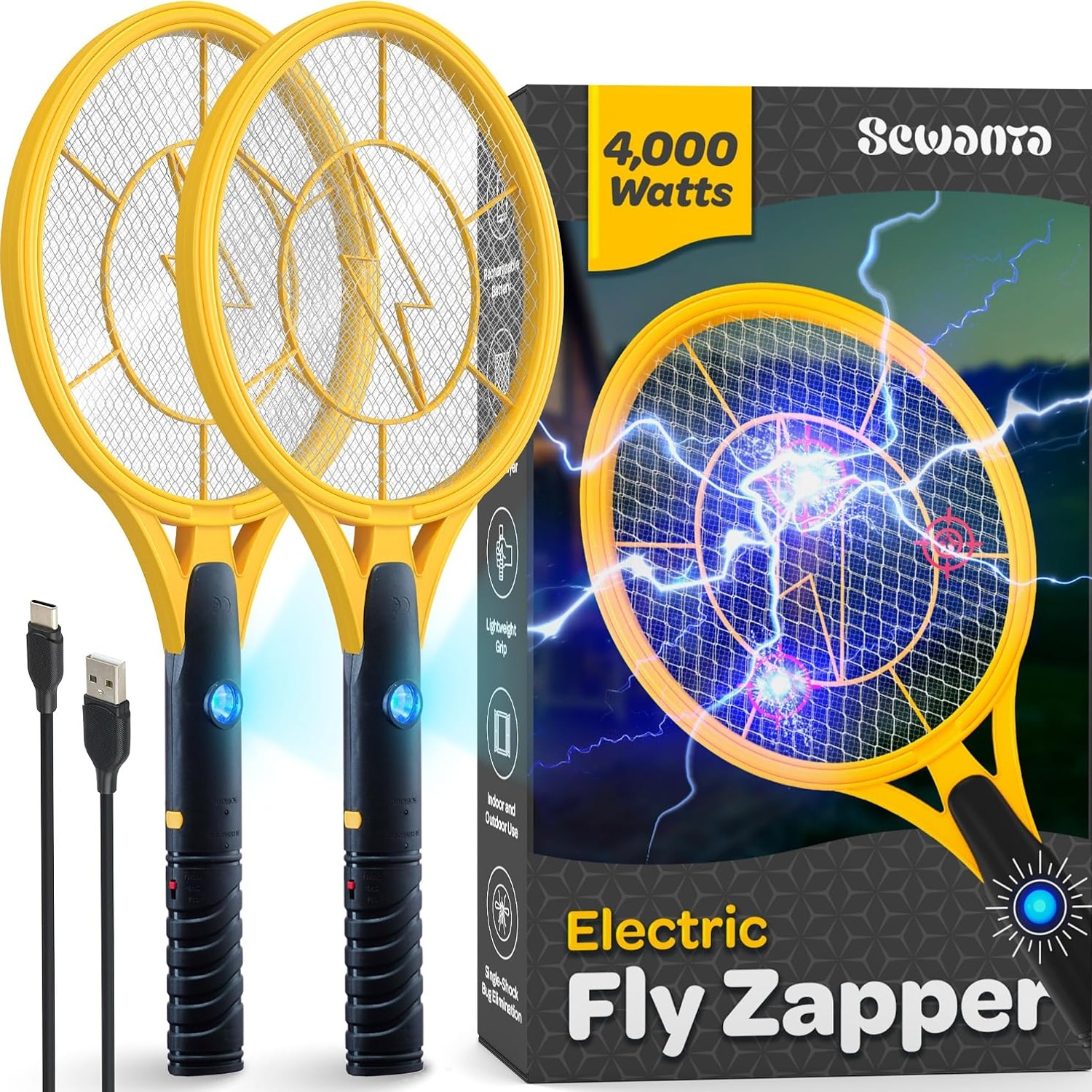
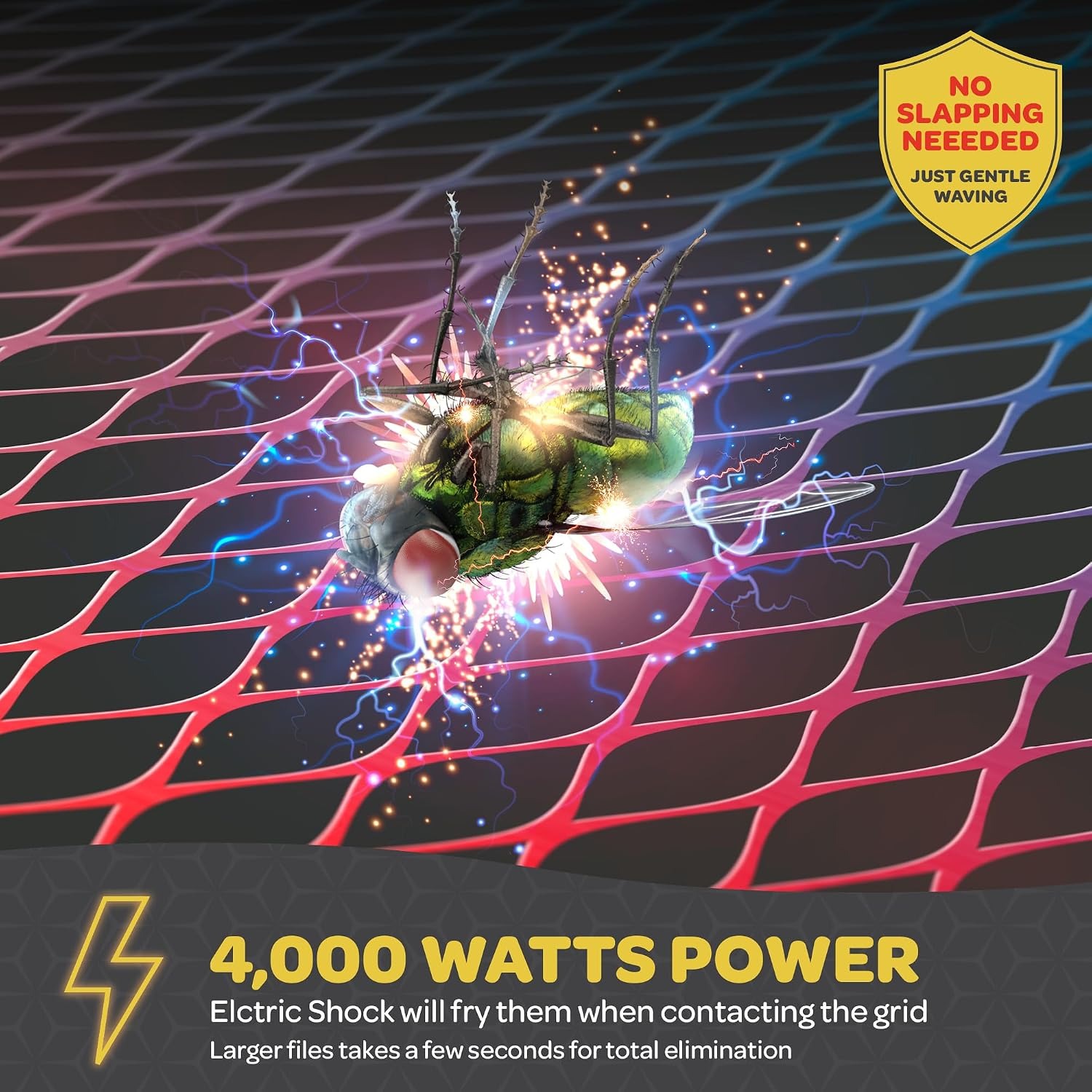
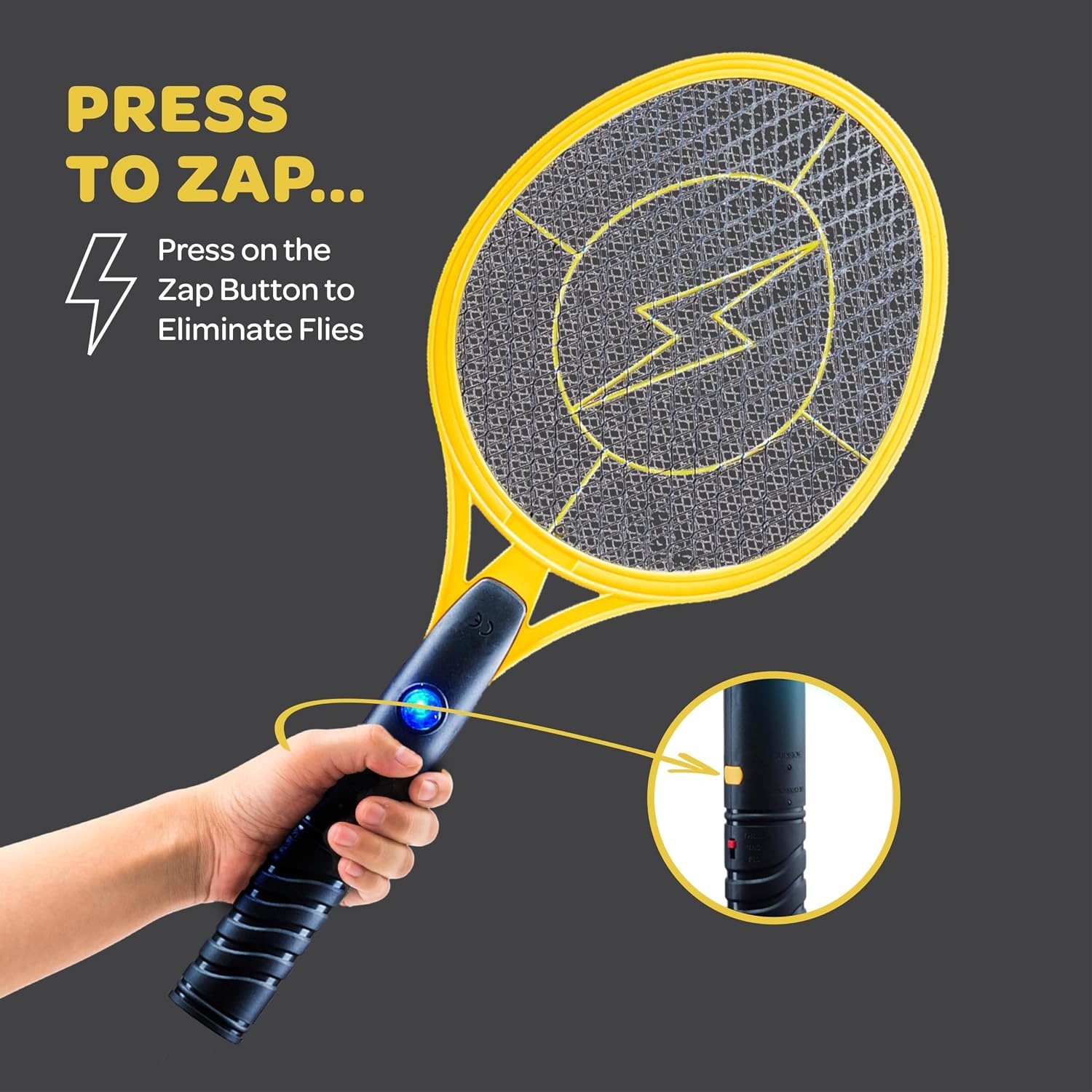
The racket looks like a small tennis racket with a wire grid where the strings would be. When the device is switched on, that grid carries a high voltage. This set runs at 4000 volts. The number sounds alarming, but what matters in electrical safety is current, not just voltage, and these handheld devices run at a very low current. The charge is enough to deal with a fly instantly and not enough to be dangerous in normal use.
The mesh here is built in three layers. The live grid is in the middle, and there is a guard layer on each outer face. The guards are there so a finger brushing the surface does not reach the charged layer. It is a sensible design, and it is the main reason this style of racket is comfortable to use around a busy household.
One habit is worth learning. After you switch the racket off, wait about ten seconds before touching the mesh. A small residual charge can remain in the grid for a short while. Waiting is quick, it becomes automatic, and it removes the only real surprise this kind of product has.
Rechargeable versus battery powered
Plenty of fly swatters still run on AA cells. They work fine until the cells die, which always seems to happen halfway through a warm evening. Then the racket goes back in the drawer and stays there, because nobody buys batteries for it in February.
A rechargeable bug zapper removes that failure point. This set has a built-in battery in each racket and charges over a standard USB cable, so you can use a phone charger, a laptop, a car socket or a power bank. If you camp, the power bank option is the detail that matters. You are not dependent on mains power or on remembering to pack spare cells.
The trade-off is that you need to think about charging before the season rather than during it. Give both rackets a full charge when the weather starts to warm up, and top them up every few months in storage so the batteries do not sit completely flat.
The light in the handle
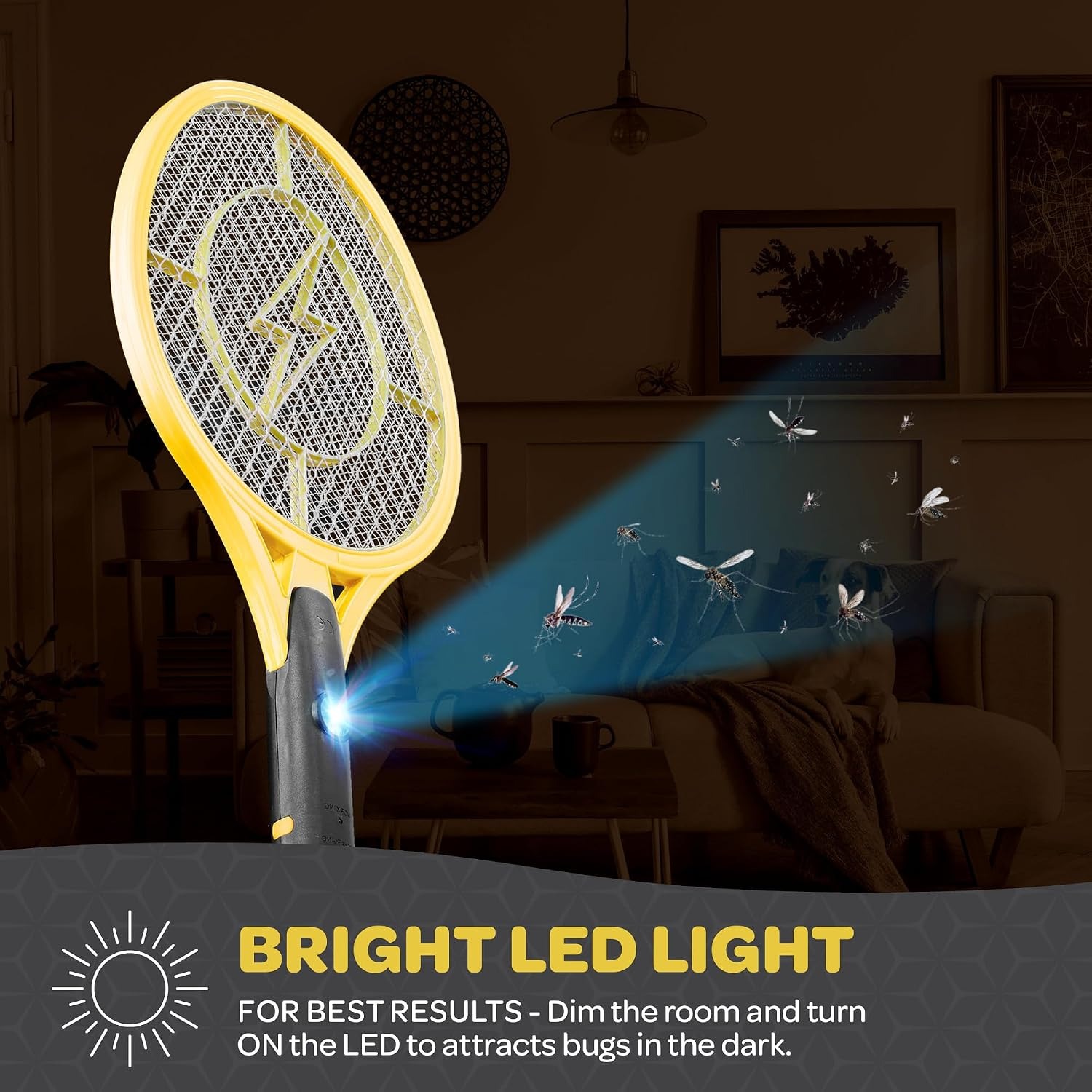
Most insect activity happens at dusk and after dark. That is exactly when you cannot see what you are aiming at. The LED built into the handle fixes that in two ways. It lights the space in front of you, and the blue color draws insects toward the racket instead of toward your plate.
In practice, the best technique with a fly swatter with led light is not to swing wildly. Switch the light on, hold the racket out, stay still, and let the insects come to you. On a patio at dusk or inside a tent at night, that approach clears far more than chasing shadows around.
Who this set suits
Households with a kitchen fly problem get the most immediate benefit. Food prep areas are the worst place for aerosol sprays, so a handheld bug zapper that needs no chemicals is a better fit. Keep one on top of the fridge and it will get used daily through summer.
Campers and caravanners are the other obvious group. The rackets are small, roughly 7 inches tall, and the pair weighs 0.72 kg together. That packs easily. A camping fly swatter that charges from the same power bank as your phone is far more practical than anything needing a socket.
Gardeners, people who eat outdoors a lot, and anyone with a wasp problem around the bins will also find a use for it. Just take care with wasps, because a stunned wasp can still sting. Move it outside rather than picking it up.
Why two rackets is the useful bit
Sets of two are sometimes just a volume play. Here it makes real sense. One racket lives indoors, the other lives wherever you sit outside or in the camping kit. You never have to hunt for it, and if one runs low on charge the other is ready.
It also means two people can deal with a problem at once, which matters when a swarm comes in through an open door. A two pack fly swatter is the sensible default for most homes.
How to choose between models
A few things separate the good from the forgettable.
Look at the power source first. Rechargeable beats battery powered for anything you expect to use season after season. Then look at the mesh construction. Three layers with outer guards is the safer pattern and worth insisting on if children are around.
Size is a genuine choice rather than a quality marker. Big full-size rackets give you more swing area and suit a large open patio. Compact rackets like this one, at about 3 inches by 1 inch by 7 inches, fit a drawer and a backpack and are easier to use indoors in tight spaces. Pick the one that matches where you will actually use it.
Finally, check whether there is a light. It sounds like a small thing until the first night you need it.
Looking after it
Care is simple and mostly about keeping water away. After use, switch the racket off, wait ten seconds, then shake it over a bin to clear debris. A dry soft brush gets anything stuck in the mesh. Never rinse it under a tap, never submerge it, and keep the charging port dry.
Store it indoors in a dry place out of reach of children. Avoid leaving it in a hot car or a damp shed for months at a time. Charge it before storage and give it a quick top-up every few months, which is the single best thing you can do for any built-in battery.
If the grid starts to feel less effective, the usual cause is a build-up of debris in the mesh rather than a fault. Clean it properly and test again before assuming anything is wrong.
Common mistakes
The first is swinging too hard. The mesh does the work on contact, so a steady pass is more effective than a wild swipe and much less likely to hit a lamp.
The second is using it in damp conditions. Moisture on the grid can short the unit. If it starts to rain, bring it inside.
The third is forgetting about charge until the moment you need it. Build the habit of plugging it in at the start of a warm spell and you will never think about it again.
The short version
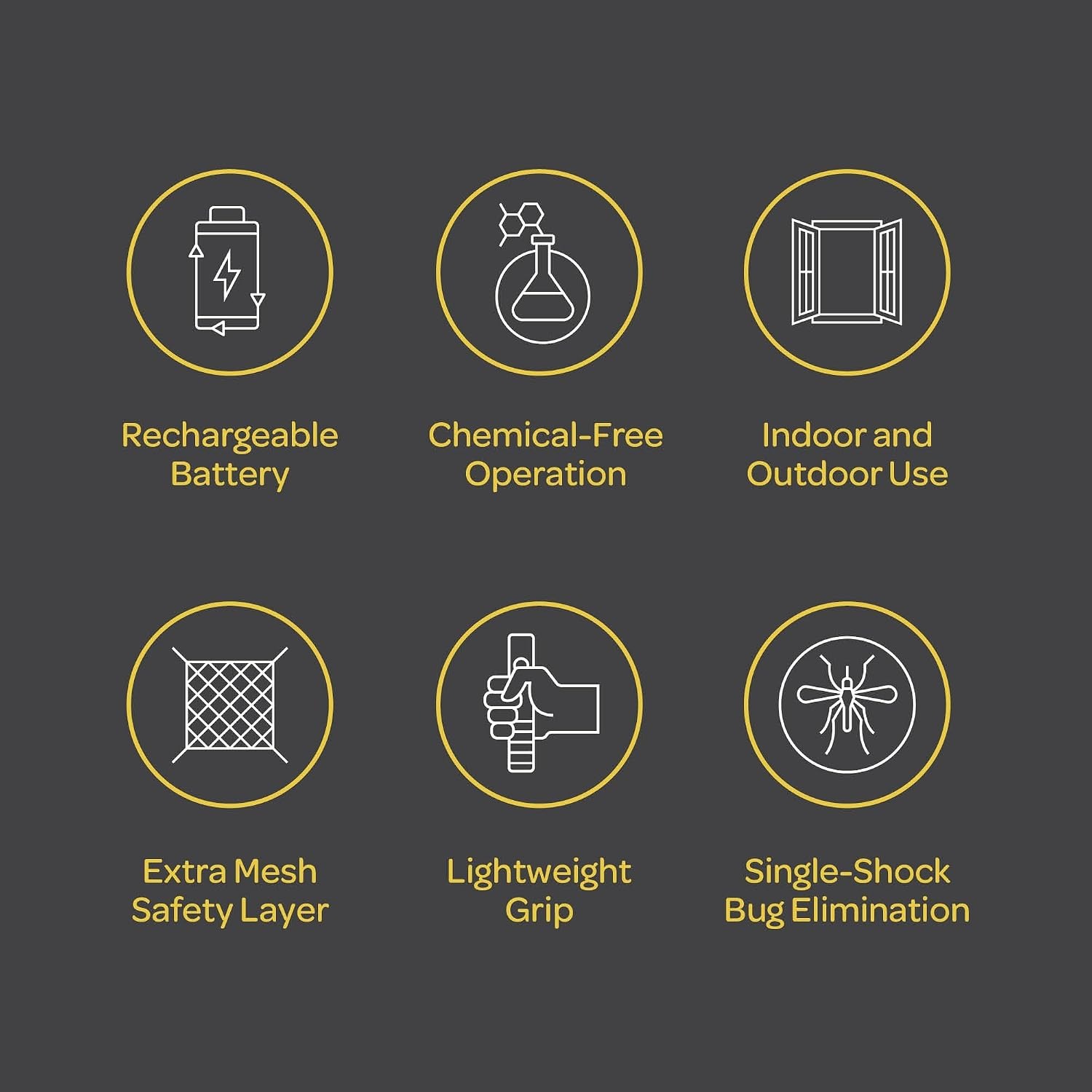
This is a pair of compact, USB-rechargeable rackets running a 4000-volt three-layer grid, with an LED in each handle and a non-slip grip. They are listed for flies, mosquitoes and wasps, and for use at home, camping, hiking and picnics. No chemicals, no batteries to buy, no mess on the walls.
Keep one indoors, keep one with the outdoor kit, charge them before the season starts, and wipe the mesh after use. That is the whole routine.