
The complete guide
How to Choose and Use a Handheld Bug Zapper Racket
The problem with the old tea-towel method
Everyone knows the routine. A fly gets in through the back door, settles on the bench, and lifts off the second a hand comes near it. You swing, you miss, it lands on the fruit bowl. Five minutes later you are standing on a chair with a rolled-up magazine, and the fly is somewhere behind the curtain.
The trouble with traditional swatters is that they need two things to work. They need the insect to be sitting still, and they need a hard flat surface behind it. Take away either one and you have nothing but a wasted swing. Flies spend most of their time in the air, which is exactly where a flat swatter is useless.
An electric fly swatter removes that restriction. You do not need to trap the insect against anything. A light touch in open air is enough, because the grid, not the impact, does the work. That is the single reason these rackets have taken over from the old plastic swat in so many kitchens.
How a bug zapper racket works
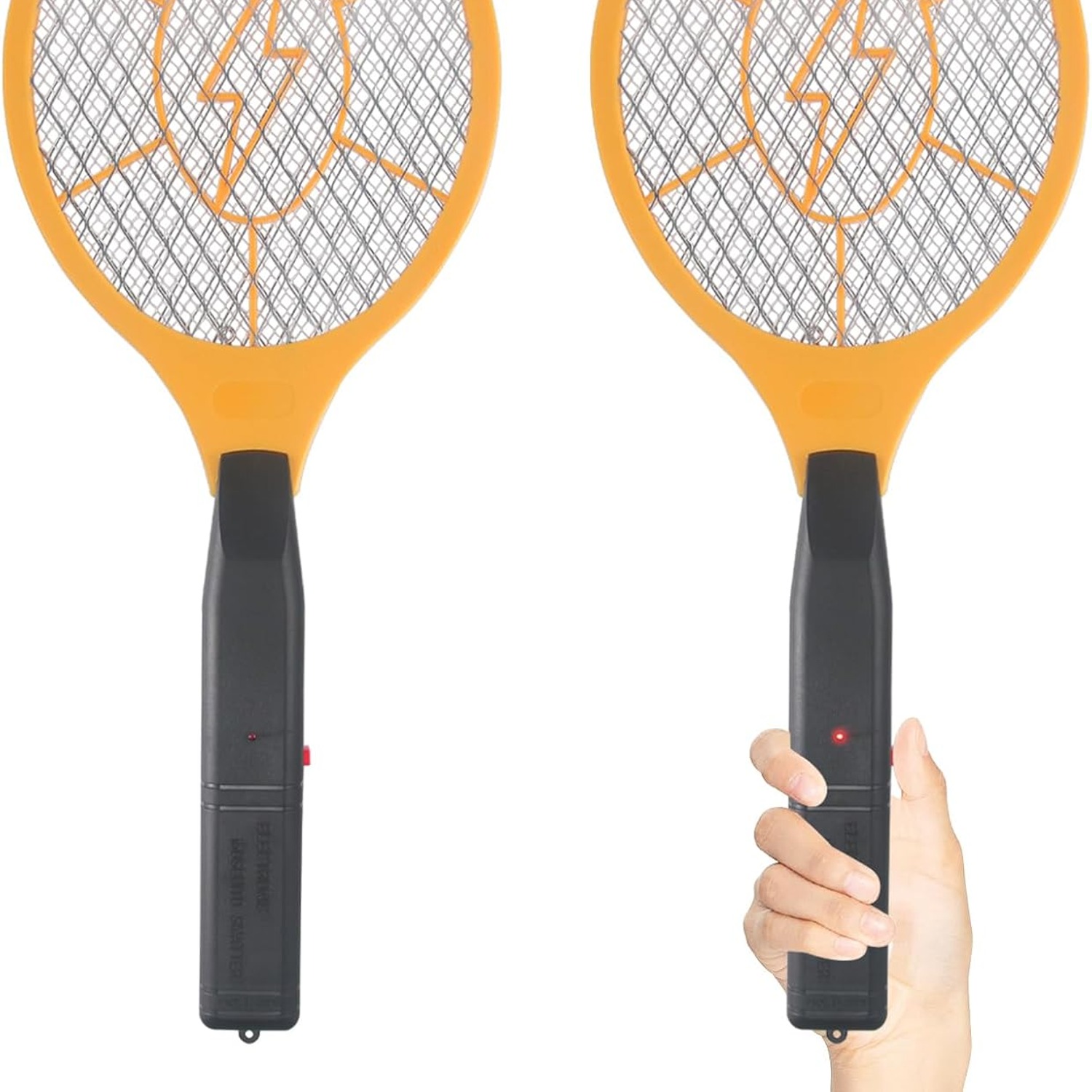
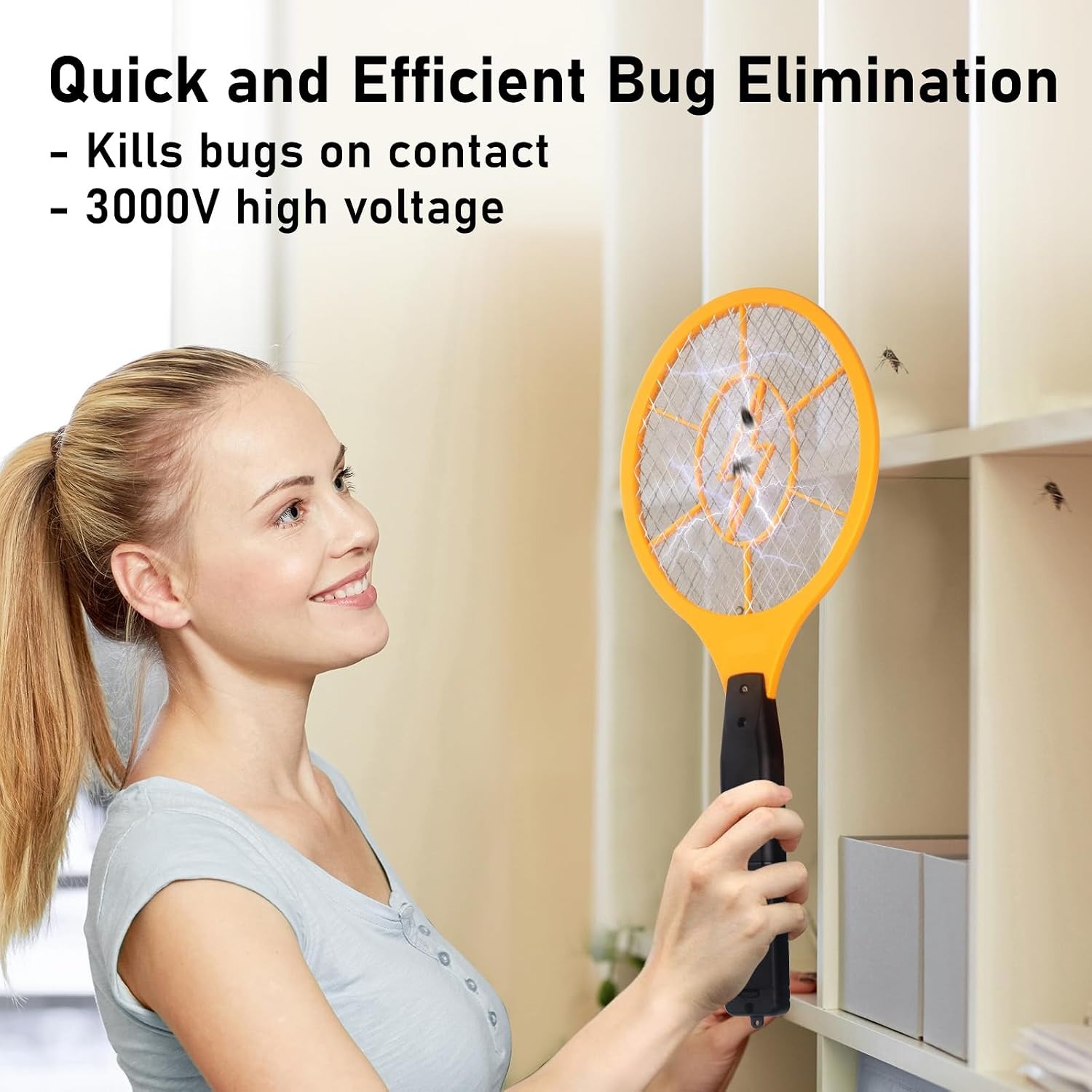
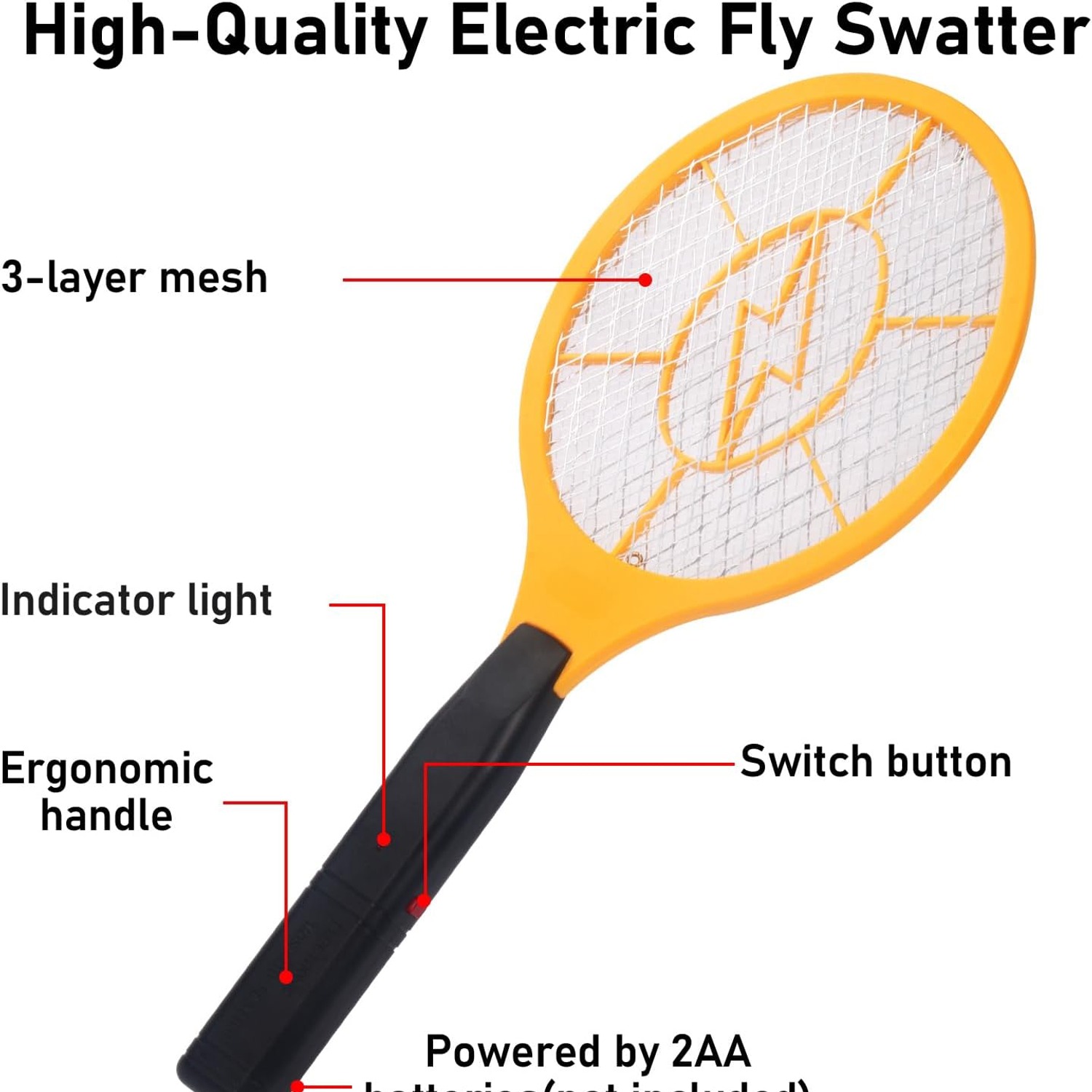
The head of the racket holds a fine mesh grid. When you hold the trigger, that grid carries 3,000 volts. The voltage is high, but the current behind it is very small, which is what makes it safe enough for household use while still being instantly fatal to a fly or a mosquito.
When an insect lands on the grid, its body bridges the gap and completes the circuit. There is a sharp crack, and that is the end of it. You do not need to hold the trigger for long, and you do not need to swing hard. A steady sweep through the air is more effective than a smash, because speed of contact matters more than force.
The grid only carries charge while you hold the dual safety trigger. Let go and it is dead. That is an important detail, because it means the racket can sit on a hook or in a drawer without being live. The dual action, rather than a single button, is what stops it discharging when it gets knocked about.
Who this two-pack suits
Most households have more than one trouble spot. The kitchen is the obvious one, because food draws flies. The second is usually wherever the door opens onto a garden or a deck, where insects come in every time someone walks through. A bedroom is a third, especially in mosquito season when a single whine at two in the morning can cost you a night of sleep.
Having a single racket means you spend half your time fetching it from the other end of the house. By the time you come back, the fly has moved. Two units means one lives in each hot spot, and that small change is what turns a gadget into something you actually use.
The second racket is also handy for a different reason. Campers, caravanners and people with a holiday house can leave one permanently packed. Because it runs on AA batteries with no cable and no mains connection, it works anywhere, which is why it earns its place as the best camping bug zapper for a lot of people. Gardeners and shed-dwellers get the same benefit.
Battery power versus rechargeable
Plenty of rackets now ship with a built-in rechargeable cell and a USB cable. That sounds like an upgrade, and in the first season it is. The problem shows up later. Built-in cells lose capacity over repeated charge cycles, and in most of these units the cell is not user replaceable. When it stops holding charge, the whole racket is scrap.
This set uses two AA batteries per racket instead. Fresh cells restore full performance in under a minute, with no waiting and no cable to lose. There is no slow decline over three summers, just a straightforward swap whenever the zap starts feeling weak. For a tool you use seasonally, that is often the more sensible arrangement, and it is a big part of why people who have been through a couple of dead rechargeables come back to the best battery powered fly swatter design.
One habit is worth building. When the season ends and the rackets go into a cupboard, take the batteries out. Cells left sitting in an unused device for months are the most common cause of corroded contacts. Thirty seconds of effort at the end of summer saves you from a dead racket next year.
What to look for when comparing models
Voltage is the headline number everyone quotes, and 3,000 volts sits comfortably in the effective range for flies and mosquitos. Below that, you start getting insects that stun rather than drop. Above it, you are mostly paying for a bigger number without a meaningful difference on soft-bodied insects.
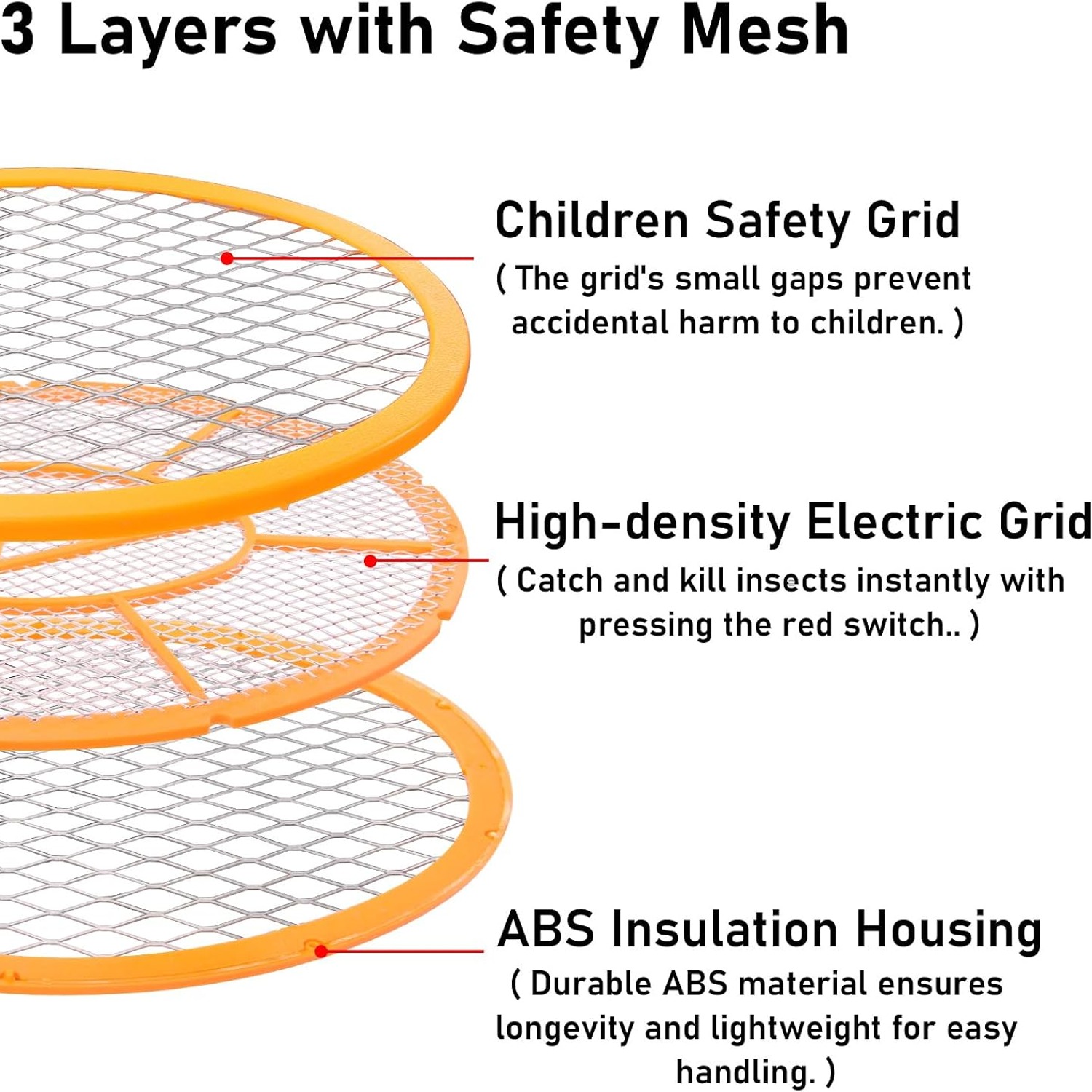
Grid material is worth checking. Stainless steel mesh resists corrosion better than plain wire, which matters if the racket spends time near a kitchen sink or out on a humid patio. The frame material tells you how it will survive being dropped, and ABS plastic is the standard choice because it takes knocks without splitting.
Then there is the handle, which almost nobody thinks about until the first time a racket flies out of their hand. Two moulded groove lines give your fingers something to hold onto during a fast swing. It is a small detail that separates the best bug zapper racket from the cheap ones that are smooth and slippery.
Finally, look at how the safety is handled. A single exposed button is easy to press by accident. A two-step trigger is not. If children live in the house, that difference is worth more than any extra volts.
Using it well
Hold the trigger before you swing, not after. Move through the air at a moderate pace rather than lunging, and aim to pass the grid through the insect's flight path rather than at the insect itself. Flies veer away from fast movement, so a smooth sweep catches more than a sudden chop.
For mosquitos, the technique is different again. They fly slowly and tend to hover near skin, so a gentle pass near an arm or an ankle usually does it. Hallways and bedrooms in the evening are where most people get their results.
Avoid pressing the live grid against metal surfaces, and keep it away from water. It is a dry-use tool. Do not use it in rain, do not rinse it, and do not swing it over uncovered food. Brush debris off the mesh with a dry brush when the unit is unpowered, and wipe the frame with a barely damp cloth if it needs it.
Care that actually matters
There are only three rules worth remembering. Keep it dry. Remove the batteries when it is stored. Brush the mesh clean rather than washing it.
Do those and the racket will go on working for years, because there is very little inside one to fail. No motor, no pump, no chemicals to expire. Just a grid, a circuit and a pair of AA cells.
The short version
If flies and mosquitos are a seasonal nuisance in your home, a handheld racket is the simplest fix available. No spray, no smell, no residue on the kitchen bench, and no chasing an insect around the room hoping it lands somewhere flat.
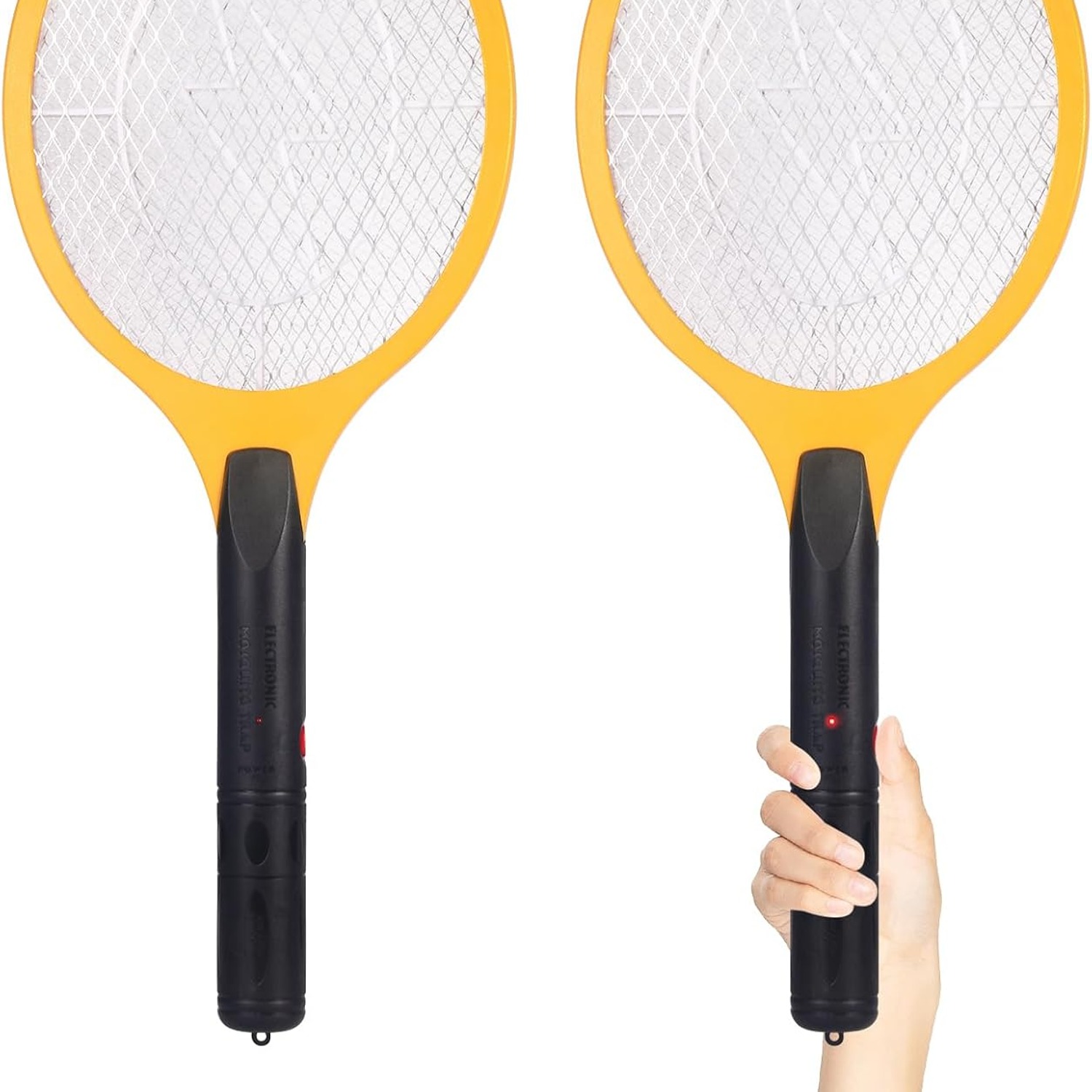
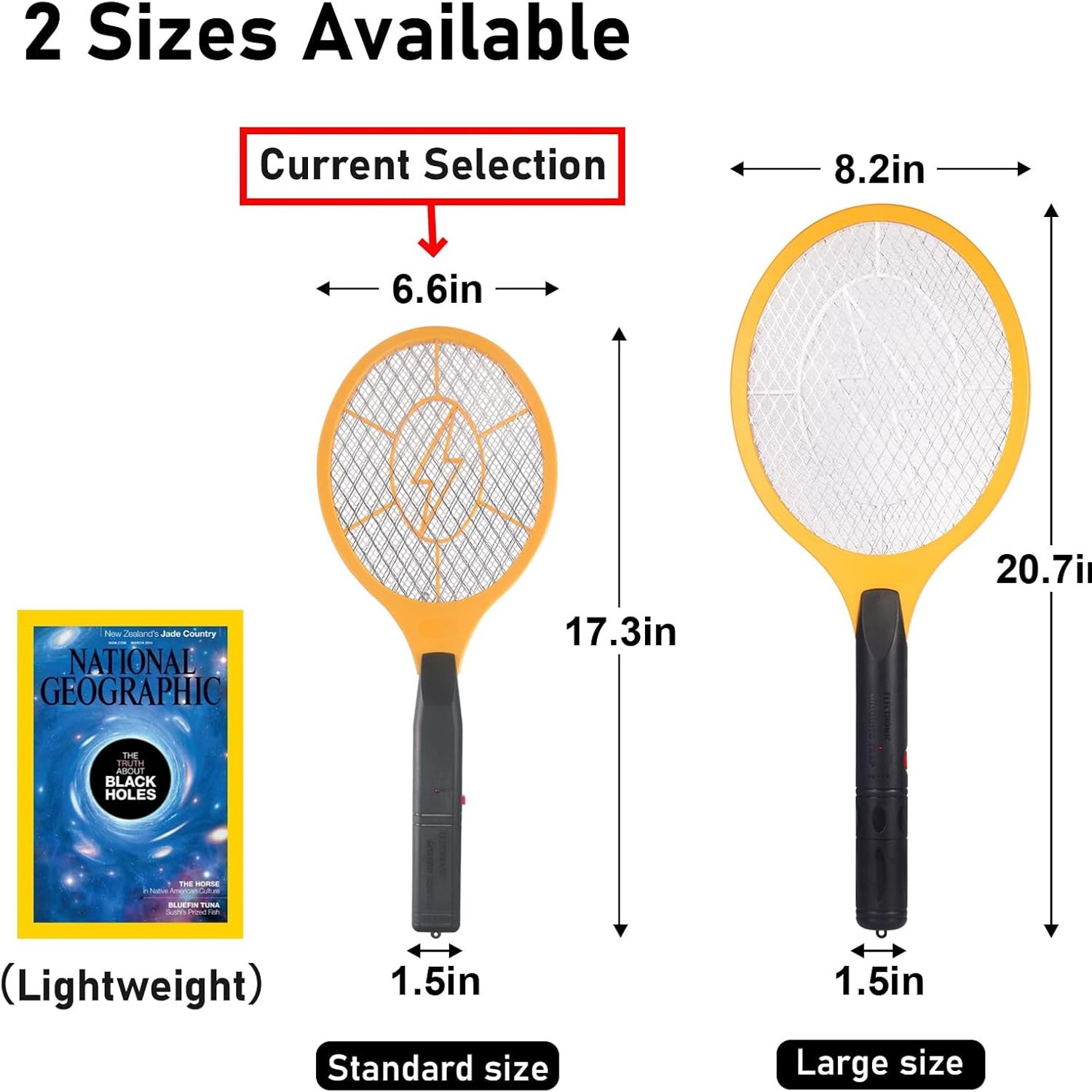
This pack gives you two full-size rackets with a 3,000 volt stainless steel grid, a dual safety trigger, an ABS frame and grooved handles. Each one runs on two AA batteries, which you supply, so there is no rechargeable cell to wear out. Put one in the kitchen, put the other wherever insects get in, and the problem mostly solves itself.