
The complete guide
How To Choose And Use A Manual Fly Swatter
The problem with one fly in the house
A single fly is not a pest problem. It is an irritation, and that is a different thing. It lands on the bread, it circles the lamp, it goes quiet for a minute and then comes back right as you sit down. You do not want to spray the kitchen for one insect. You do not want to leave a sticky trap hanging in the dining room for a visitor to walk into. You just want it gone in the next thirty seconds.
That is the gap a manual fly swatter fills. It is instant, it costs nothing to run and it does not put anything into the air you then have to breathe. The catch is that most households own exactly one swatter, and it is never in the room where the fly is. That is the actual reason people get frustrated with swatters, and it is the reason a three pack makes more sense than a single.
How a swatter actually works
Flies see movement before they see shapes, and their reaction time is quick. A swatter beats that reaction in two ways. First, the head is perforated, which means air passes through it rather than being pushed ahead of it. A solid paddle creates a cushion of air that warns the fly a fraction of a second early. A mesh panel does not.
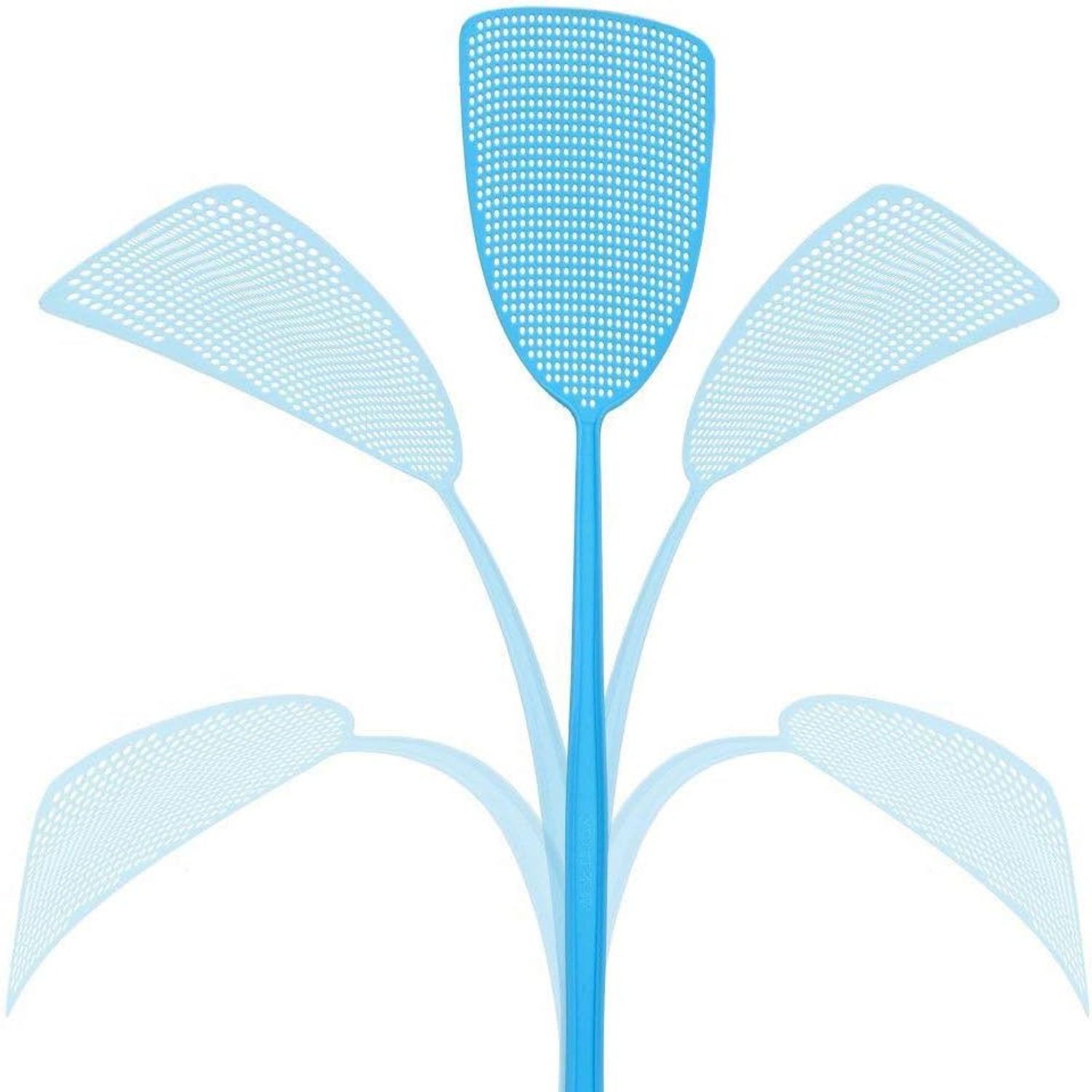
Second, the head is flexible. On a hard surface like a wall, a windowsill or a benchtop, a rigid paddle hits and bounces. The contact is brief, and sometimes all it does is launch the fly across the room. A flexible panel bends on impact and stays flat against the surface for a touch longer. That extra contact is usually what turns a near miss into a result.
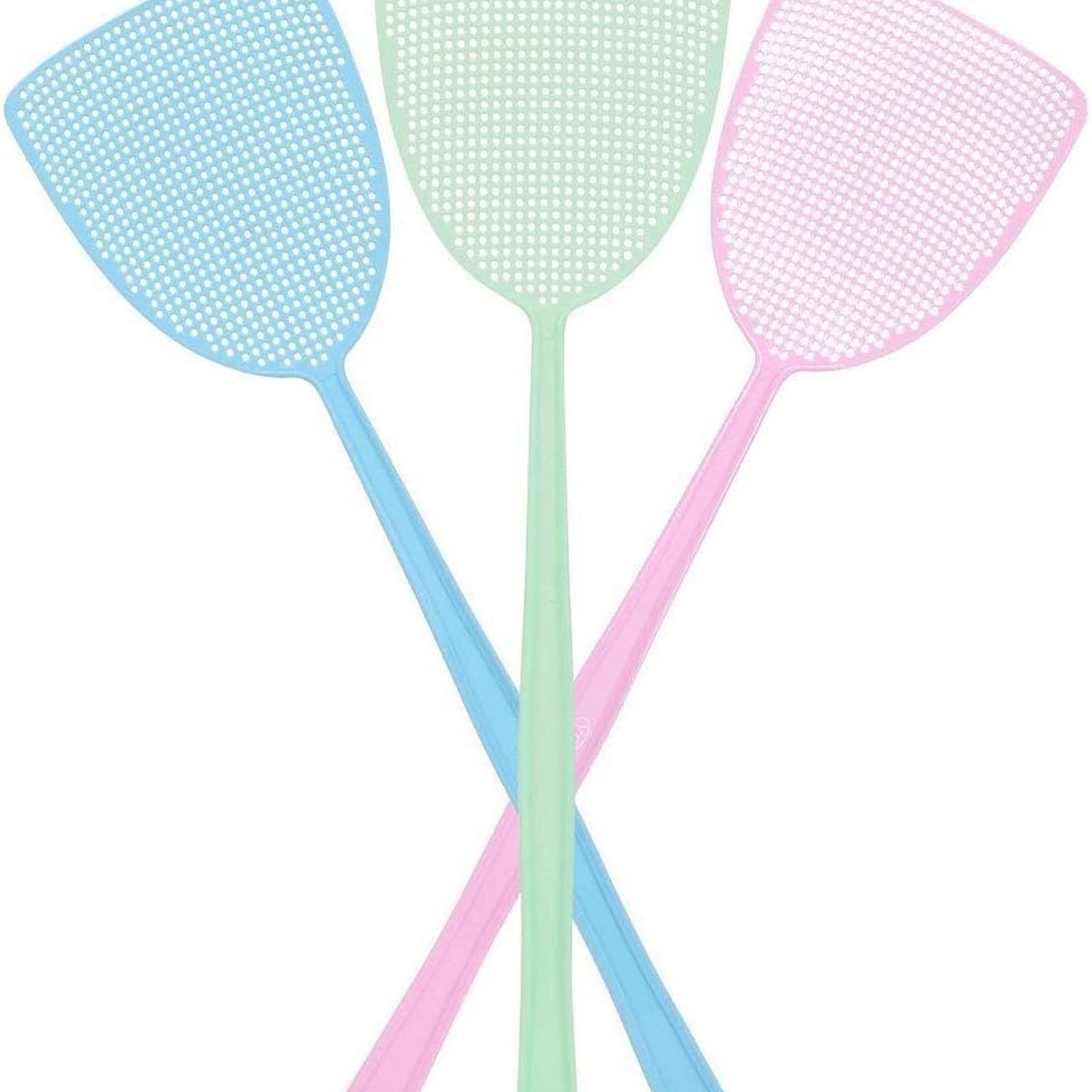
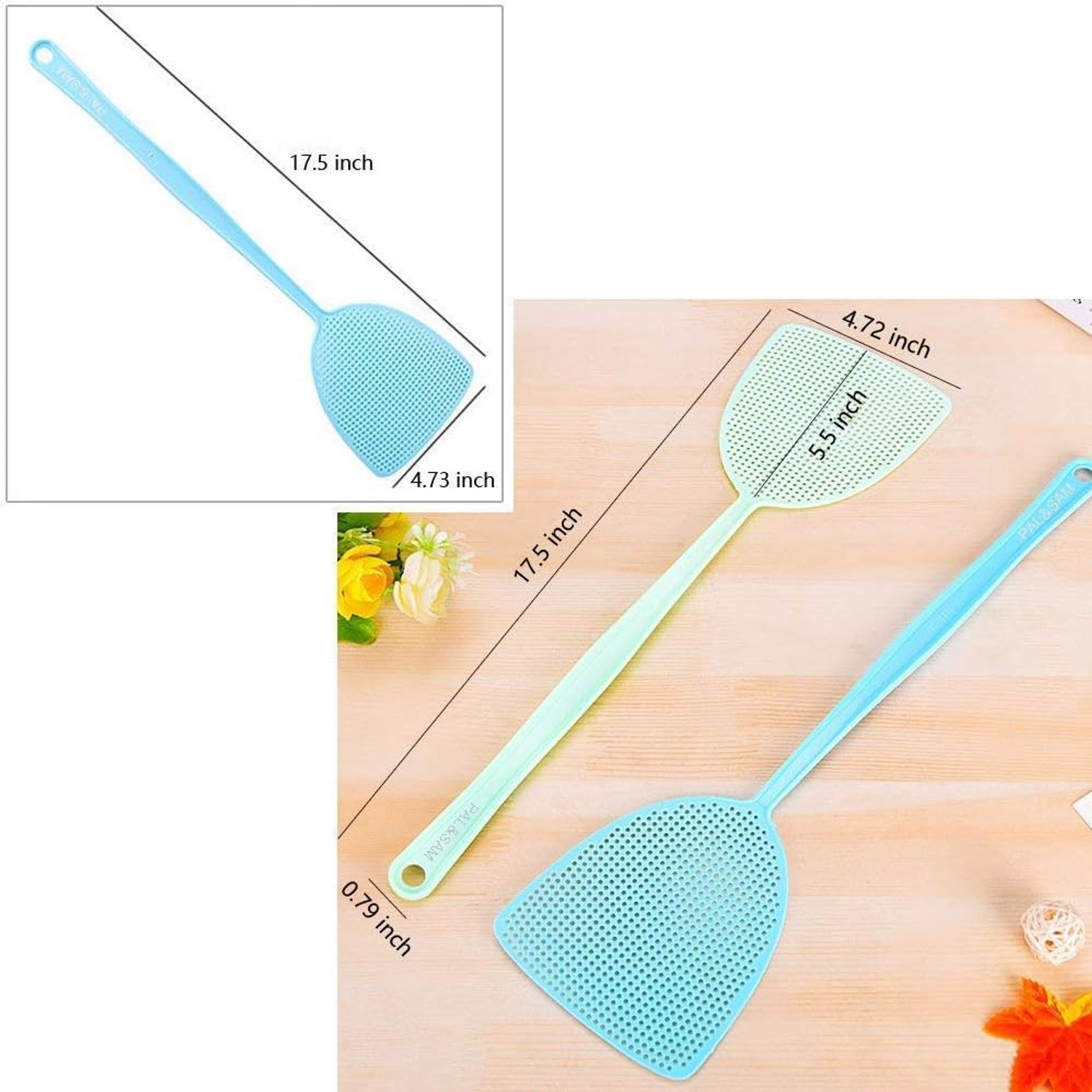
The head on this one measures 5 inches wide with a thin 0.1 inch panel, so it covers a reasonable area while staying light. Light matters, because the speed of the swing comes from your wrist, not from the weight of the tool.
Why handle length matters
The handle here is part of an overall 17.5 inch length. That is on the longer side for a household swatter, and it changes how you use it in a few practical ways.
It lets you reach the top of a window or a high corner of a room without pulling over a chair. It keeps your hand well back from a bin lid, a compost caddy or an outdoor table where you would rather not put your knuckles. It also gives you a wider arc, so a small wrist flick covers more distance than it would on a short handle.
The trade-off is that a longer handle needs a bit more room to swing. In a tight space, a pantry or a caravan bunk, you shorten your grip and use a smaller motion. The tool still works, you just change how you hold it.
Who this suits
Most households, honestly. But a few groups get more out of a multipack than others.
People with back doors that open onto a garden or a yard. Flies come in every time the door opens, and having a swatter hanging right there means you deal with it before it gets past the hallway. Caravan and camper owners, because the pack is flat, light and needs no power, and a van in summer collects flies faster than a house does. People with sheds, stables, workshops or anywhere with an open door and something organic nearby. And anyone who would rather not use a spray indoors, whether that is because of pets, small children, fish tanks or just a preference for not filling a room with aerosol.
It is also a sensible thing for cafes, classrooms and holiday rentals to keep a few of on hand, since a manual insect swatter needs no training and no safety notes beyond common sense.
Choosing between swatter types
There are three broad options on the market, and they suit different situations.
Electric rackets look impressive and work well in open air, but they need charging, they should not be used near curtains or flammable surfaces, and they are not something you want a child picking up. Sticky traps and ribbons catch flies passively over hours or days, which is useful for a steady problem but useless for the one fly annoying you right now. A manual plastic fly swatter is the immediate option, and it is the only one of the three that works the instant you pick it up with no setup and no risk.
Most people end up using more than one approach. Screens on the windows and a trap in the shed reduce the numbers. A swatter handles the ones that get through.
When you are comparing swatters specifically, look at three things. Length, because reach decides whether you swat or chase. Flexibility of the head, because that decides your hit rate on hard surfaces. And whether it has a hanging hole, because that decides whether you can find it.
Storing them so you actually use them
The hanging hole is the most underrated feature on a swatter. A swatter in a drawer gets buried under tea towels and forgotten. A swatter on a hook by the door is in your hand in two seconds.
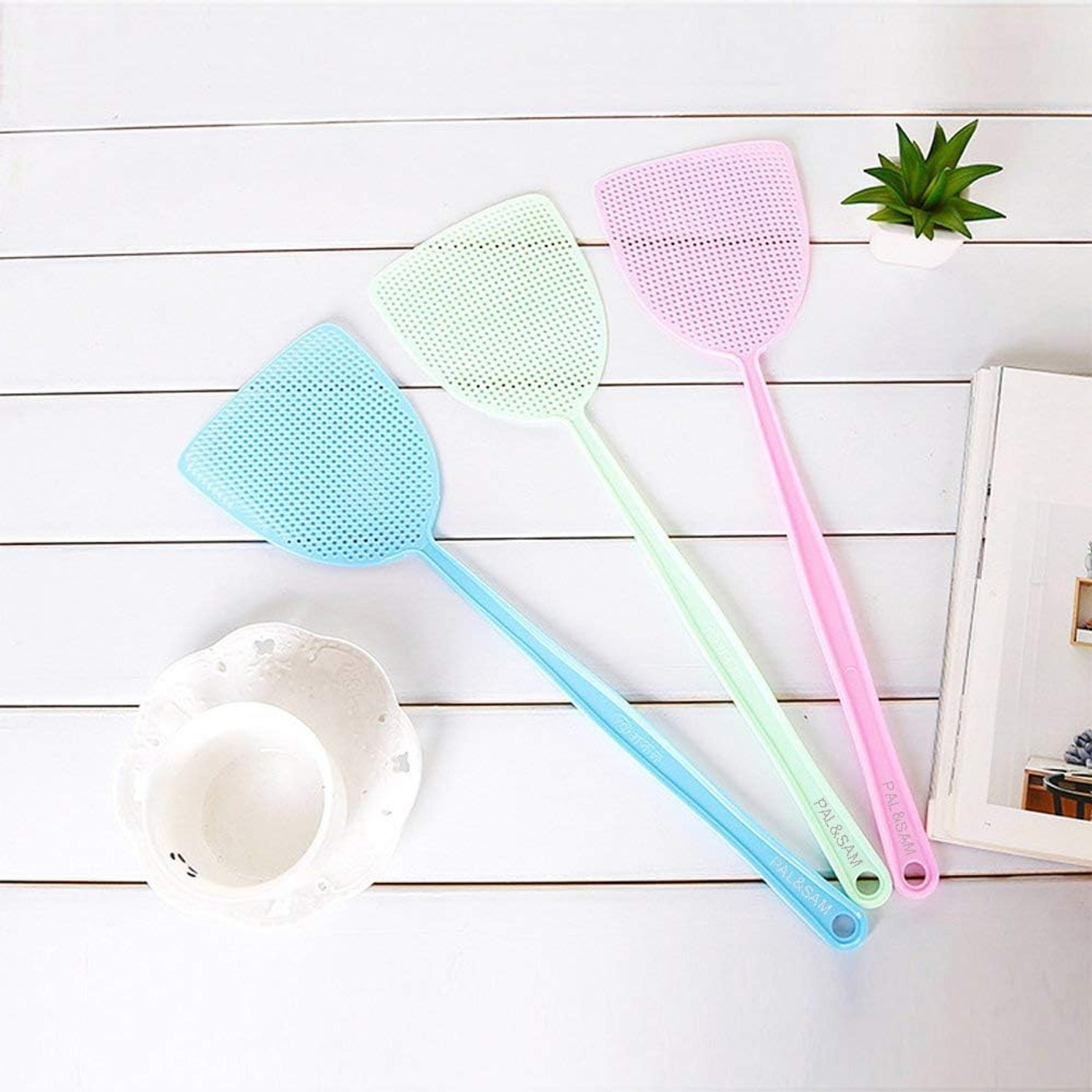
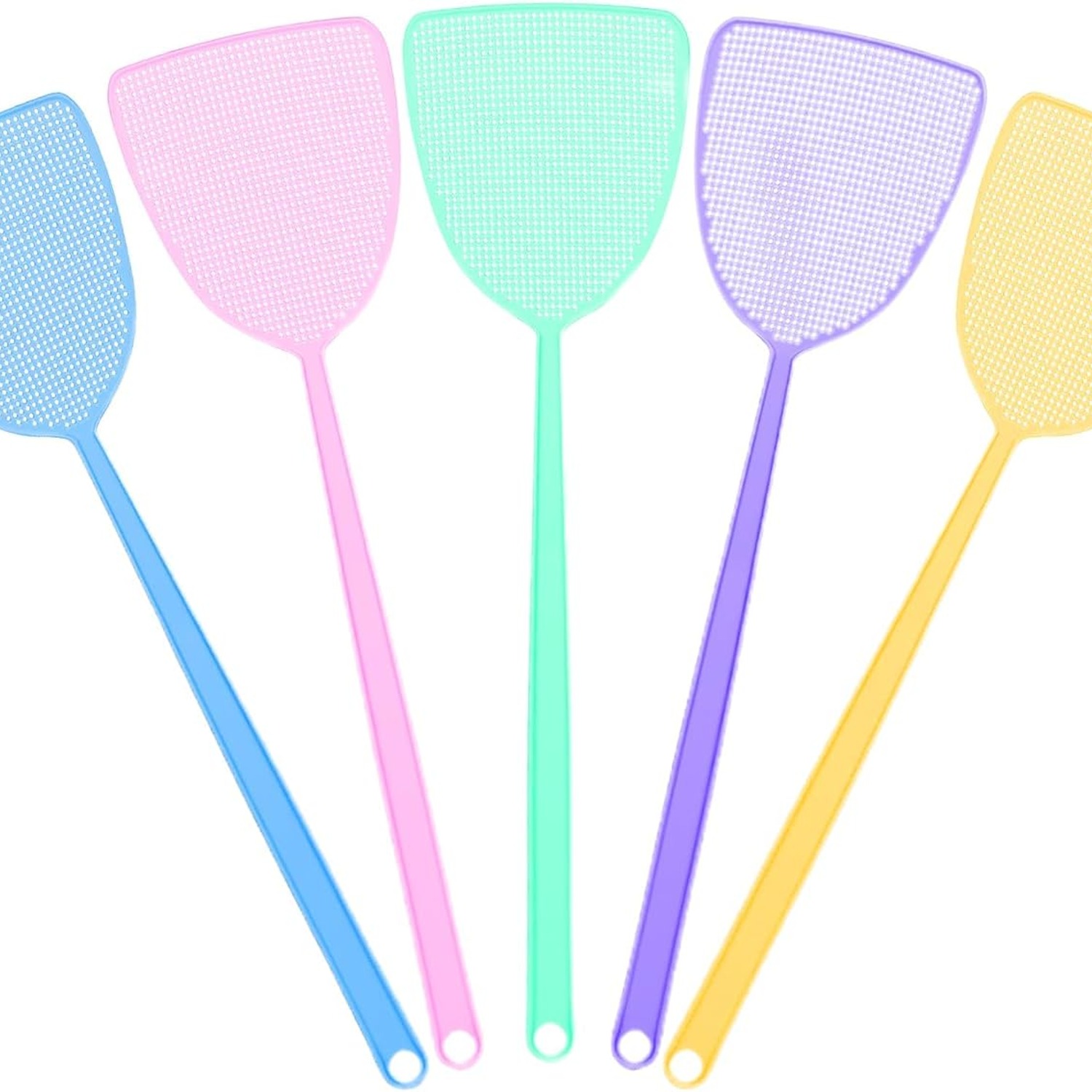
Put a small hook or a nail in three places and hang one on each. Inside the pantry door, beside the back door and in the shed or laundry is a good starting setup. Self-adhesive hooks work fine given how little these weigh. The assorted colors help here too, since you can mentally assign one color to indoors and another to outdoors and the grubby shed one never ends up back in the kitchen.
Hanging also protects the shape. Thin plastic takes a set if it sits flat under heavy things for months, and a creased head never swings quite the same.
Keeping them clean
A swatter is a tool that touches insects, so it should get washed. Warm soapy water, a rinse under the tap and a dry before it goes back on the hook is all it needs. The perforated panel clears quickly because water runs straight through it.
Two things to avoid. Do not put it in a dishwasher, because thin plastic warps at dishwasher temperatures. And keep it away from the stove, oven top and heaters, since the same applies to radiant heat. Hang it somewhere cool and shaded, particularly if one lives outside.
If you use one around a bin, a compost area or livestock, wash that one more often and keep it separate from the kitchen swatter. That is another small reason three different colors is useful.
A few technique notes
Approach from behind if you can, and move the swatter slowly until the last moment. Flies register fast movement. Aim slightly ahead of where the fly is sitting, since most take off forwards and upwards. On glass, swing a little softer and let the flexible head do the work rather than hitting hard enough to worry the pane.
If a fly keeps evading you, stop chasing. Chasing just moves it around the room and tires you out. Wait for it to settle on a flat surface and take one good swing instead of six bad ones.
The short version
Three plastic swatters, 17.5 inches long, 5 inches across the head, about 1.6 ounces each, with a hanging hole in every handle. Manual, so no batteries, no refills, no spray. The flexible head helps you connect on hard surfaces, the long handle keeps your hand back and gets you into high corners, and the hanging hole is what makes the difference between a swatter you use and one you lose.
Hang one by each door you open in summer. That is the whole trick.