
The complete guide
How To Choose A Telescopic Fly Swatter That You Will Actually Use
The problem with a normal fly swatter
Most fly swatters are fine right up until the fly moves. It lands on the bench, you get it. It lands on the ceiling, on the top of the window, on the pendant light above the dining table, and suddenly you are dragging a chair across the floor in bare feet with a bit of plastic in your hand.
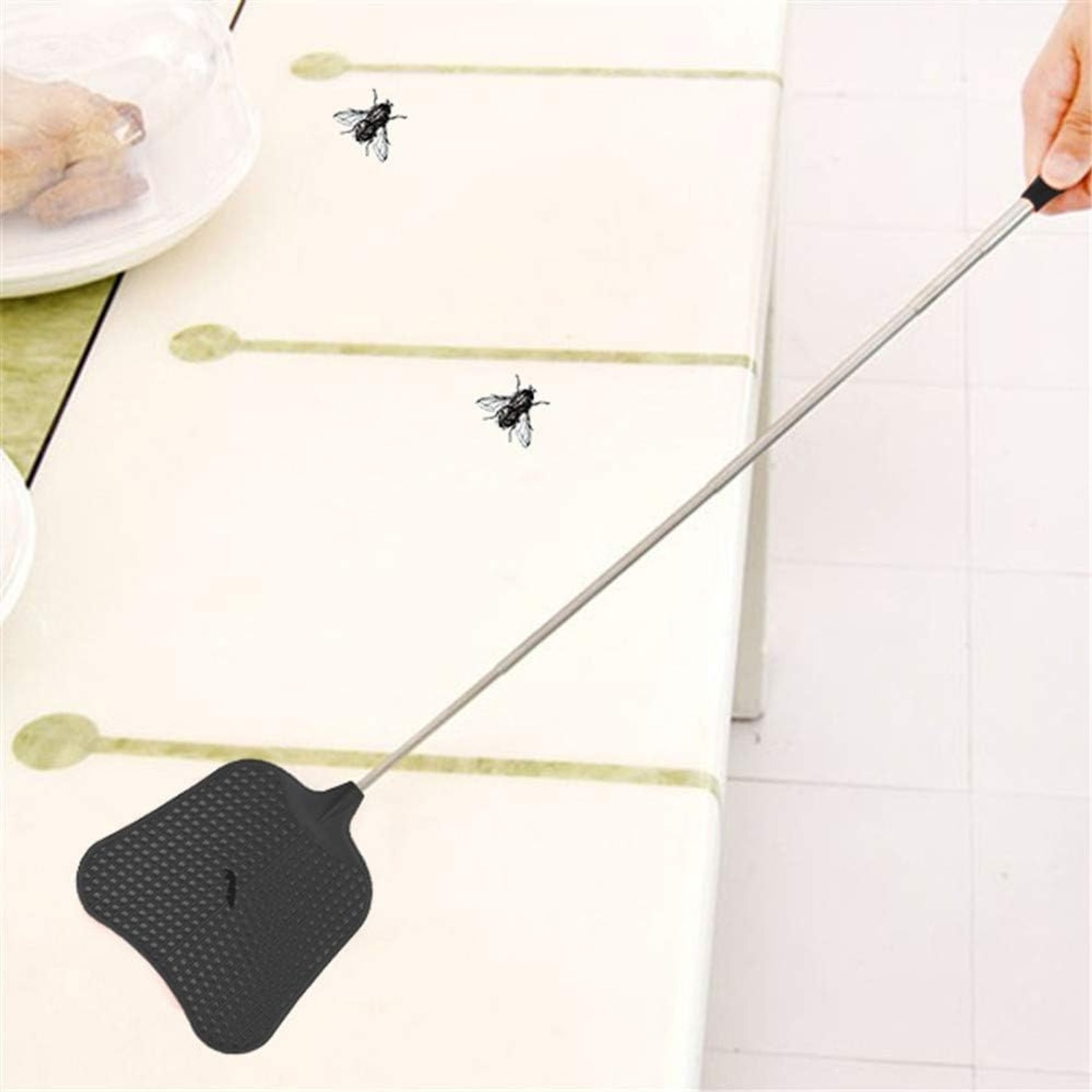
That is the gap a telescopic fly swatter fills. Instead of moving yourself to the fly, you move the paddle. The pole extends, you stay flat on the floor, and the fly on the cornice is now a normal shot rather than a balancing act.
It sounds like a small thing. In practice it changes how often you bother. A standard swatter gets used for easy targets and gives up on hard ones. An extendable fly swatter gets used on both, which means fewer flies hanging around the kitchen by the end of the day.
How a telescopic swatter works
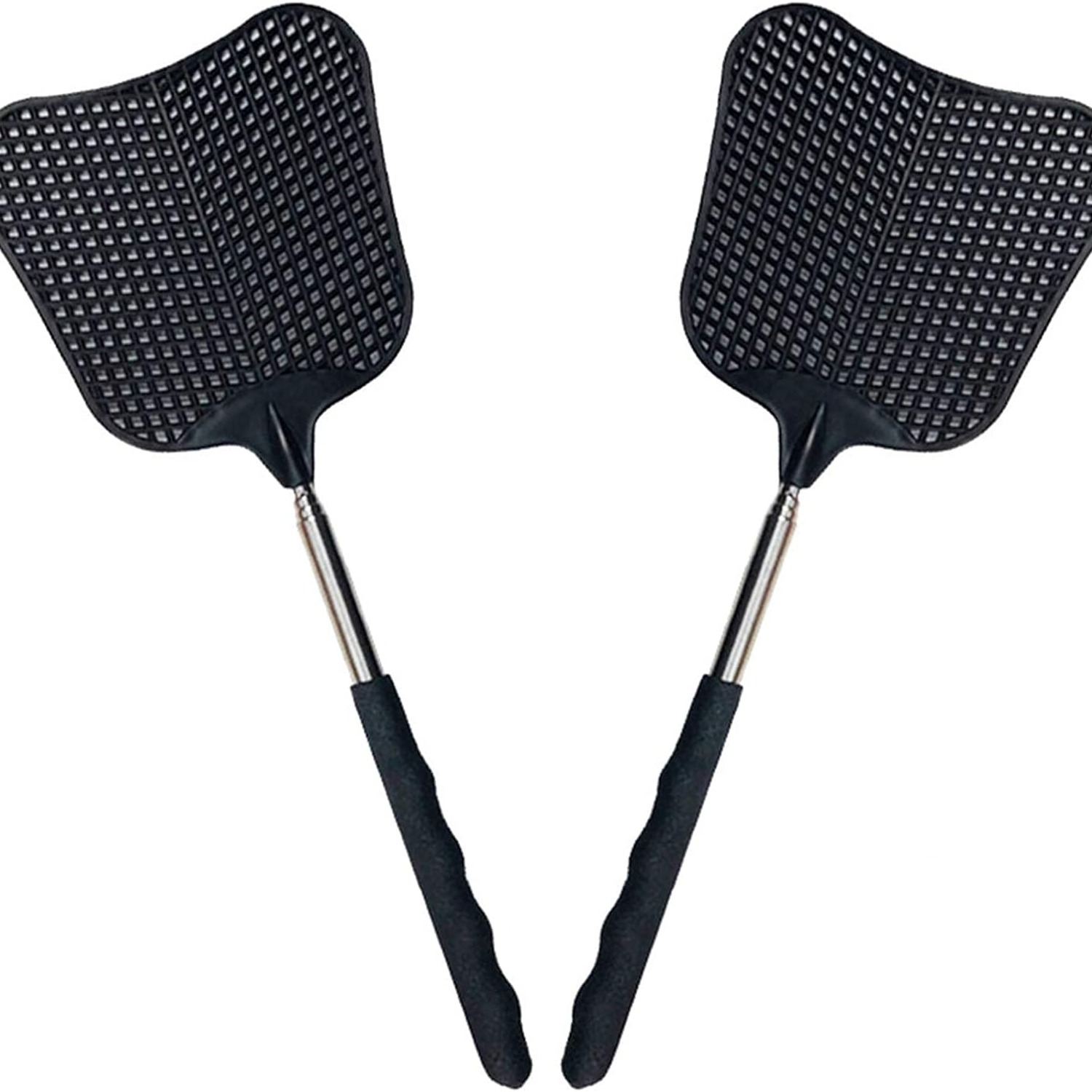
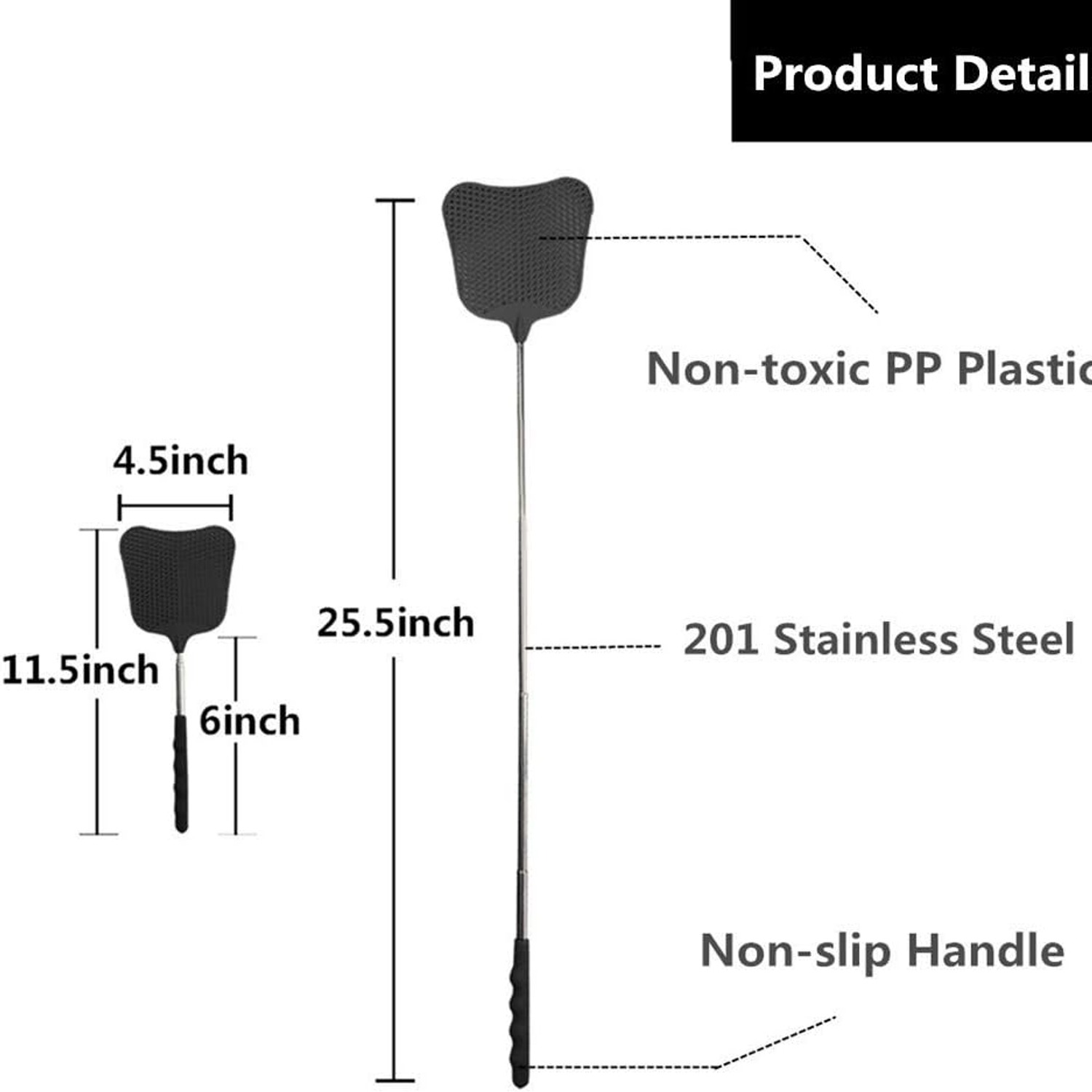
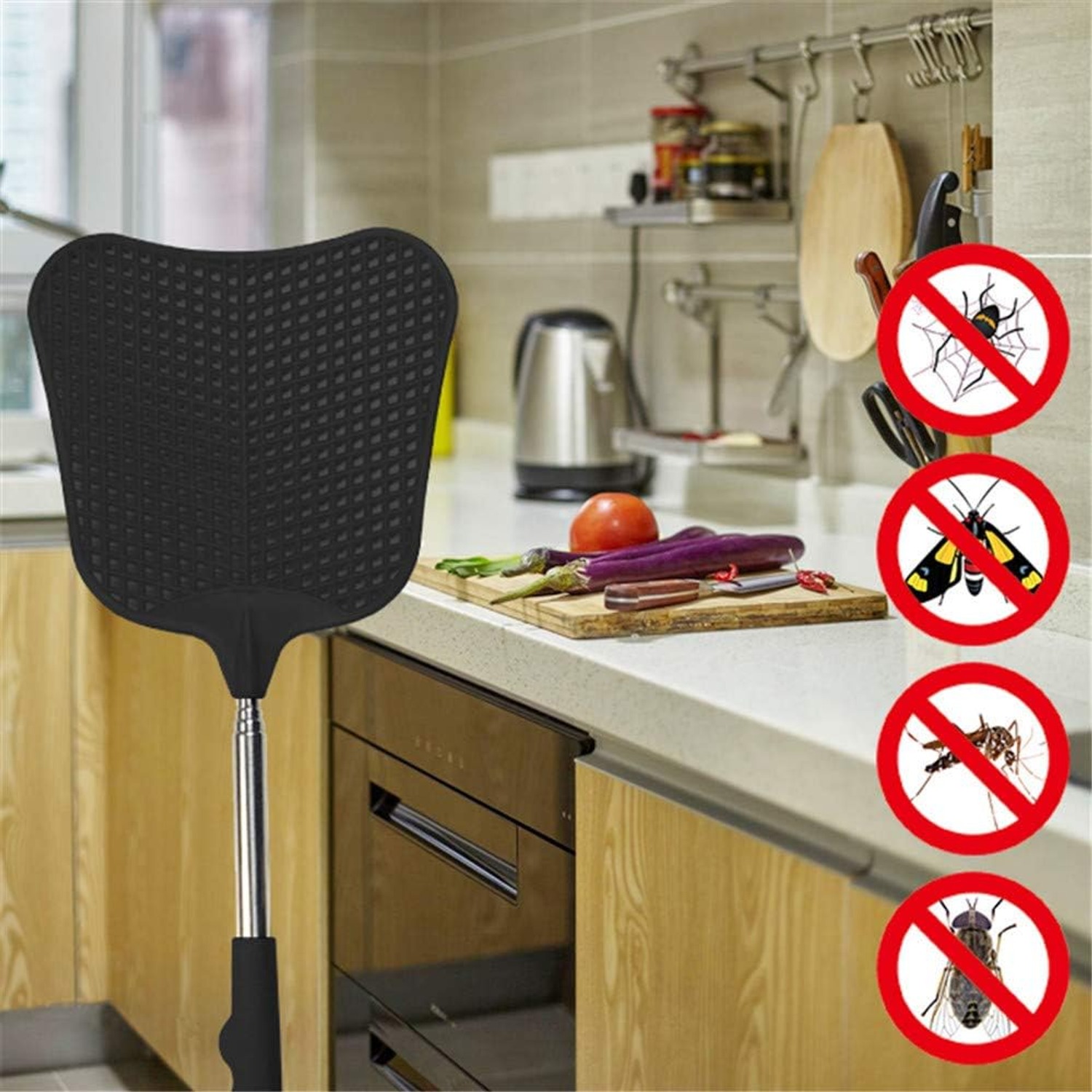
The design is simple. A set of stainless steel tubes slide inside each other, the same principle as a camera tripod leg or a car antenna. Closed, the swatter is short. Open, this one reaches 25 inches, with the paddle on the end.
The sections hold position by friction. You pull each one out until it seats, and the pole stays rigid while you swing. When you are done, you push them back in and the whole thing shrinks back to drawer size.
Steel is the right material for the pole. It holds its shape at full extension without flexing like a whip, and it does that at very low weight. The whole swatter weighs 0.08 kg, so the extra length does not turn into extra effort.
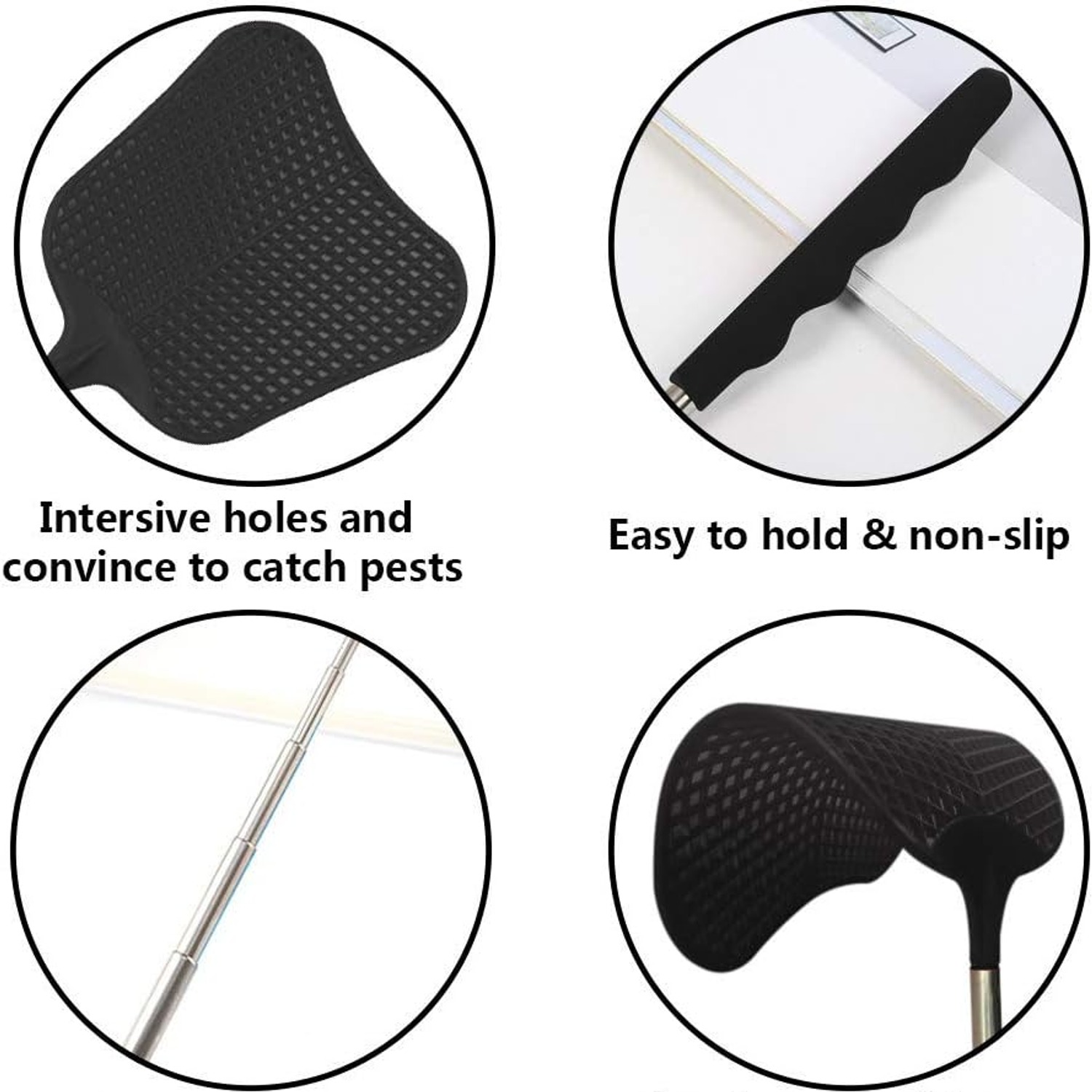
The paddle is PP plastic and deliberately flexible. There is a reason for that. A rigid paddle hitting a flat wall bounces straight off, and the fly leaves in the gap. A flexible paddle conforms for a split second, which keeps contact going slightly longer. It also means the paddle survives repeated hits against walls, benches and window glass instead of cracking at the neck.
The handle is PVC with a textured, shaped grip. That matters more than it sounds. Fly season is also hot weather season, and hands get damp. A smooth round handle rotates in your palm mid-swing and your aim goes with it.
Who this suits
Anyone who cooks with the back door open. Kitchens are fly magnets because of food, warmth and smells, and that is where most swatting happens. A long handle fly swatter earns its keep over a bench, around a range hood and up near kitchen windows.
Dining rooms are the second place. Flies at the table are the most annoying kind, and nobody wants to reach for a spray while people are eating. A manual swat leaves nothing in the air and nothing on the food.
It also suits caravans, campers, boats and sheds. The collapsed size is the selling point there. Space is tight, and a portable fly swatter that folds down beats a full-length rigid one every time.
Offices are on the list too. Open windows and a warm room attract flies, and an electric racket buzzing in a shared workspace is not a popular choice. A quiet plastic fly swatter solves it without anyone looking up.
Pet owners and parents tend to prefer manual swatters in general. No residue on bowls, no mist drifting across a highchair, nothing to wash off surfaces afterwards.
What to look at when you choose
Reach. Work out your actual need rather than guessing. Stand where you usually stand, reach up, and see how far short of the ceiling you are. Add 25 inches to that. For most standard-height rooms you will be covered. For a double-height stairwell or a vaulted lounge, no handheld swatter is going to reach, and that is worth knowing before you buy.
Paddle width and flex. Wider is more forgiving. A big head gives you a larger margin for error on a fast-moving target, and flex keeps the paddle in contact a moment longer. Hard, narrow paddles look neat and miss more.
Handle material. Steel poles stay straight. Plastic poles at this length tend to bend on the swing, which robs you of speed right at the point of impact.
Grip. Look for shaping and texture rather than a plain tube. Grip is the difference between a swing that goes where you aim and one that twists.
How many. One swatter and three rooms is a bad ratio. A fly swatter 2 pack lets you keep one where the flies are and one where you are, which usually ends up being different places.
Storage. Be honest about where it will live. If it does not fit the drawer or the hook you have in mind, it will end up in a cupboard and you will go back to the tea towel.
Using it well
Technique helps more than people expect. Flies take off backwards and upwards, so aiming slightly behind and above the fly improves your odds. Approach slowly, then swing fast. Flies react to fast movement in their field of view, not to slow movement at a distance.
If you are hitting a flat surface, let the paddle flex into it rather than stopping your swing at contact. Follow through an inch or two.
For high work, use the pole fully extended but keep both the swing short and controlled. A long lever amplifies everything, including a wild arc into a light fitting. For bench-height work, leave the pole part-closed. A shorter pole is stiffer and faster, and you do not need the reach.
Watch what is around you before you swing. Glasses, vases and pendant lights are the usual casualties, not flies.
Keeping it in good shape
Care is minimal. Wipe the paddle with a damp cloth and a little dish soap after use, then dry it off. That takes ten seconds and keeps it hygienic, especially if the swatter lives in a kitchen.
Keep the steel pole dry. If it gets splashed, dry it before you collapse it, since trapped moisture inside the sections is the thing most likely to cause marks over time. Do not put it in a dishwasher, and do not leave it baking in a car on a hot dashboard for weeks on end.
Collapse the pole fully before storing. Leaving it part-extended in a drawer is how sections get bent.
If the sections start to feel stiff, a quick wipe of the tubes with a dry cloth usually clears the dust that causes it.
Manual versus the alternatives
Sprays kill on contact and cover an area, but they leave residue, smell, and a cost every time you use them. In a kitchen or around pets that is a real downside.
Electric rackets are satisfying and fast, but they need charging or batteries, they are bulky, and they always seem to be flat on the day you need them.
Sticky traps and UV units work passively and have their place, especially in a shed or a bin area. They do nothing about the one fly circling your dinner right now.
A manual swat is the tool for the immediate problem. It costs nothing to run, is always ready, and works the second you pick it up. The only variable is your aim, and that improves fast.
The short version
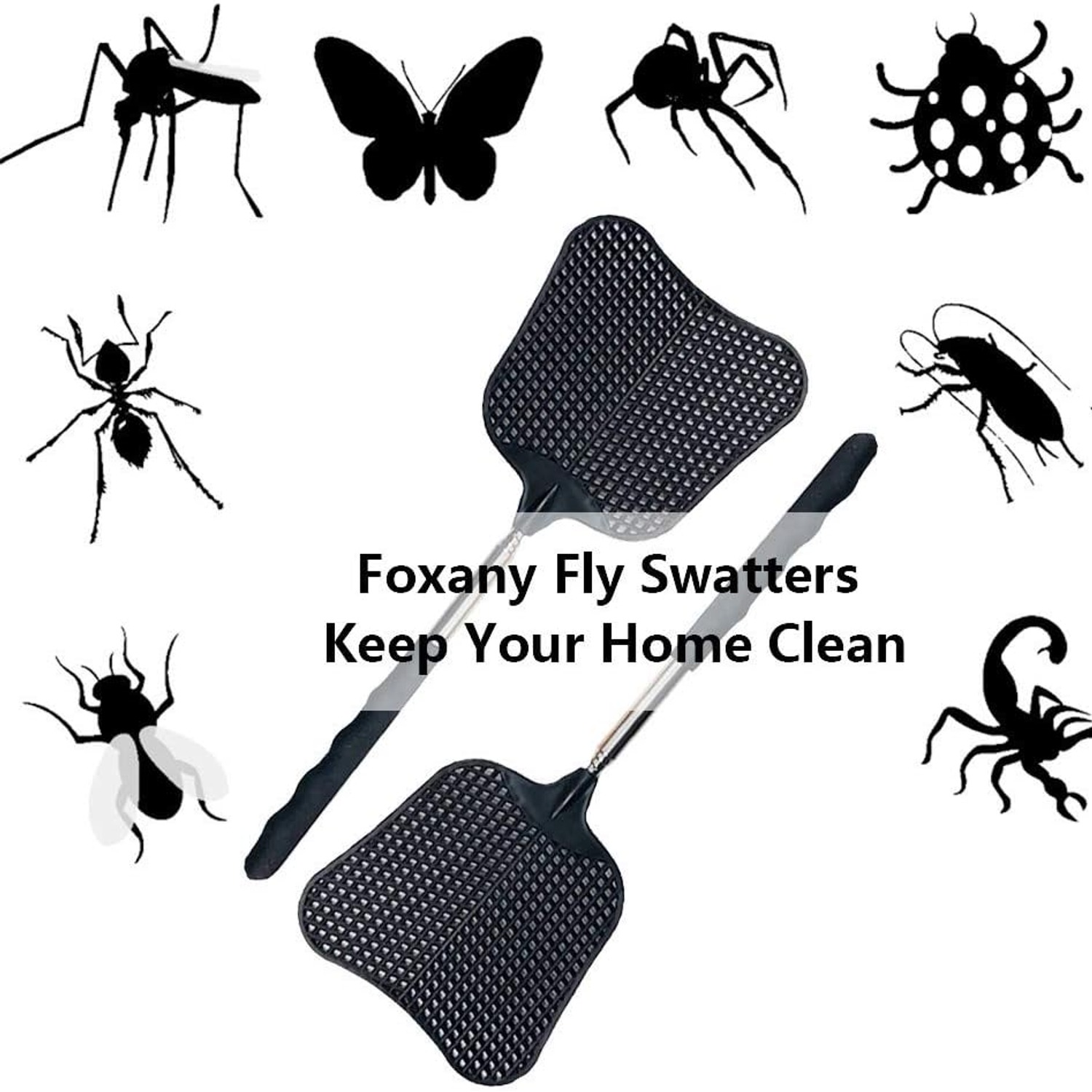
If flies on ceilings and high windows are your annoyance, a telescopic fly swatter is a sensible fix. This one extends to 25 inches on a stainless steel pole, has a wide flexible PP plastic paddle, a non-slip PVC grip, and weighs just 0.08 kg. It collapses small enough to live in a drawer or a glovebox, and you get two in the pack so you are not carrying a single swatter from room to room.
No batteries, no chemicals, no smell. Pick it up, extend it, swing.