

The complete guide
How to Choose a Handheld Electric Fly Swatter That Actually Works
The problem with chasing flies
Every summer the same thing happens. You cook, you open a window, and within ten minutes there is a fly doing laps of the kitchen. A rolled magazine works only if the fly lands somewhere flat and stays there. Aerosol sprays work, but you have just filled the room where you are about to eat with chemicals. Sticky traps catch things eventually, which is no help to the fly that is currently on your plate.
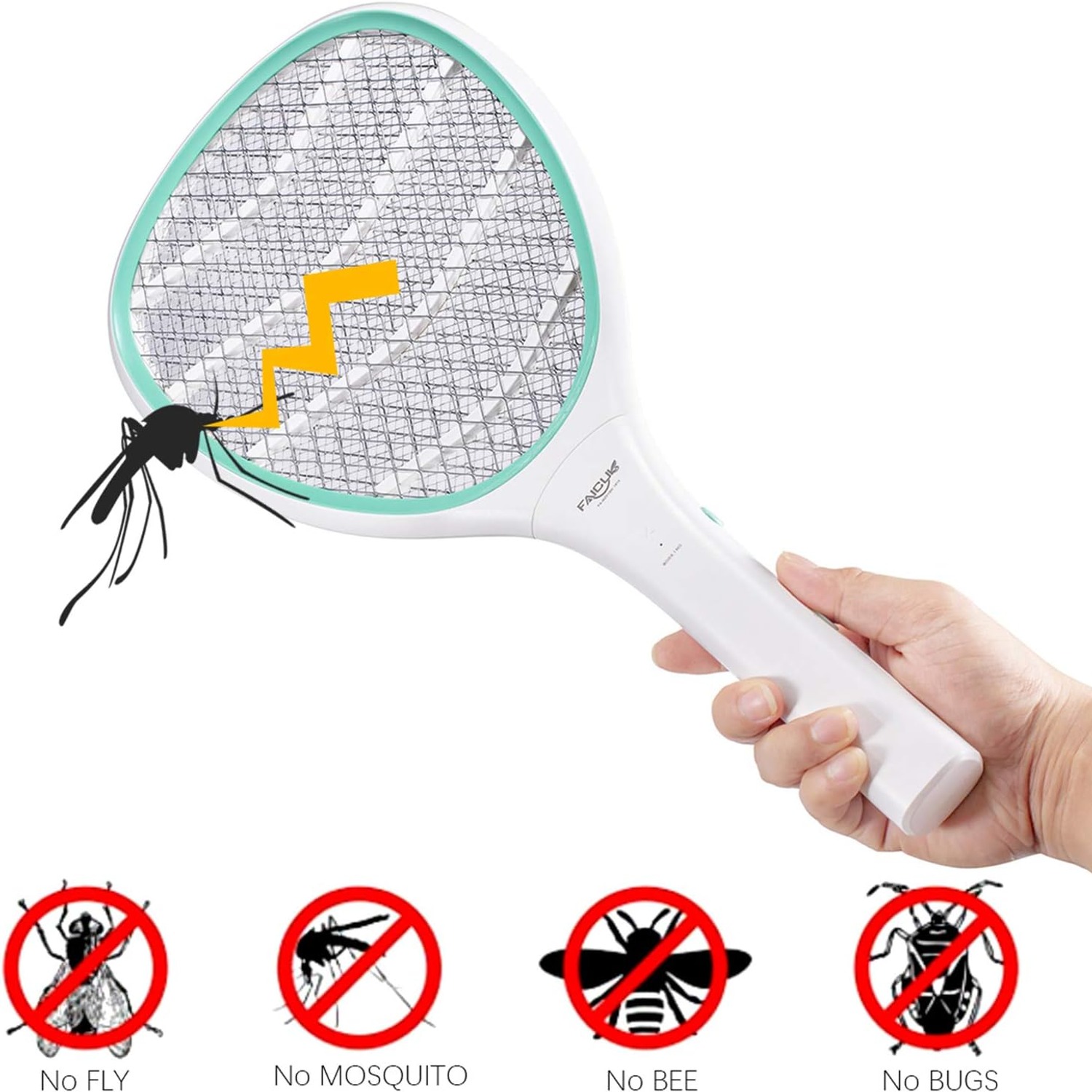
A handheld electric fly swatter solves a specific part of that problem. It lets you deal with a flying insect while it is still flying, in open air, with nothing left behind but the insect. No spray, no residue, no need for the fly to cooperate by landing on a hard surface.
How these rackets work
Inside the head of the racket is a wire grid. When you press the trigger, a small circuit powered by two AA batteries steps the voltage up to around 3000 volts. The current behind that voltage is tiny. It is the voltage that does the job, by jumping the gap when an insect bridges two wires.
The insect dies instantly on contact. You will usually hear a sharp snap. That sound is the entire feedback system, and it is oddly satisfying, which is part of why these rackets are popular.
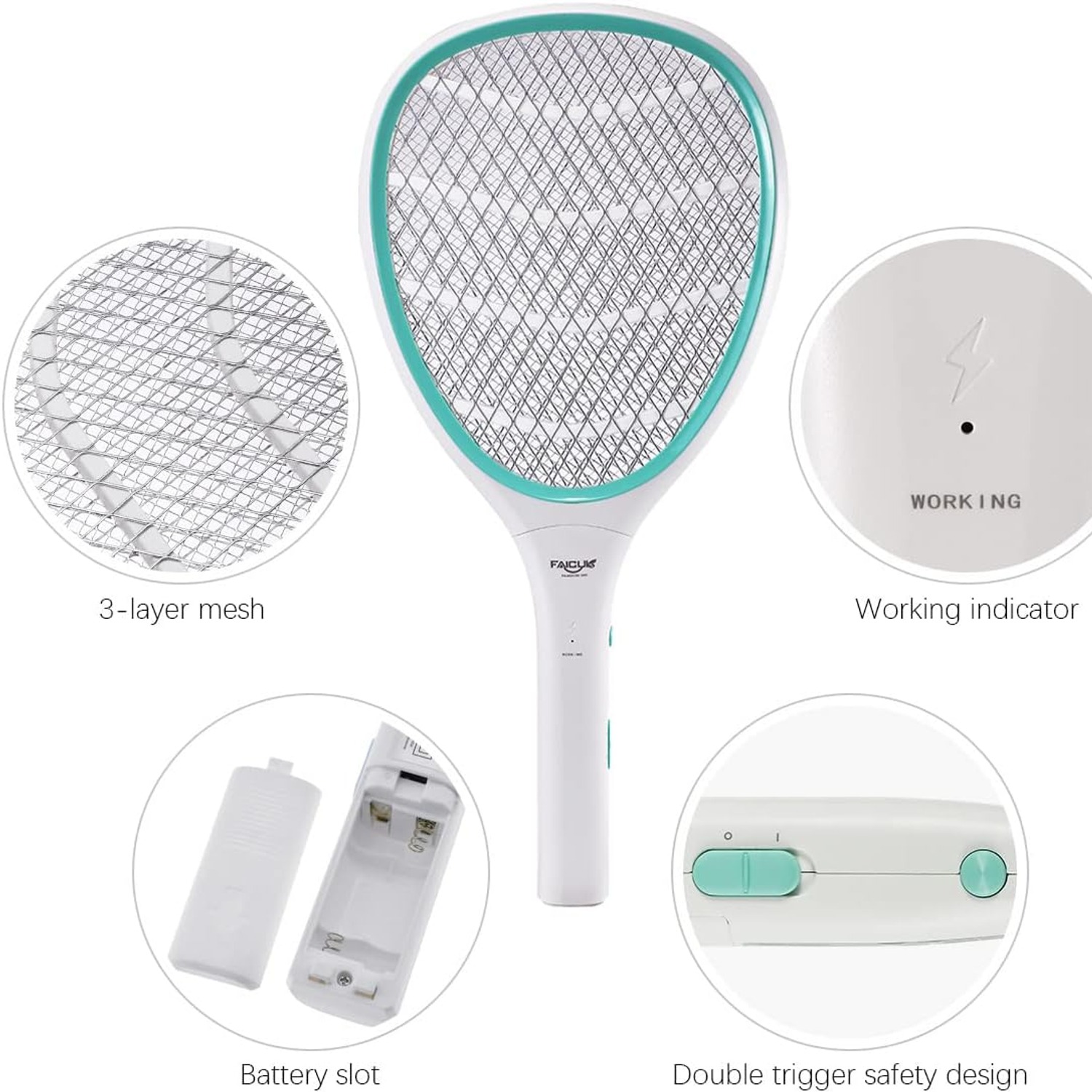
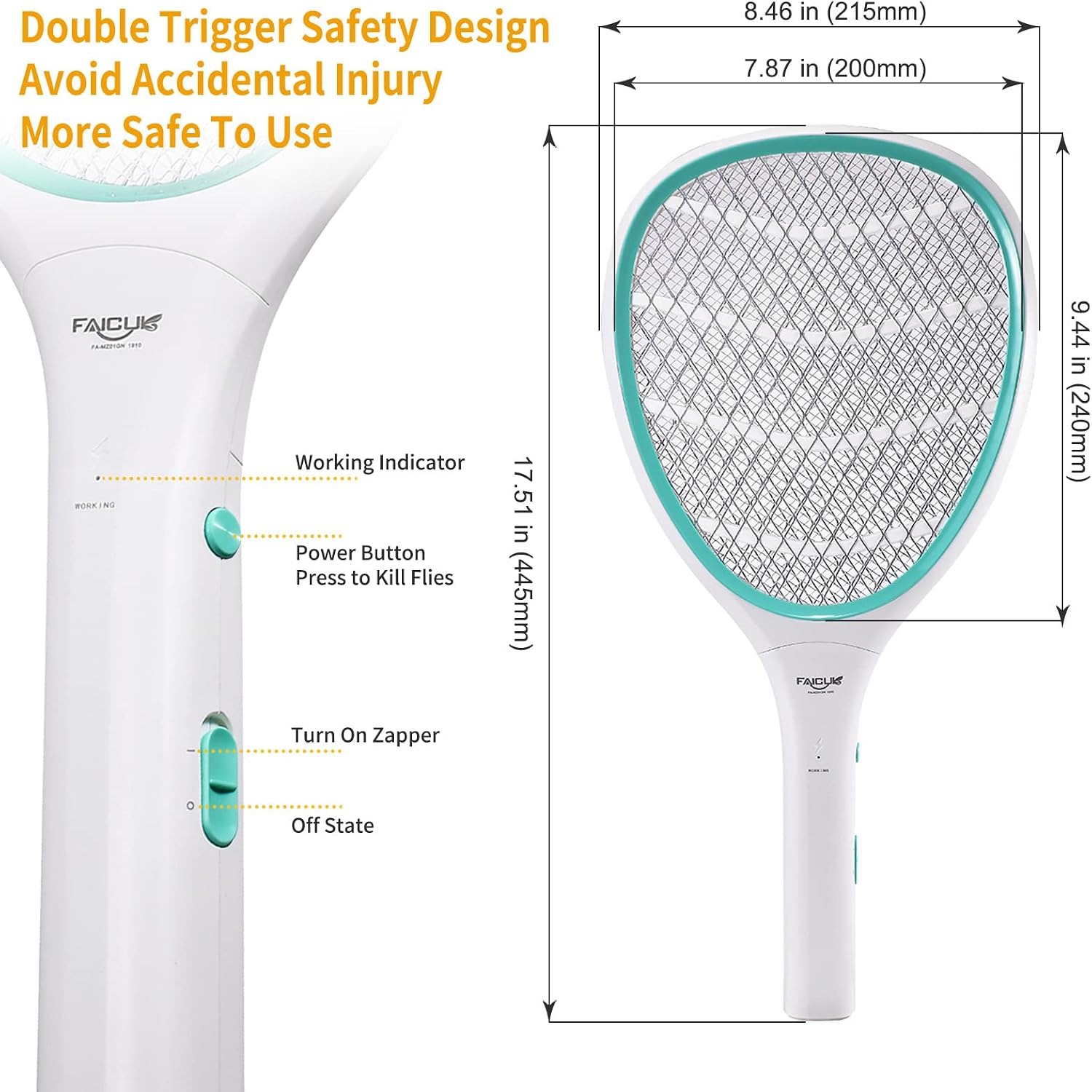
The important part to understand is that the grid is only live while you hold the button down. Flick the power switch on and nothing happens yet. Press the round button and the grid charges. Release it and the charge stops. That is the double trigger arrangement, and it is the main reason a racket like this can live in a kitchen drawer without worry.
Why the mesh layers matter
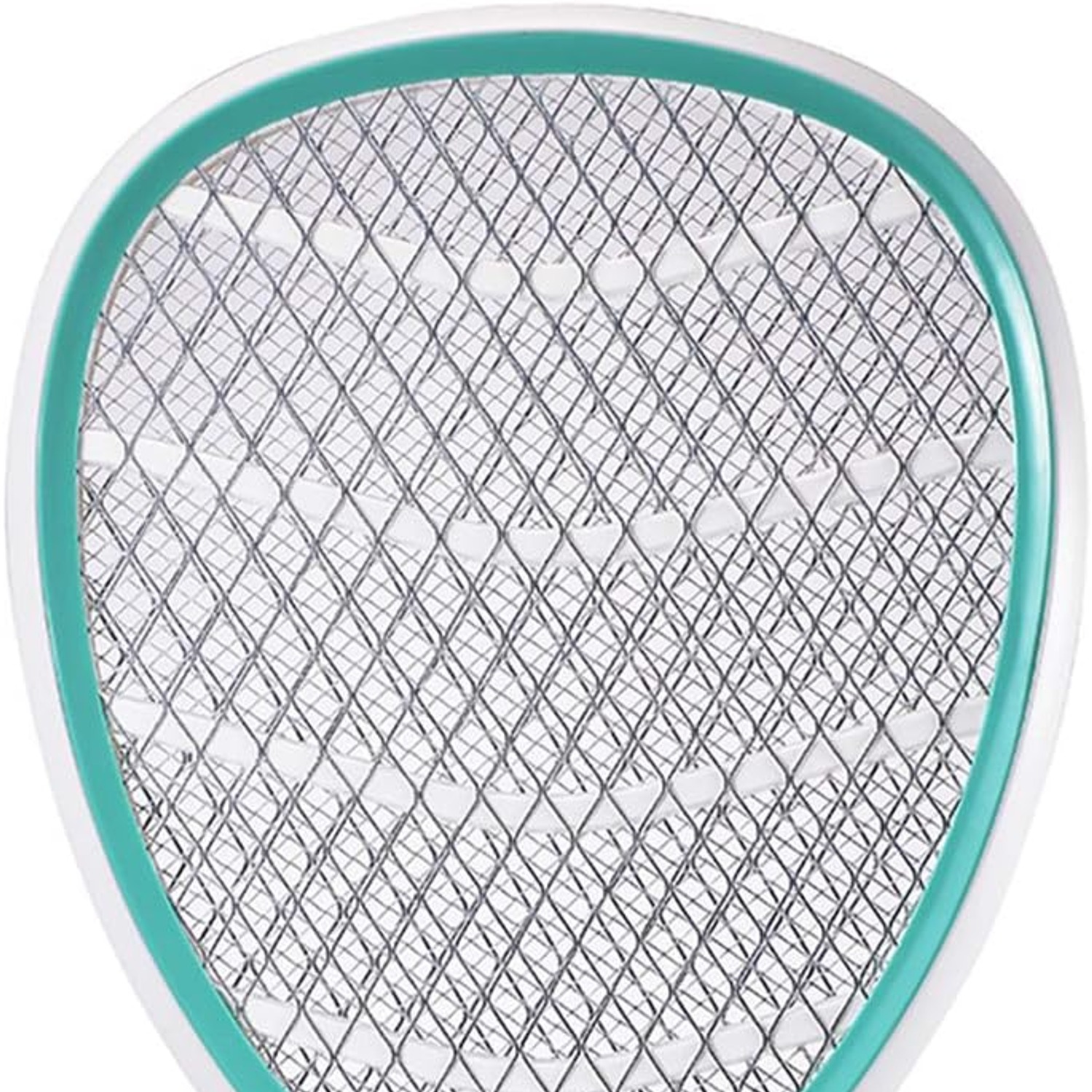
Cheap rackets sometimes have a single exposed grid. That is a bad design, because anything that touches the racket face touches the live wires, including a curtain, a benchtop or a finger.
This Faicuk racket uses three layers. The charged grid is in the middle, and an outer guard sits on each face. Those guards hold everything at a distance from the live wires. You can sweep the racket along a wall or over a fly screen and the grid never makes contact with the surface.
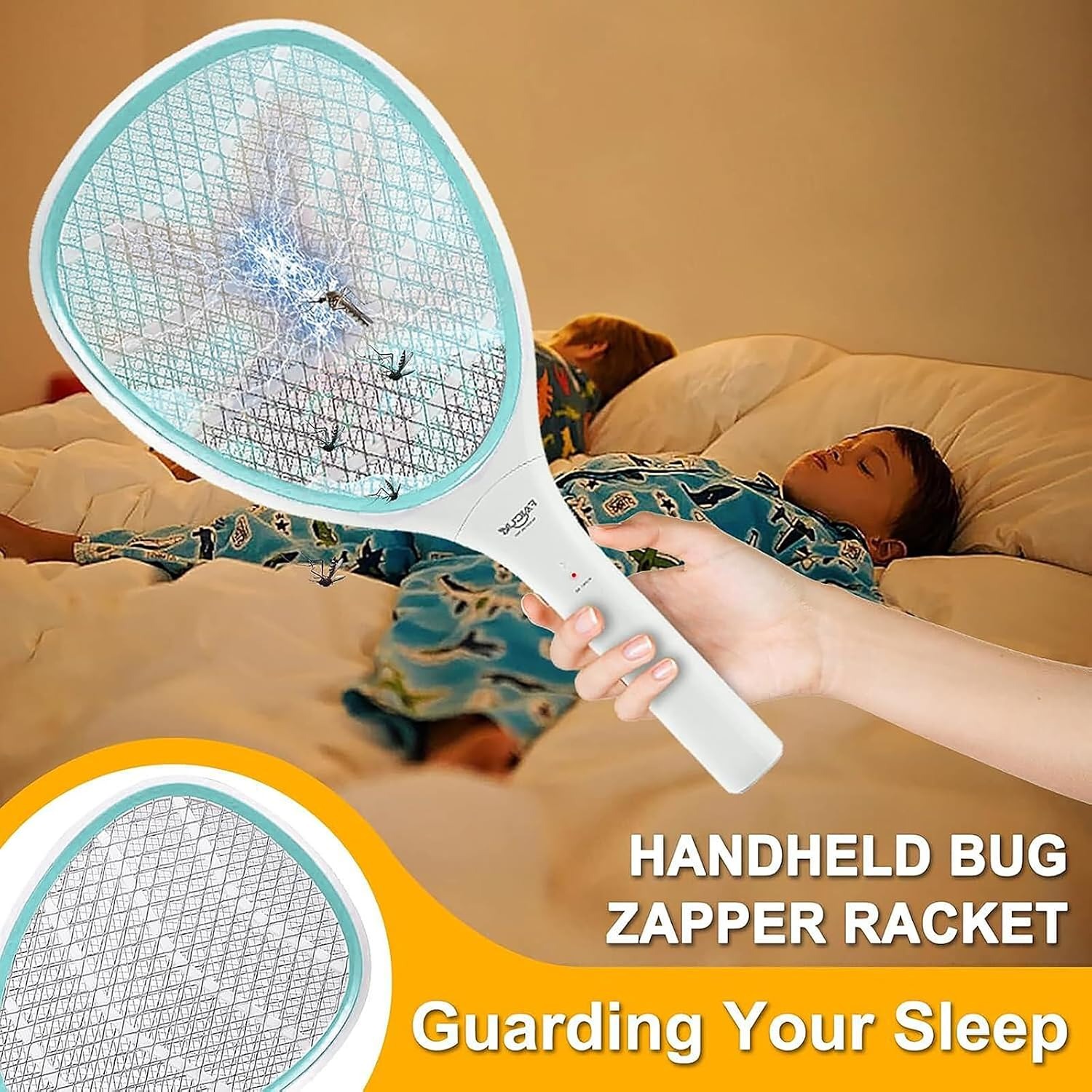
That spacing also means a finger brushing the outside of the racket does not reach the charge. It is not a license to be careless, and you should still treat the racket as a live electrical tool, but it changes the risk profile considerably. If you have kids in the house, the mesh and the double trigger together are the two features worth paying attention to.
Battery power versus rechargeable
Most electric swatters fall into two camps. Some have a built-in rechargeable cell and a USB port. Others, like this one, run on two AA batteries.
Rechargeables are convenient until the day the battery is flat and the insect is in the room. Then you are waiting. They also carry a charging circuit, and charging circuits are the part most likely to overheat or short out on a budget product. Faicuk makes the point that skipping the charging circuit removes those risks entirely.
AA batteries have the opposite trade-off. You need to buy them, and they are not included here. But a pair lasts a long time because the grid only draws power in short bursts while you hold the button. Keep a spare pair in the same drawer and you are never out of action. For a tool that gets heavy use for three months and then sits idle for nine, that is the more sensible arrangement.
Battery power also makes it genuinely portable. There is no outlet needed, which is why this style ends up in camp boxes, caravans, boat lockers and beach bags. If you are after the best battery powered fly swatter for travel, the lack of a charging dependency is the whole argument.
Who this suits
Households with a kitchen fly problem are the obvious group. So are people with a fruit bowl that attracts fruit flies, since those are small and slow and very easy to catch mid-air.
Campers and caravanners get a lot out of it. Mosquitoes at dusk around a tent are a fixed feature of outdoor life, and a racket deals with them without filling a confined space with repellent. The same goes for anyone eating outdoors at a barbecue.
Gardeners use them for moths and flies around compost and sheds. People with pets like that there is no spray residue on floors where an animal lies down.
It suits you less if your problem is wasps. The manufacturer is clear that large insects are outside the design. A wasp hit by this racket may well survive the contact and then be extremely annoyed with you. Use a proper wasp product for that.
It also will not solve an infestation. If flies are breeding somewhere, you need to find the source. A racket deals with the individuals in front of you, not the cause.
What to look for when choosing
Voltage is the headline number, and 3000 volts sits in the effective range for small flying insects. Much lower and you get insects that are stunned rather than killed. Much higher is mostly marketing for this class of pest.
Safety design is the number that does not get printed on the box. Look for multiple mesh layers and a trigger that must be held, not a simple on-off switch that leaves the grid permanently live. Both are present here.
Build material matters more than people expect. These rackets get dropped, sat on and thrown into bags. ABS plastic flexes and takes a knock. Brittle recycled plastic cracks at the neck where the head meets the handle, which is the highest-stress point on the whole tool.
Weight affects how long you can use it. At 9 ounces this one is light enough for a wrist flick rather than an arm swing, which matters when you are trying to catch something that keeps changing direction.
Getting better results
Most people swing too hard. A fly reacts to the air pressure of a fast swing and dodges. A slower, steady sweep through its flight path works better, because the fly does not register it as a threat until the grid reaches it.
Flies also tend to take off upward and backward. If one is sitting on a surface, sweep just above and slightly behind it rather than straight at it.
For mosquitoes at dusk, hold the button down and make slow passes through the air near lights or near where people are sitting. Mosquitoes are weak fliers and go down easily.
With fruit flies, work near the fruit bowl or the bin. They cluster, so several passes in one spot often clear a group.
Care and storage
Switch it off and take the batteries out before you clean it. Let it sit for a moment, then brush any debris off the grid with a dry brush. An old toothbrush is ideal.
Never rinse it and never submerge it. Water and a high-voltage grid are a bad combination, and it will not dry out properly inside the head. Wipe the handle with a barely damp cloth if it needs it, then dry it.
At the end of the season, remove the batteries before you put it away. Cells left inside over a long storage period can leak and corrode the contacts, and that is what kills most of these rackets rather than any fault in the electronics. Store it somewhere dry and indoors.
The short version
This is a 3000-volt handheld racket for flies, mosquitoes, fruit flies and moths. It runs on two AA batteries that you supply, which means no charging and no outlet. Three mesh layers and a hold-to-fire button keep the live grid away from fingers. The ABS body stands up to normal rough handling.
It is not for wasps, it is not a toy, and it will not fix a breeding problem on its own. For the everyday job of clearing the flying insects actually in the room with you, it is quick, clean and genuinely effective.