

The complete guide
How To Pick A Fly Swatter That Actually Connects
The problem with the swatter in your drawer
Most households own one fly swatter, and it is always in the wrong room. The fly is in the kitchen, the swatter is in the laundry, and by the time you have found it the fly has moved to the lounge and settled somewhere high. That is the real reason flies feel hard to kill. It is not reflexes, it is logistics.
The second problem is the swatter itself. A lot of them are moulded in one piece from soft plastic, handle included. They cost almost nothing to make, and they feel fine when you pick them up. The trouble shows in the swing. A soft handle bends backwards as you accelerate, so the head lags behind your hand, then whips forward late and slow. Flies take off in a few hundredths of a second. A lagging head gives them all the warning they need.
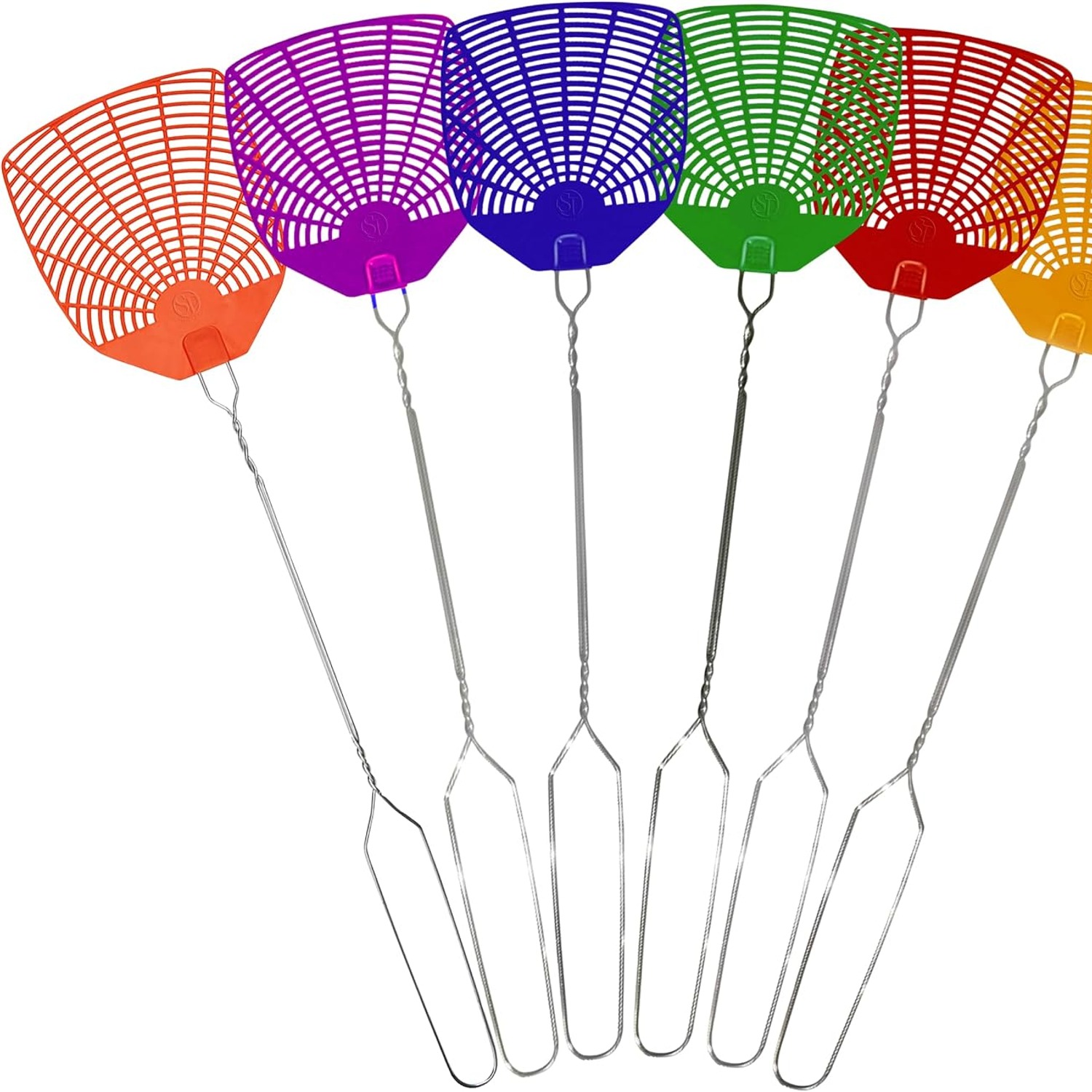
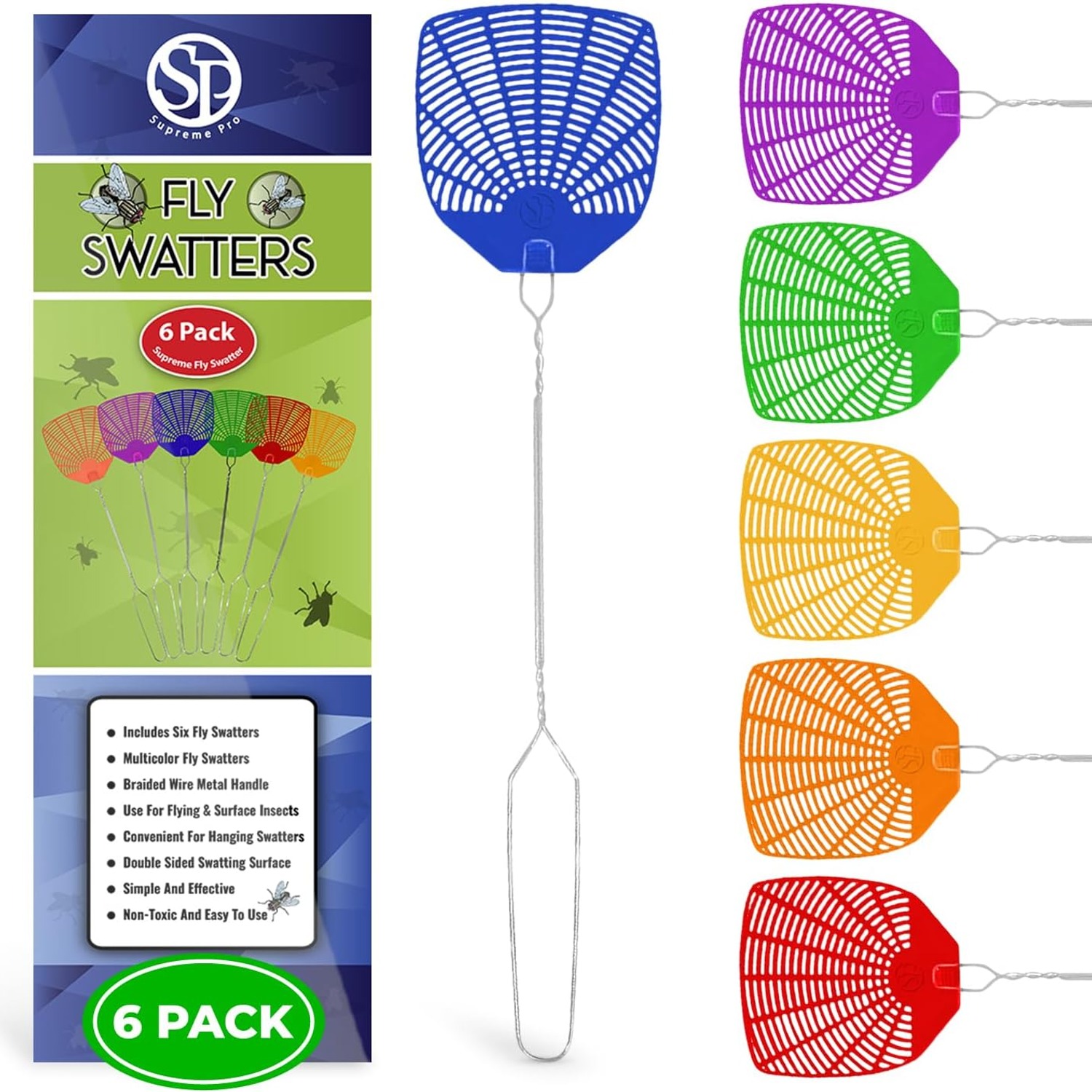
A swatter with a metal handle solves that. The braided wire core holds its line through the swing, so the head arrives when you intended it to, travelling at the speed you put into it. It is a small mechanical difference that changes the hit rate noticeably.
How a swatter actually works
Three things decide whether you connect. Speed, reach, and air.
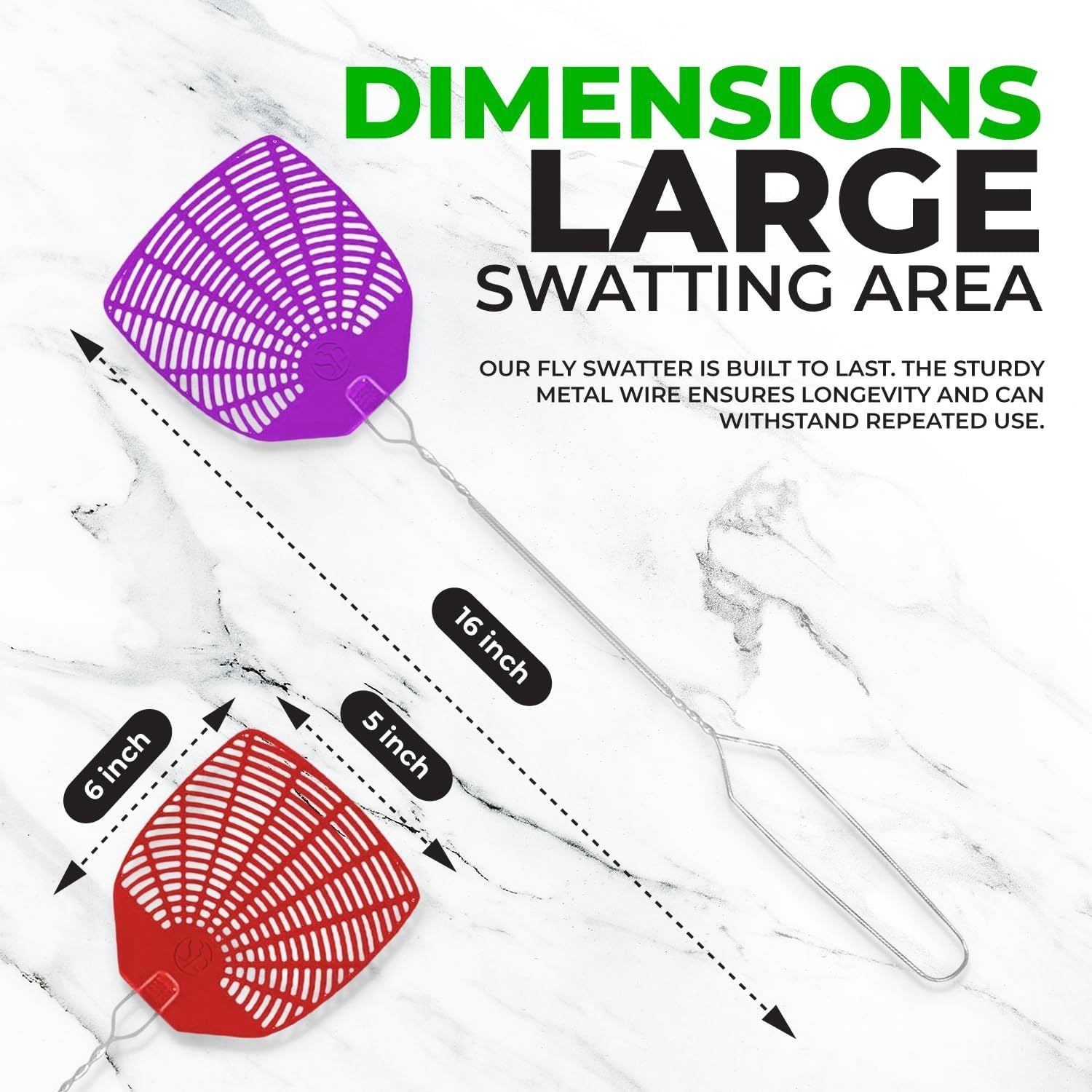
Speed comes from the handle. A stiff handle transfers your arm movement straight to the head. Reach comes from length. At 17 inches overall, this one adds meaningfully to your arm without becoming awkward in a tight kitchen. You can get to a cornice, the top of a window, or the far side of a dining table without climbing on anything.
Air is the one people forget. A fly detects the pressure wave pushing ahead of a solid object and launches away from it. That is why a rolled-up newspaper misses so often. A swatter head is perforated, so air passes through the holes rather than piling up in front. The fly gets less warning. The flexible plastic head on these swatters also conforms slightly on impact, which means better contact on a curved or uneven surface such as a window frame or a skirting board.
None of this involves chemistry or electricity. You are using geometry and a fast arm.
Who this pack suits
If you live somewhere with warm summers and doors that stay open, you already know. Kitchens attract flies because of food and bins. Patios attract them because of people eating outside. Sheds and garages attract them because things get left in there.
Families with small children often prefer a mechanical swatter because nothing is sprayed into the air near a cot or a highchair. Pet owners feel the same way, since a dog will happily lick a bench that has just been misted with something. The pack lists flies, mosquitoes, bees, wasps and spiders among its target species, which covers the usual summer intruders.
Then there are the people who buy a six pack specifically to spread it around. Campers and caravanners want a flat, light thing that needs no power. Classroom teachers want something cheap that can live on a hook. Workshop owners want one near the bench. Having six means you stop carrying one swatter from room to room.
Choosing between the options on the market
There are really four kinds of swatter sold today.
The soft one-piece plastic swatter is the cheapest. It is fine occasionally, but the handle gives out and the hit rate is poor. The metal handle swatter, which is what this is, costs a little more and swings far better. Electric rackets kill on contact with a charged mesh, but they need batteries, they should not be used near curtains or anything flammable, and they are not something you want a child picking up. Chemical sprays treat the room rather than the insect, and plenty of people do not want them near food, bedding or animals.
If you want one tool that works every time with no upkeep, a metal handle swatter is the straightforward answer. When people search for the best long handle fly swatter, what they usually mean is something with reach that does not fold in the middle, and that is the gap this fills.
Length is worth a thought too. Very long swatters give great reach but feel clumsy in a small kitchen. Very short ones are nimble but leave you standing too close to a wasp. Seventeen inches sits in the sensible middle, which is why it is a common size for the best fly swatter for kitchen use.
Where to put six swatters
Treat it as a coverage exercise rather than a stockpile. Think about where insects enter and where they linger.
Start with the kitchen, because that is where food and the bin are. Put one on a hook near the back door, since that is the entry point in most homes. Put one outside, on the patio or near the barbecue, where it will be ready when you are eating out there. Put one in the garage, shed or workshop. If you have a caravan, boat or a car that gets used for camping, that takes another. Keep the last one spare, or give it to whichever room complains loudest.
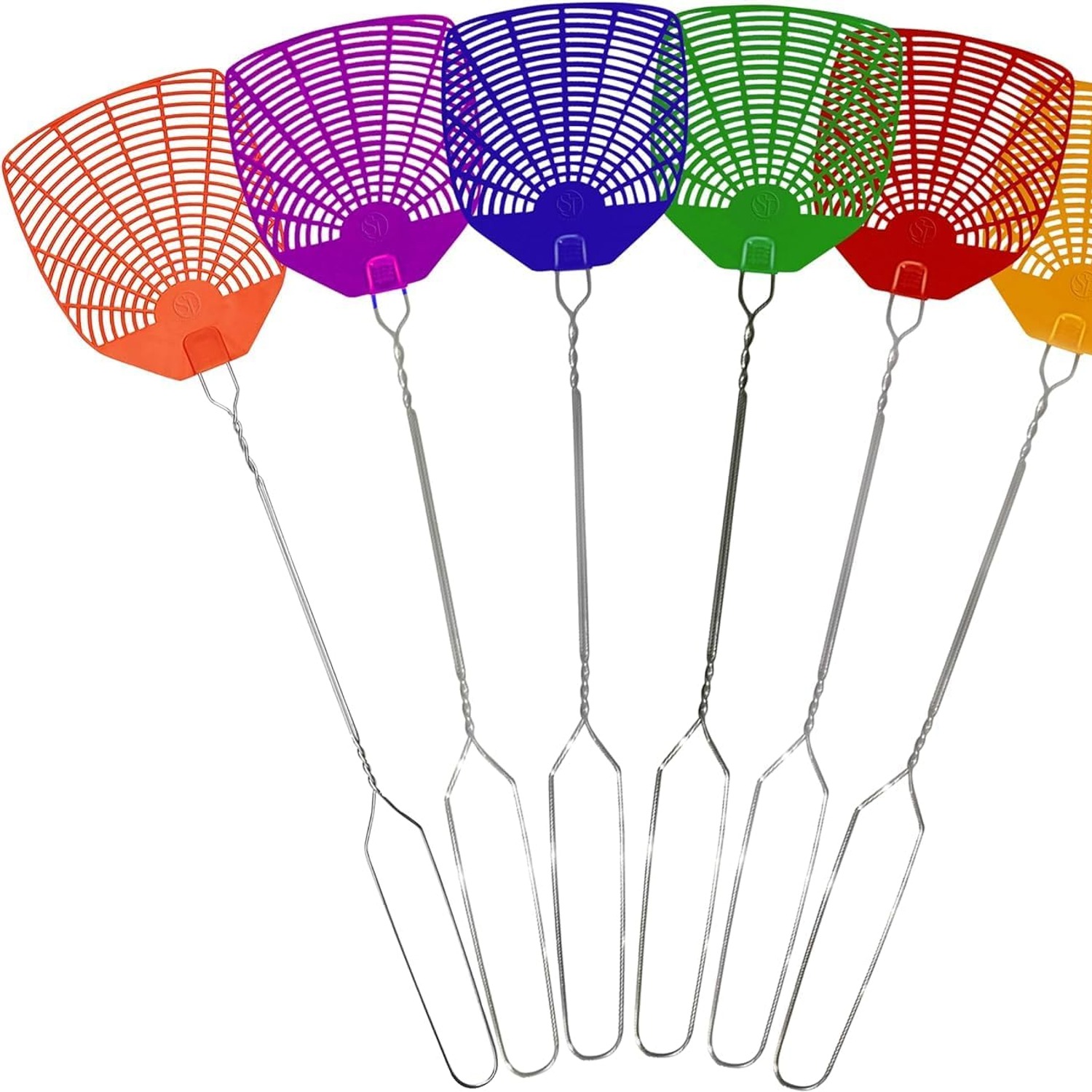
The color coding helps more than you would expect. Six different colors means each location has its own, and a bright red or yellow swatter is easy to spot against a cluttered shelf or a dark wall. It also makes it obvious when someone has relocated the kitchen one to the deck.
Looking after them
This is the easy part. After you use one, wipe the head with a damp cloth, or rinse it under the tap and give it a shake. Let it dry before you store it, because a damp head tucked into a drawer will eventually smell.
Hang them where you can see them. The handle sits over a hook neatly, and the flat 0.4 inch profile means a drawer works just as well if you would rather they were out of sight. Keep them out of long direct sun where you can, since UV is hard on plastic over the years, and do not leave one resting against a heater or a barbecue lid.
Avoid the dishwasher. Hot water cycles can warp a plastic head, and the cleaning takes ten seconds by hand anyway.
A quick word on technique
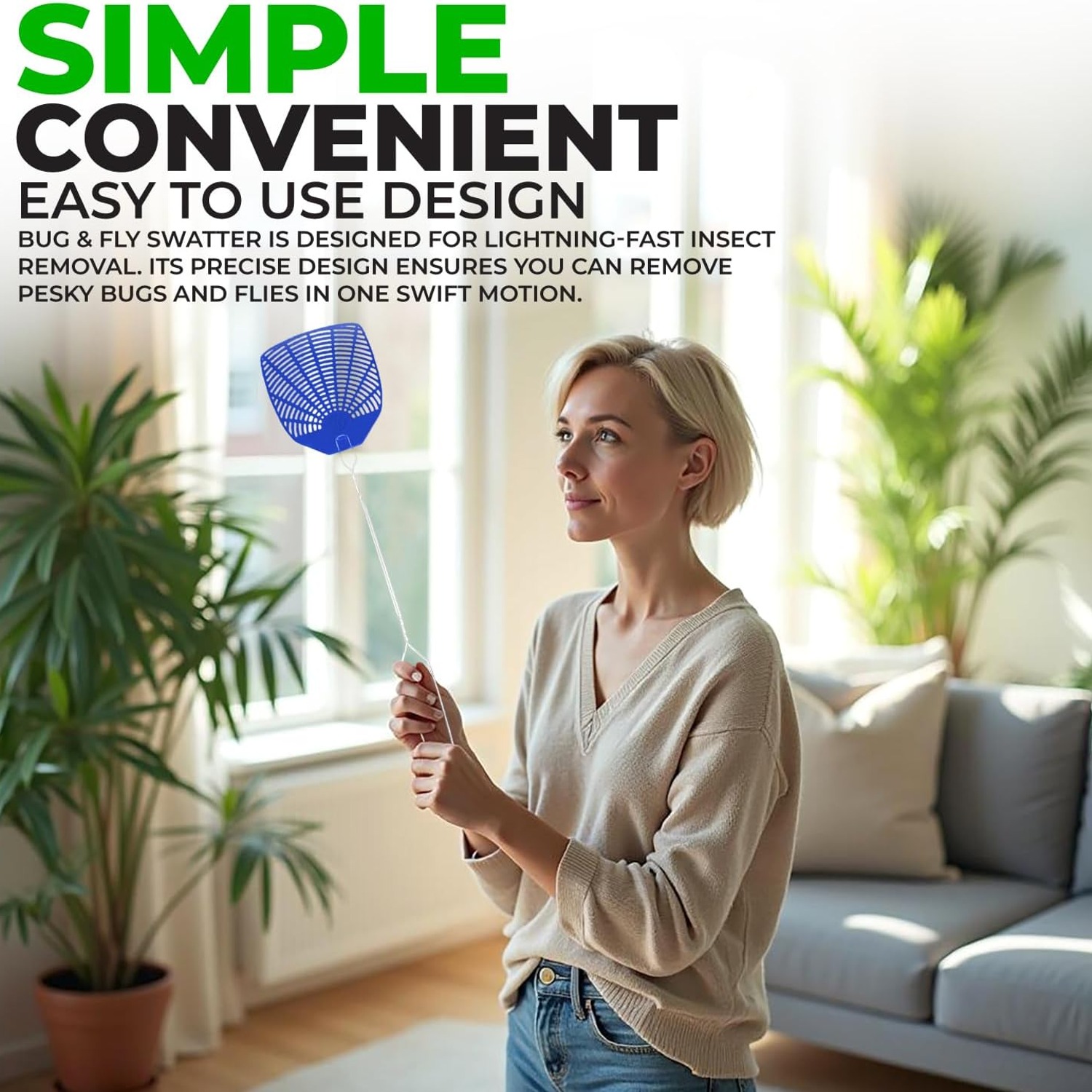
Swing across the insect rather than straight down at it. Flies tend to launch upward and backward when startled, so a flatter approach catches them in the escape path. Aim slightly behind where the fly is sitting if it is on a vertical surface, because that is the direction it will go.
Be patient with the first swing. Flies that have been disturbed once get harder to approach, so it is worth waiting for a settled target rather than flailing at one in flight. On a window, let it walk to the glass, where the flat surface gives the head full contact.
For mosquitoes, the opposite is true. They fly slowly and do not detect pressure waves as well, so a direct swing usually works.
The short version
Six swatters, 17 inches each, braided metal wire handles and flexible plastic heads, in six colors. Nothing to charge, nothing to spray, nothing to replace. The metal handle is what separates it from the floppy supermarket version, because it keeps the head moving at the speed you swung it rather than trailing behind your hand.
Buy it if you want a swatter within reach in every room instead of one that is always somewhere else. Skip it if you are set on an electric racket or you want a treatment that handles a whole room at once. For everything in between, this is a cheap, durable fix that will still be working next summer and the one after that.