
The complete guide
How to Choose a Fly Swatter That Lasts More Than One Summer
The problem with the swatter in your drawer
Almost everyone owns a fly swatter. Almost nobody likes theirs.
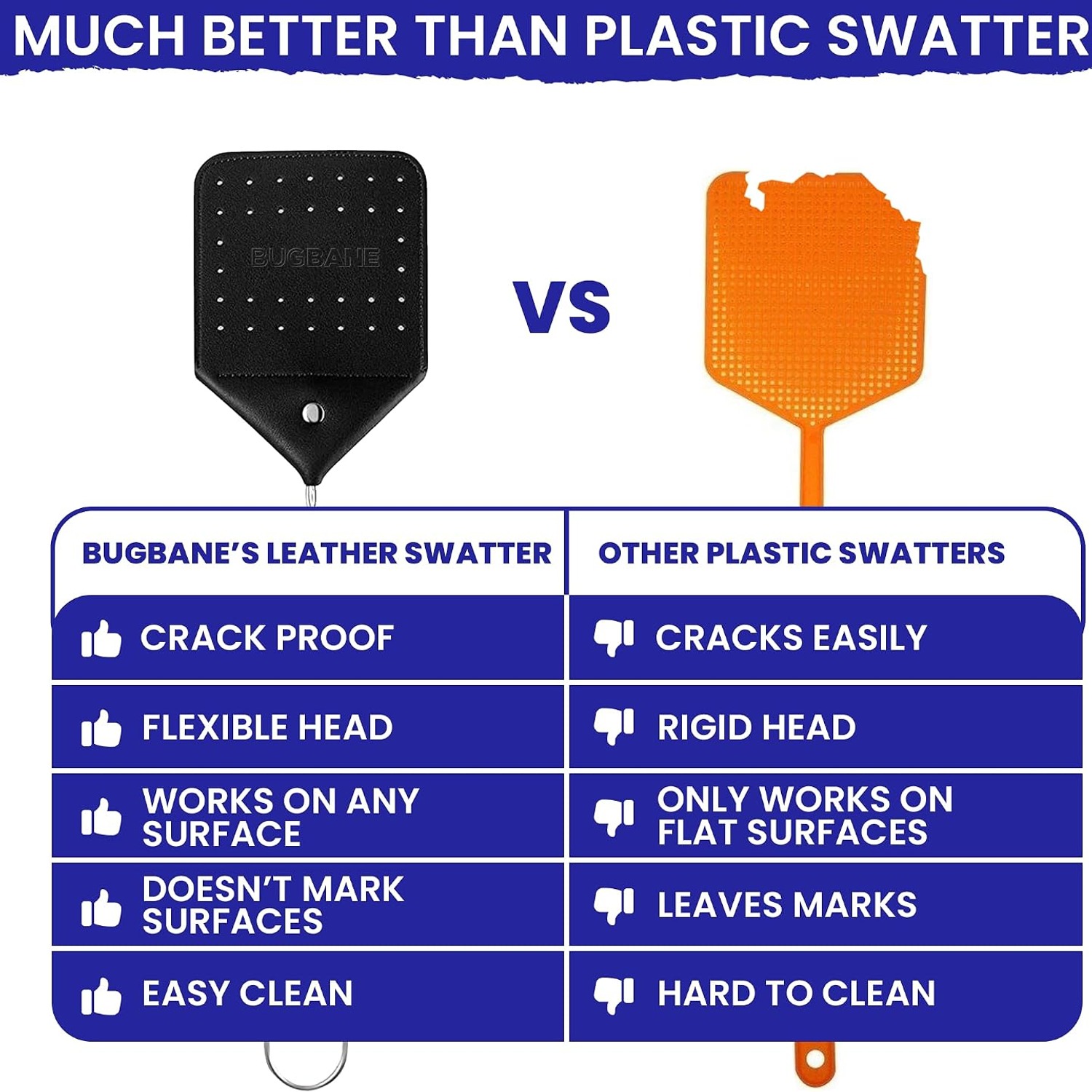
The typical one is a single piece of moulded plastic on a bendy wire stem. It costs very little, which is the whole point, and it behaves exactly like something that costs very little. The head develops a white stress line where it folds, then one hot afternoon that line becomes a crack. The wire handle picks up a slight curve from being stuffed in a drawer, and after that the head never lands flat again. You swing, the head twists, the fly leaves.
Then there is the surface problem. Plenty of flies land on a window, a tiled splashback or a painted wall. A hard plastic paddle hitting glass makes a loud crack and skids. On soft paint it can leave a dull mark. So you end up hesitating, swinging gently, and missing.
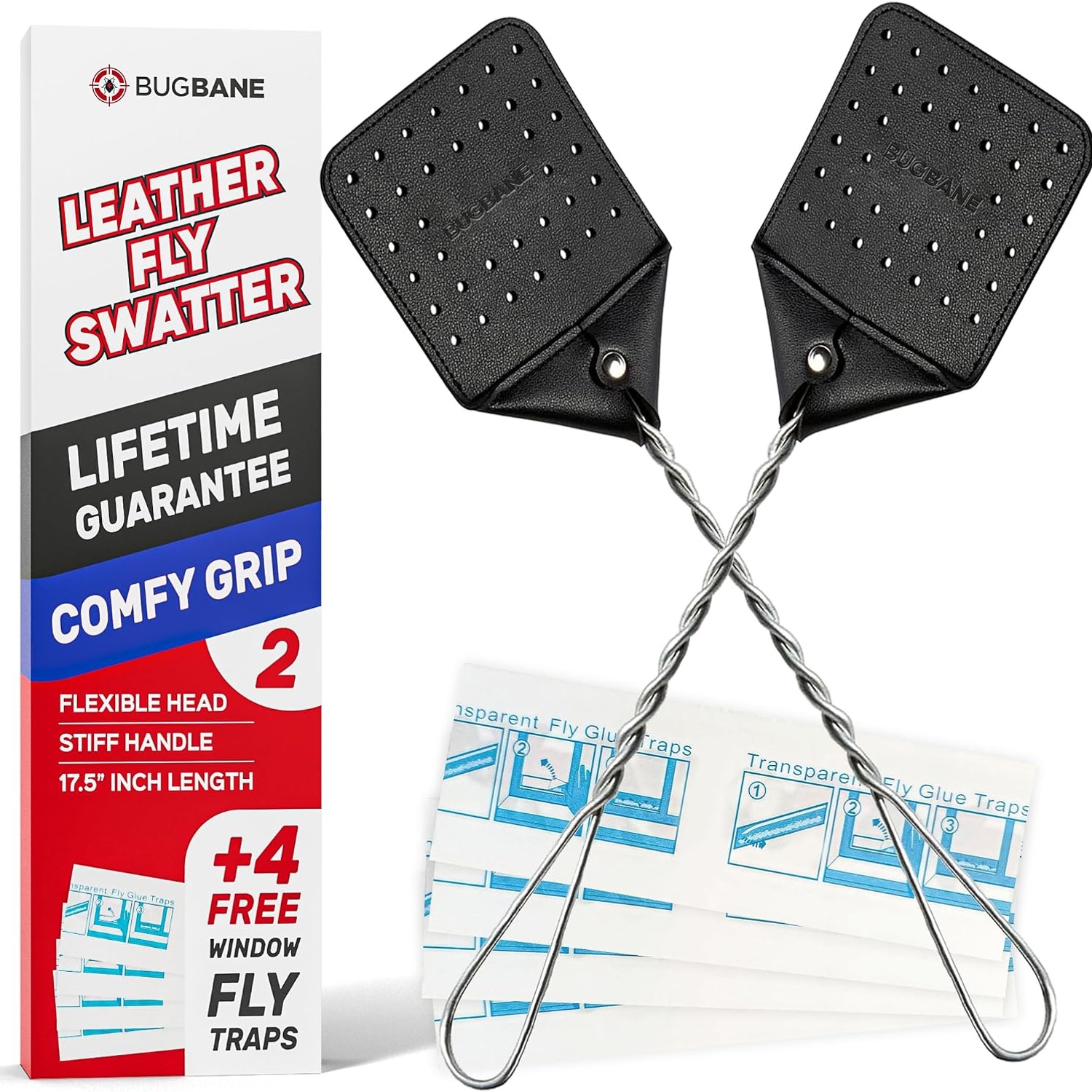
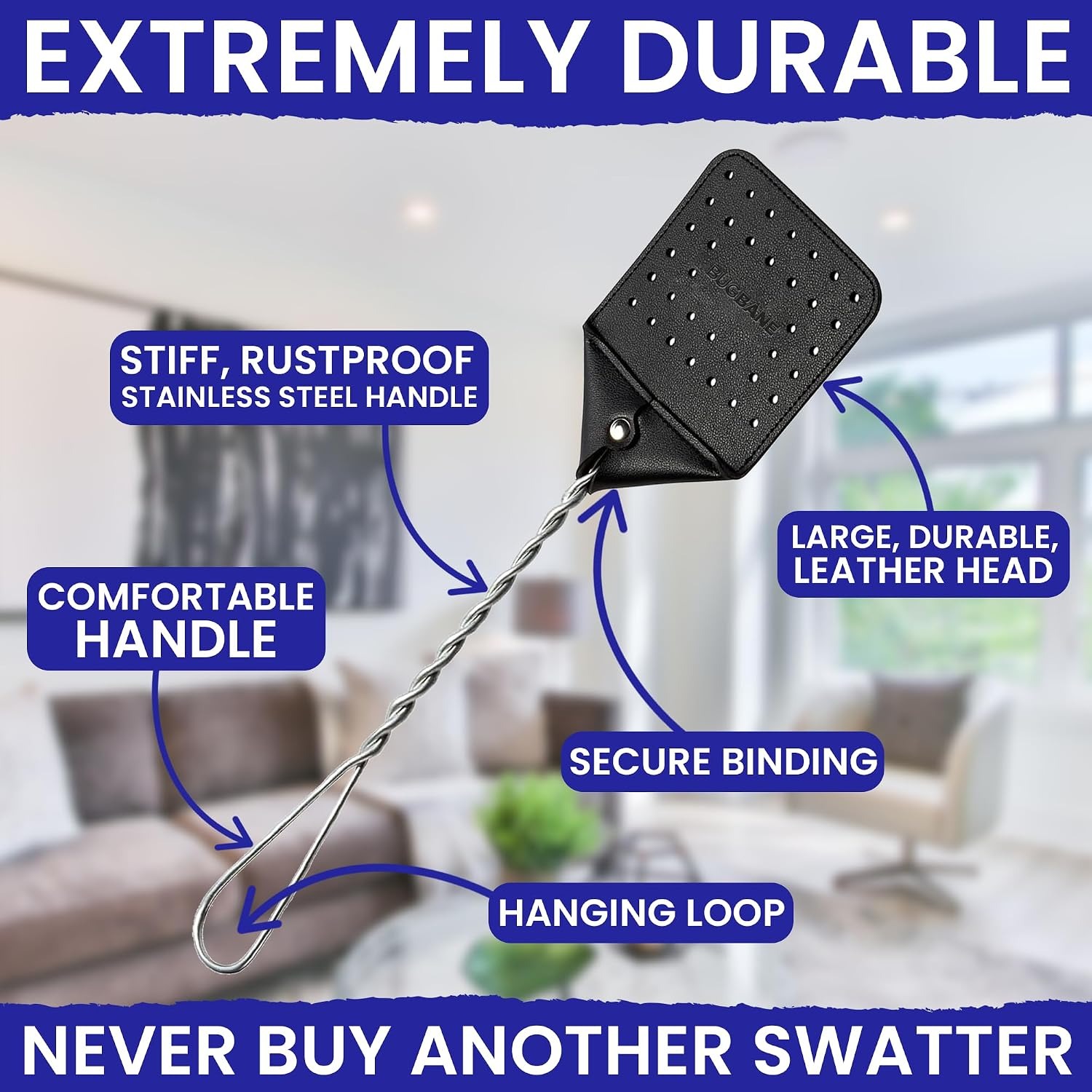
A leather fly swatter solves both of those at once. The head has give, so it conforms to whatever it hits for the fraction of a second that matters. The steel handle stays straight, so the head arrives square. That is really the entire pitch, and it is a good one.
How a leather and steel swatter actually works
A swat is a tiny physics problem. You need speed at the head, a flat contact, and enough surface area that near enough is good enough.
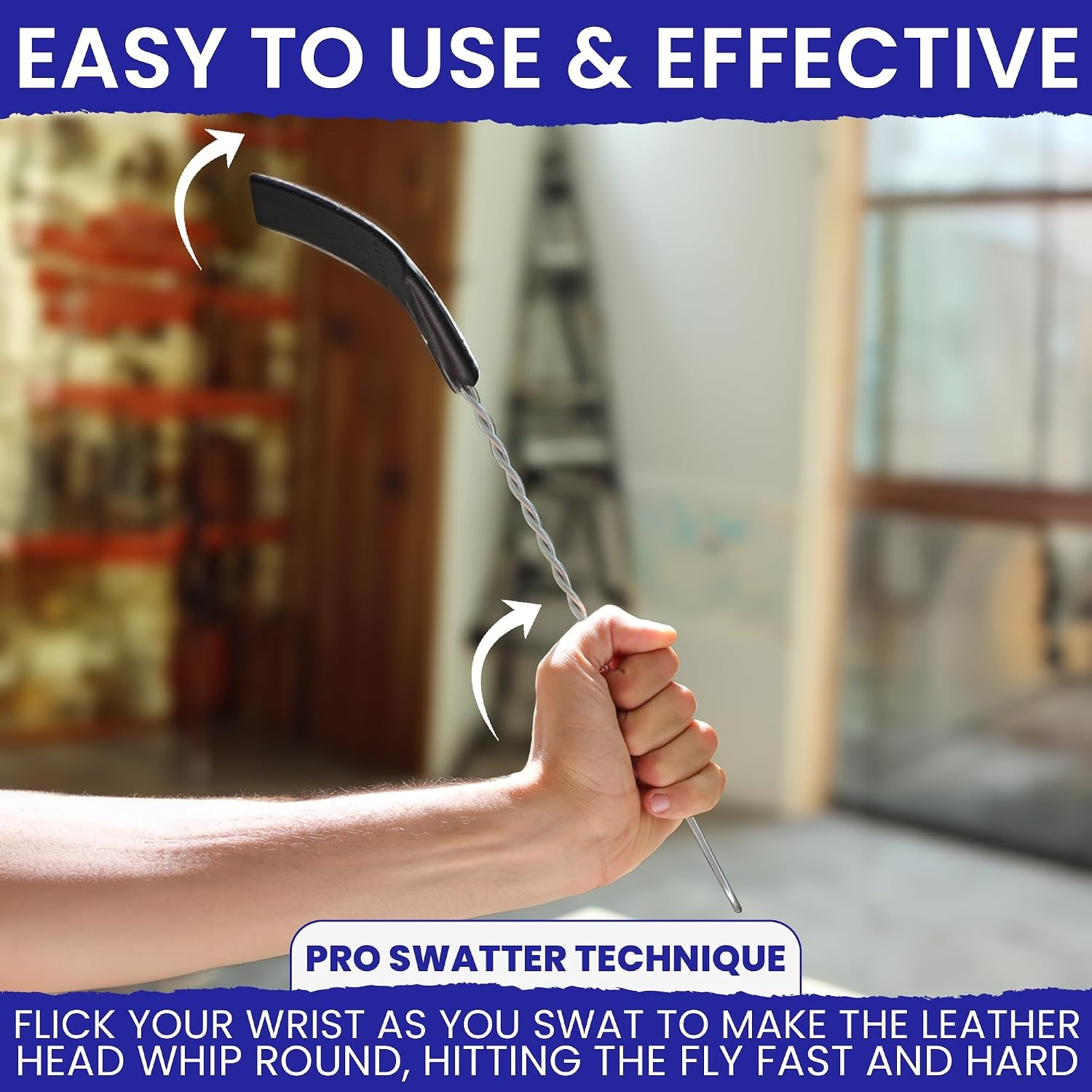
Speed comes from the handle. A stiff stainless steel shaft transfers your wrist snap straight to the head. A floppy wire handle eats some of that energy and lags behind, which is why a cheap swatter so often arrives late. With a rigid handle, where you point is where it lands.
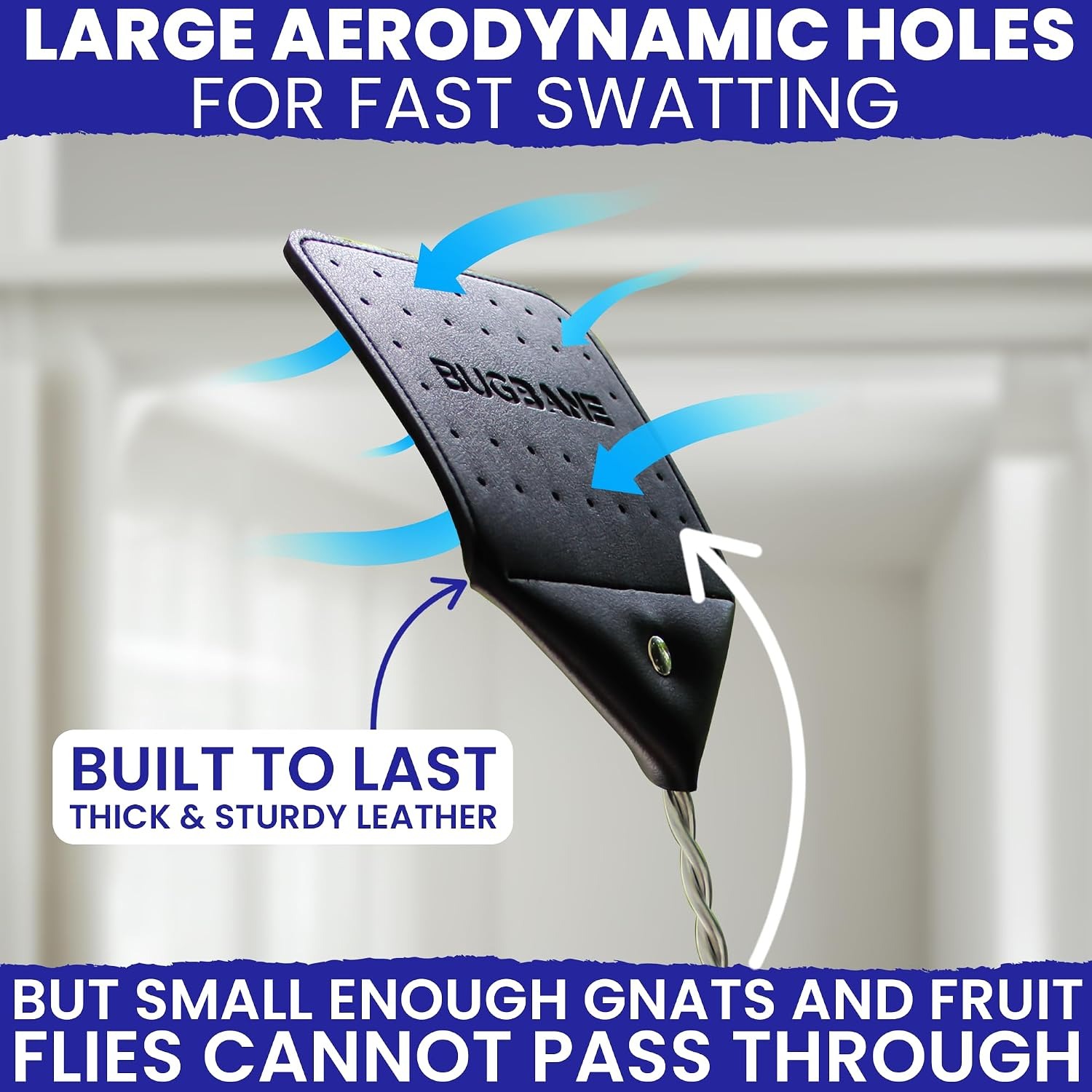
Flat contact comes from the head material. Rigid plastic touches a surface at whatever angle you happened to swing at, so on an uneven wall only part of the paddle makes contact. Leather bends around the surface on impact, spreading pressure across the whole face. That is why it works on glass, wood, tile and paint without the skid.
Surface area is the forgiving part. At 4.5 inches wide, the head covers a decent patch, so you do not need to be surgically accurate. Aim slightly ahead of the insect rather than directly at it, because most flies lift off backwards and upwards.
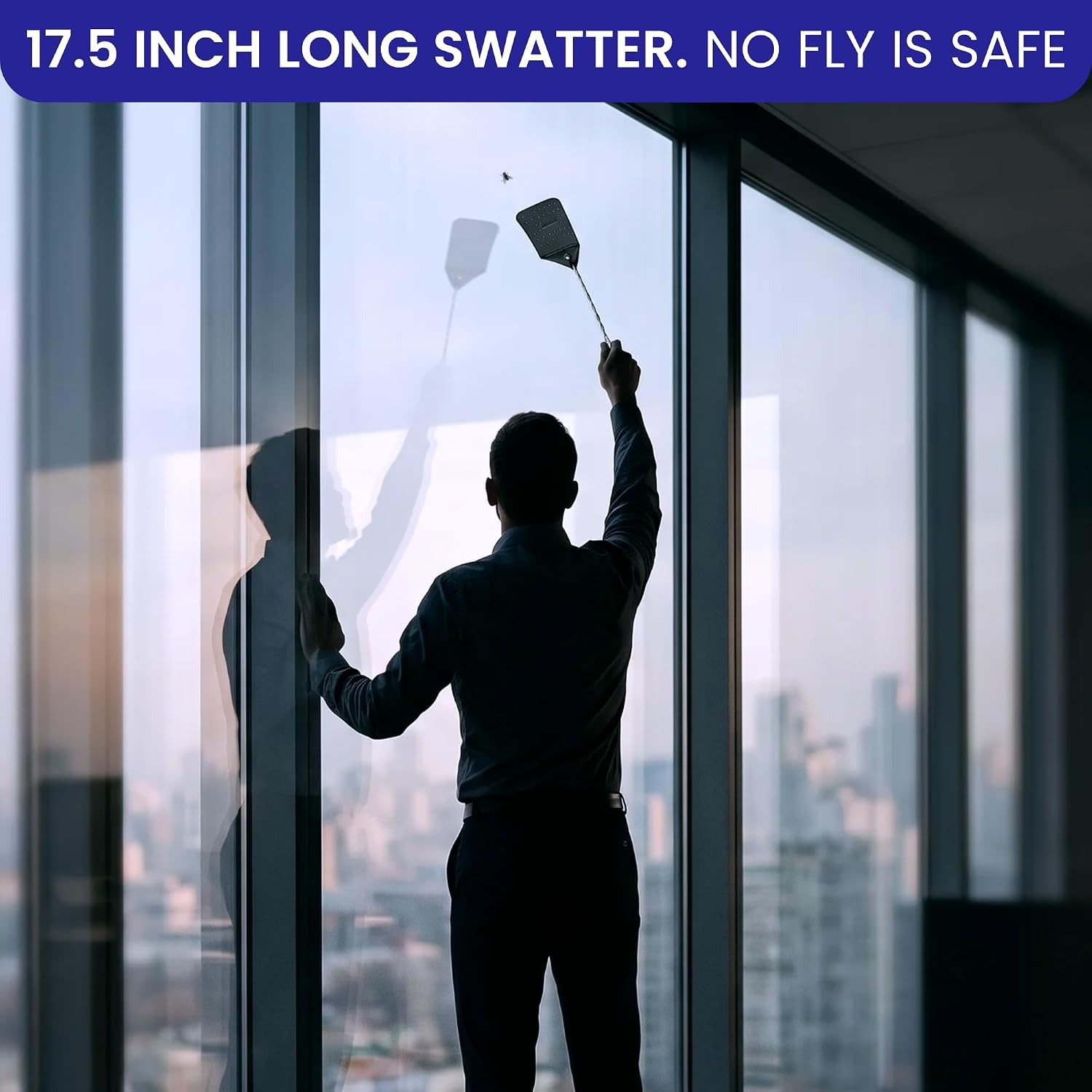
Length does the rest. Seventeen and a half inches is long enough to reach a ceiling corner, the top of a window frame, or the gap behind a bin, all without dragging a chair over. It also lets you start the swing further away, so the fly commits to sitting still for longer.
Who this set suits
If you cook, you want one. Kitchens are fly magnets because of fruit, bins and open windows, and a kitchen fly swatter that can be used safely on a worktop and a tiled wall is worth more than a spray.
Caravan and boat owners get a lot from this too, because space is tight, chemicals are unpleasant in a small cabin, and the hanging loop means it can live on a hook rather than take up a drawer.
Anyone with a patio, a barbecue or a washing line will appreciate having a second swatter that lives outside. That is the real reason for a two pack. A swatter two rooms away is a swatter you do not have.
Stables, workshops, garden offices, conservatories and pet areas all qualify as well. These are places where flies gather and where you would rather not spray anything. A manual fly killer has no residue, no smell and no cost per use.
It is less ideal if you want something to live in a handbag, or if your main problem is a swarm rather than the occasional visitor. For a swarm you want traps and prevention first, with the swatter as cleanup.
How to choose between the options
Material of the head. Thin plastic is cheapest and fails first. Mesh plastic is slightly better because air passes through, but the fold line is still the weak point. Leather is the quiet upgrade, both for durability and for surface friendliness.
Handle stiffness and material. Pick up a swatter and flex the handle. If it bends easily in your hand, it will bend mid-swing. Stainless steel is the practical answer because it stays rigid and resists rust, which matters for anything that lives outdoors.
Length. Short swatters are fine for a desk. For a home, longer wins. Seventeen to eighteen inches is a sweet spot, giving ceiling reach without feeling unwieldy in a small kitchen.
Head width. Wider heads forgive bad aim. Narrower heads are easier in tight gaps. Four to five inches is a sensible middle ground for general household use.
Storage. A hanging loop sounds trivial until you have crushed a swatter head under a rolling pin. Hanging keeps the head flat and dry.
Quantity. One is never enough in a house with more than one door. Two means a permanent indoor one and a permanent outdoor one.
Extras. Sticky window fly traps are a genuinely useful companion. They catch the flies you do not notice, mostly at the window where flies head for the light. Four traps rotated through the summer handle a surprising amount of background traffic.
Using it well
Approach slowly. Flies detect fast movement far better than slow movement, so a steady lift of the arm followed by one quick snap beats a dramatic wind-up.
Swing slightly past the target rather than stopping at it. Decelerating on contact robs the hit of speed.
On delicate surfaces, use a moderate swing. The leather head does not need brute force, it needs contact. A full-power strike on a window is unnecessary and unwise.
Use the length. Standing back and extending gives you both reach and a later detection point for the fly.
For fruit flies around a bowl, a different tactic helps. Swing horizontally through the airspace above the fruit rather than down at the bowl. Pair that with a sticky trap on the nearest sunny pane.
Looking after it
Care here is genuinely simple, which is part of the appeal.
Wipe the leather head with a damp cloth after a session and dry it before you hang it. Residue left on leather eventually hardens and attracts more interest from insects, which is ironic and avoidable.
The stainless steel handle can be wiped or rinsed under a tap. Dry it rather than leaving it dripping on a hook.
Do not soak the leather and do not put either swatter in a dishwasher. Heat and prolonged water are what dry out and stiffen leather.
Hang it by the loop. Flat storage against a wall keeps the head true. If you store one outdoors, pick a spot under cover.
For the sticky traps, place them on a window pane that gets light, high enough to be away from hands and pets. Replace them when the surface is covered or dusty. They are not reusable.
The short version
A fly swatter is one of those tools where spending slightly more once is cheaper than replacing a cracked plastic one every summer. The combination that matters is a soft head and a stiff handle, because the head decides what surfaces you can use it on and the handle decides whether you actually hit anything.
This set gives you both, twice over, at 17.5 inches with hanging loops, plus four sticky window traps to work in the background. Keep one swatter inside, one outside, a trap on the kitchen window, and the buzzing stops being a daily annoyance.