
The complete guide
How to Choose an Electric Fly Swatter That Actually Clears a Room
The problem with one mosquito
A single mosquito in a bedroom can cost you an hour of sleep. You hear it, you turn on the light, it vanishes. You turn the light off and it comes back. The frustrating part is that you are not fighting an infestation. You are fighting one insect that happens to be better at hiding than you are at finding it.
Outdoors it is a different shape of problem. On a warm evening you are not dealing with one mosquito, you are dealing with a steady supply of them. Swatting works, but you spend the night swatting instead of eating dinner or talking to people.
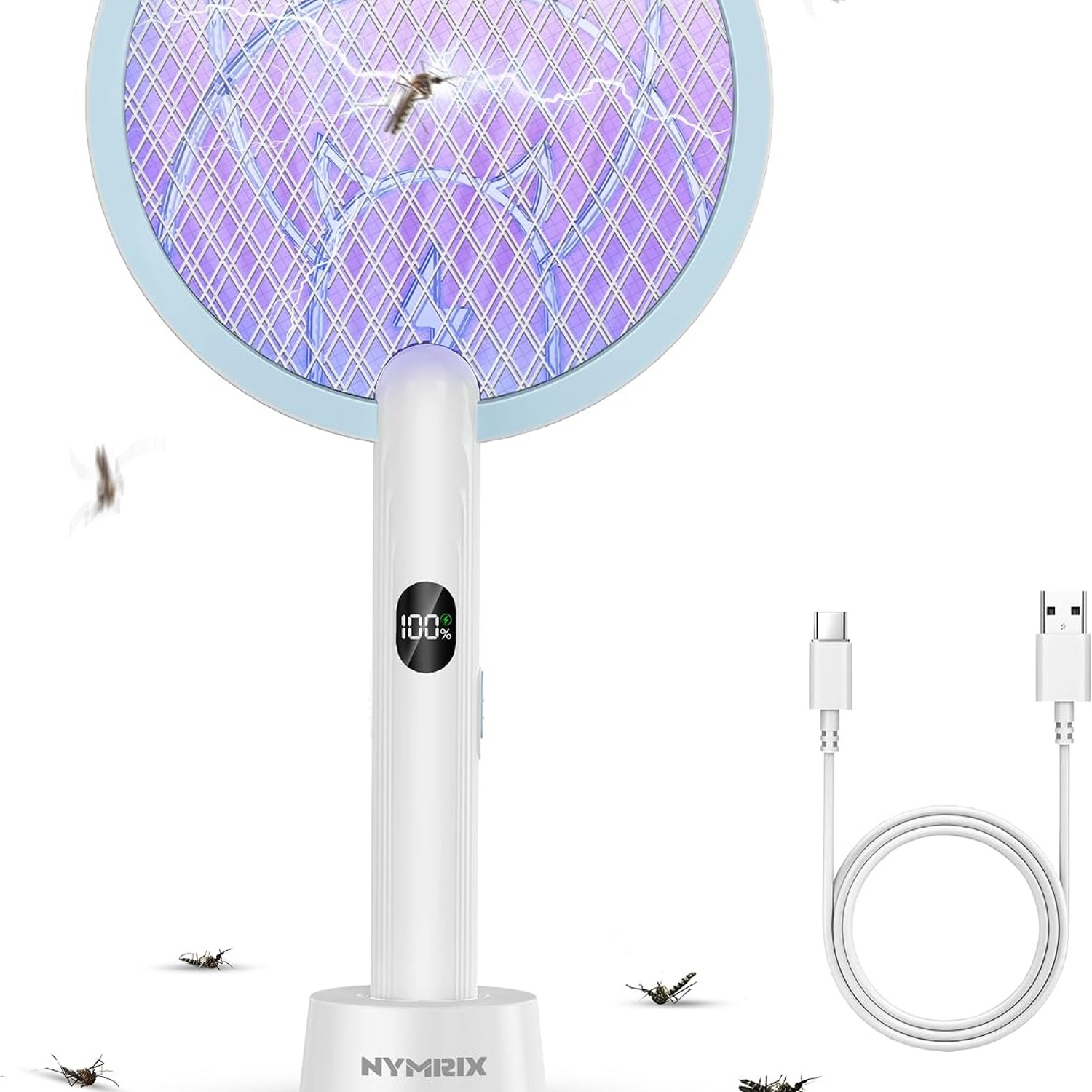
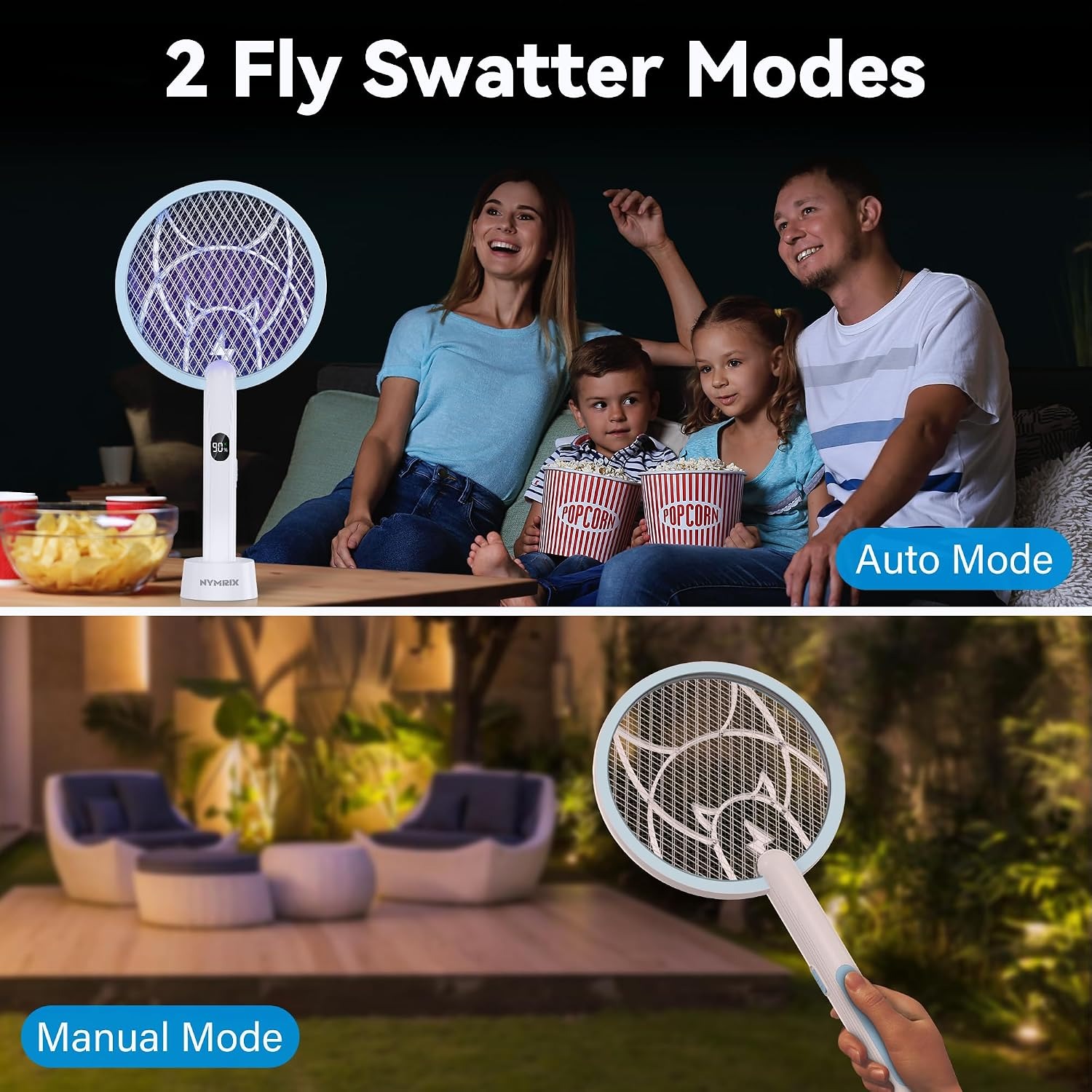
Those two problems need two different answers, and that is the thinking behind a dual mode racket. Manual mode is for the mosquito you can see. Auto mode is for the ones that keep arriving.
How an electric fly swatter works
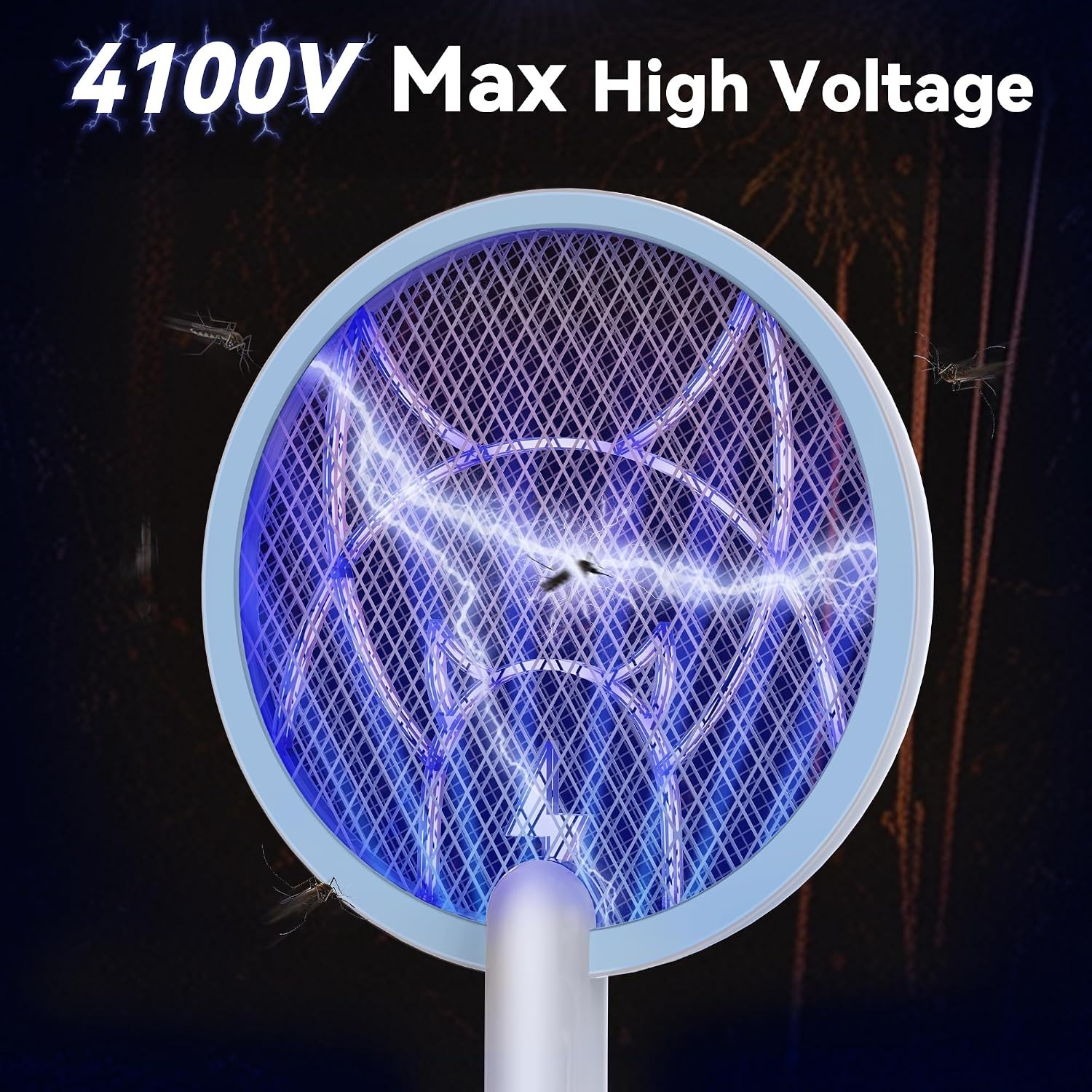
The racket head holds a metal mesh grid. When you press the button, a small circuit steps the battery voltage up to a much higher figure. On this model the maximum is 4100 volts. That number sounds alarming until you understand the second half of it, which is that the current is tiny. High voltage with almost no current is what lets the grid drop an insect instantly while remaining survivable for a person who makes a mistake.
Contact is what triggers it. An insect flying into the charged mesh bridges the gap, the charge passes through, and that is the end of it. There is a snap and a small flash. Nothing is sprayed, nothing is left behind on your worktop.
Auto mode uses a different approach entirely. Instead of waiting for you to aim, the racket sits upright on its base and switches on a purple light. Many flying insects, mosquitoes and gnats among them, are drawn to light in that part of the spectrum. They fly toward the glow, meet the grid, and the racket handles it. You do not have to be awake or even in the room.
Why rechargeable matters
Older swatters ran on AA batteries. They worked, right up until they did not, and then you were hunting through a drawer at eleven at night. Worse, the voltage from a pair of tired AAs sags, so the grid gets weaker as the batteries drain and you start needing two or three passes per insect.
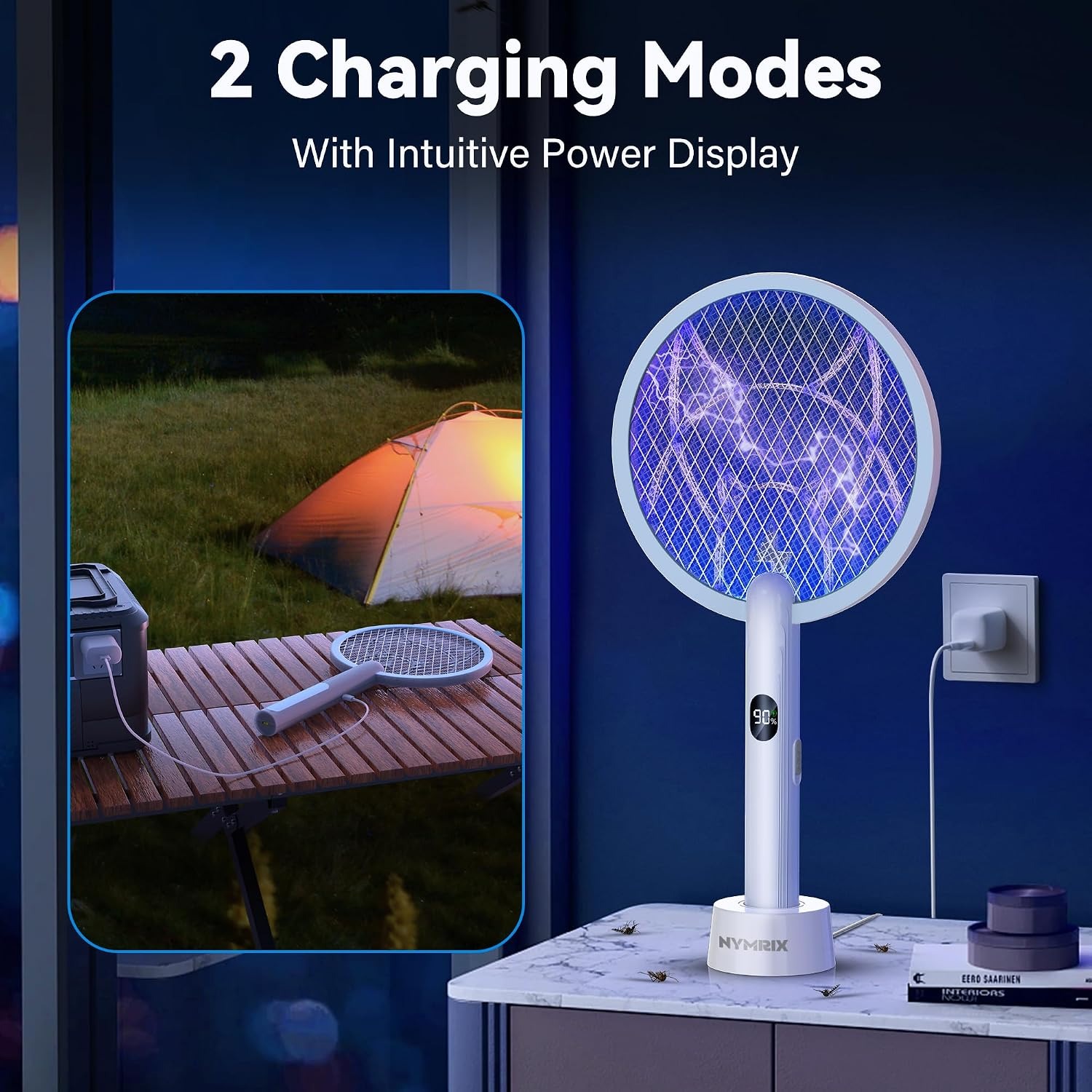
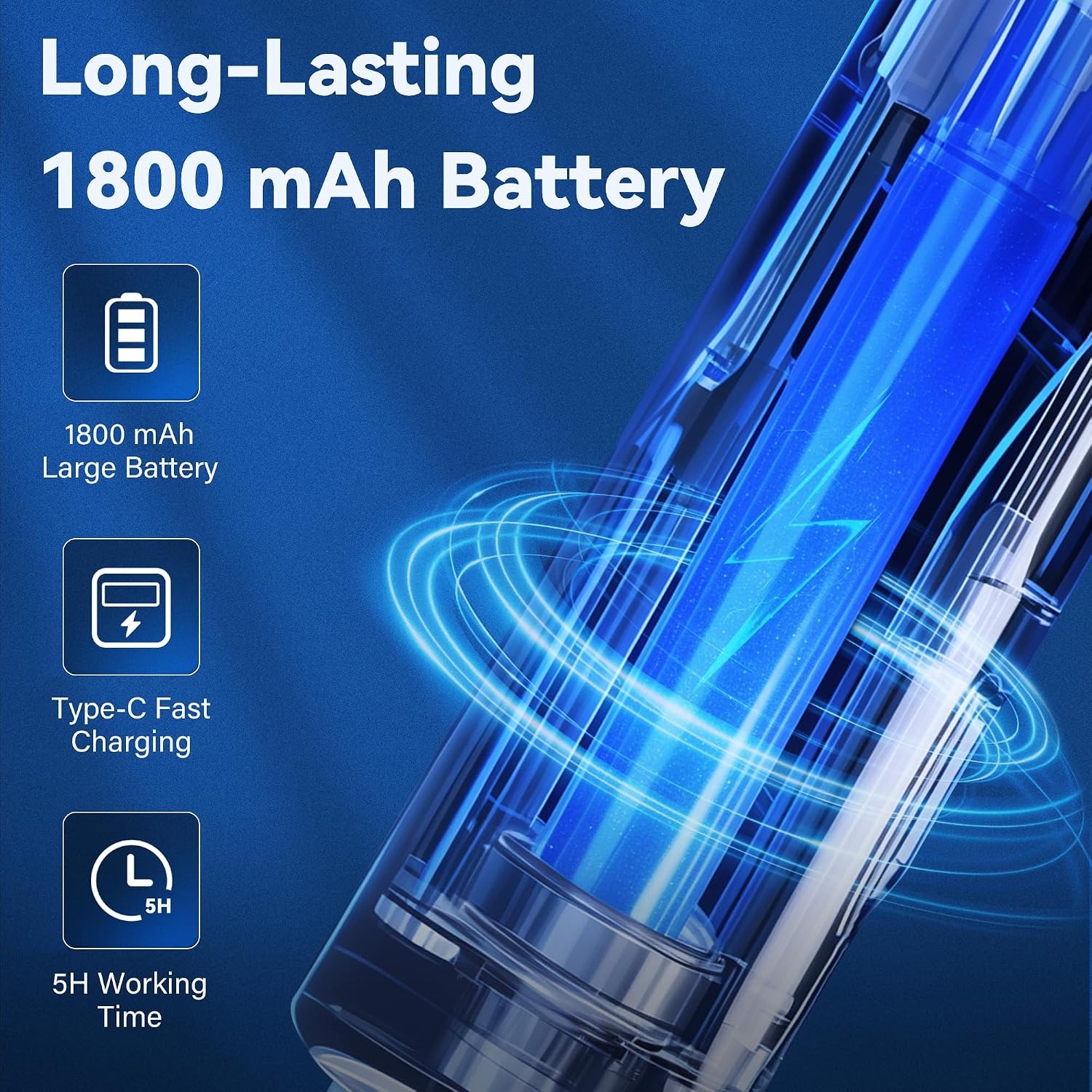
This racket uses an 1800 mAh rechargeable cell and charges over USB-C. That is the same connector as most modern phones, tablets and power banks, so you probably already own three cables that fit. There are two ports, one on the base and one on the handle, so wherever the racket happens to be parked, you can plug it in.
The battery level display on the handle is a small feature that makes a real difference. You can glance at it before heading outside and know whether you have enough charge for the evening. No more discovering the problem mid-swing.
Who this suits
If you live anywhere humid, or anywhere with standing water nearby, you already know why you need something. Coastal towns, river suburbs, anywhere tropical, anywhere with a pond down the road. Mosquito season is not a weekend, it is months.
Kitchens are the other common case. Fruit flies breed fast around a bowl of bananas or a bin that has not been emptied. Manual mode is useful for fruit flies because you can sweep the racket slowly through the air where they hover, and auto mode left on the bench overnight will thin them out while you sleep. People looking for a fruit fly killer often end up here because sprays near food are unappealing.
Campers and caravanners are a natural fit too. The whole thing weighs around 300 g, charges off a power bank, and auto mode works in a tent or an annexe. The product's listed recommended uses are indoor and camping, which matches how most owners describe it.
Anyone who dislikes chemical solutions will find the appeal obvious. There are no coils to burn, no plug-in liquids, no aerosol drifting across the dinner table. The only input is electricity.
How to choose between models
Voltage is the headline number, but it is not the only one that matters. Anything in the thousands of volts will handle a mosquito. Where cheaper rackets fall down is the battery and the build.
Look at battery capacity. A larger cell holds its voltage better across a session, which means consistent performance rather than a strong first ten minutes. Look at the charging connector. USB-C is worth paying for simply because you will never be hunting for the right cable.
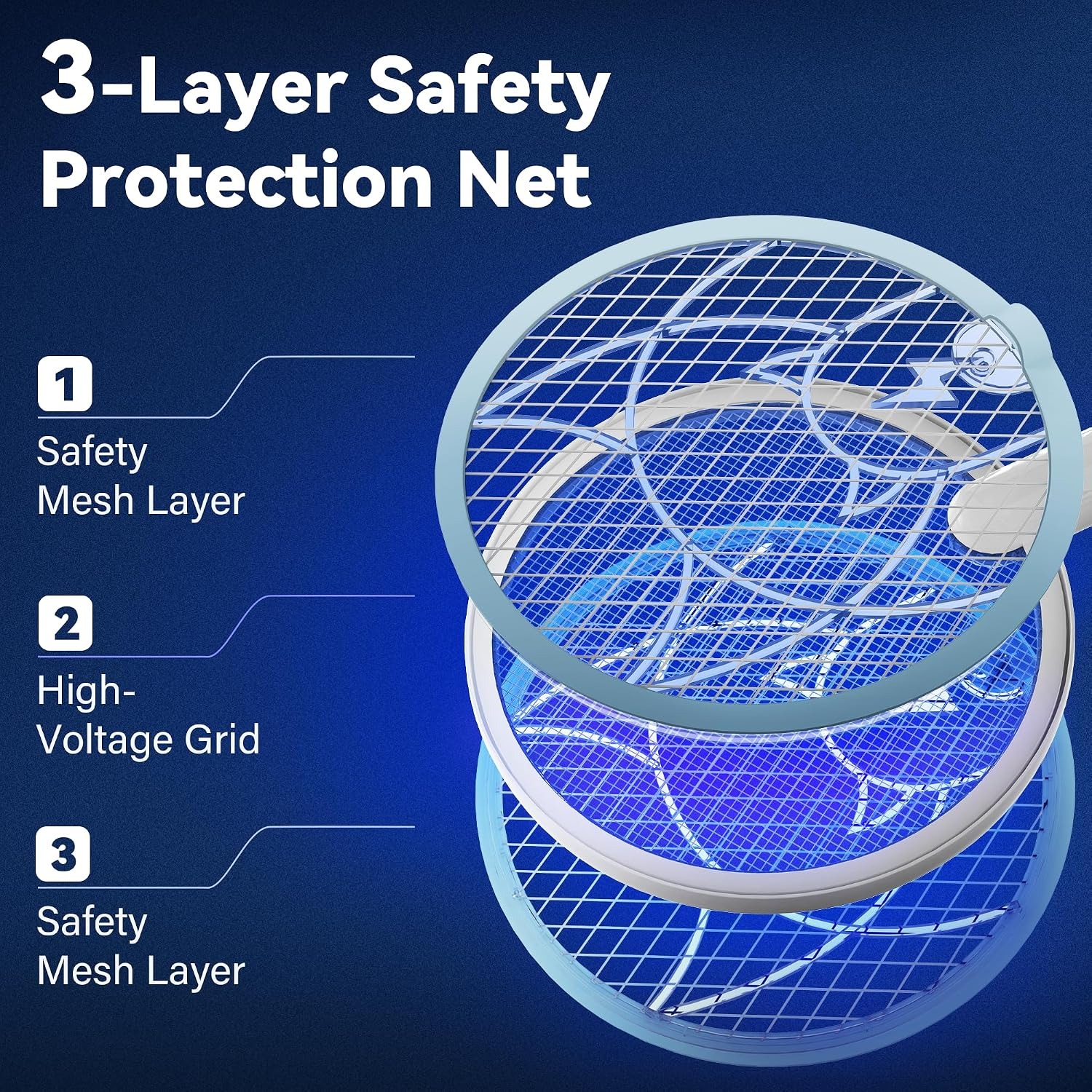
Check the mesh layers. A single-layer grid is the cheapest to make and the easiest to touch by accident. Three layers, with two outer guard meshes and a live inner grid, is the arrangement you want. It means a fingertip or a pet's nose meets a dead surface instead of a live one.
Then ask whether the racket does anything when you put it down. Most do not. A model with a lure base keeps working overnight, which more than doubles how useful it is. If you are comparing a plain handheld bug zapper against a dual-mode one at similar money, the dual-mode version is the better buy almost every time.
Finally, weight and handle. Anything much heavier than this gets tiring after a few minutes of waving. A textured, non-slip grip matters more than it sounds, especially with damp hands on a humid night.
Looking after it
Care is minimal but not zero. Switch the racket off before you clean it and give the grid a moment to discharge. There can be residual charge on the mesh immediately after use, which is worth respecting.
Brush or shake the dead insects out. A small dry brush, the sort you would use on a keyboard, is ideal. Letting bodies build up on the grid reduces how well it conducts, so a quick clean every week or two in peak season keeps it performing.
Wipe the frame and handle with a cloth that is barely damp, then dry it fully before charging. Never rinse it, never submerge it, never put it anywhere near a sink full of water. It has a battery and a circuit board inside.
Store it indoors and out of direct sunlight. If you pack it away at the end of summer, charge it part way first and top it up every few months. Lithium cells dislike sitting flat for long stretches, and a little attention over winter means it is ready when the weather turns.
The short version
This is a rechargeable electric fly swatter with a second job. Hold the button and swing, and the 4100 volt grid deals with whatever you connect with. Put it on its base, switch to auto, and the purple light brings insects to the grid while you sleep or eat or read.
The 1800 mAh battery charges over USB-C from either the base or the handle, and the handle display tells you where you stand. Three mesh layers guard the live grid. At 300 g it travels easily and lives happily on a shelf by the back door.
If your evenings are currently being interrupted by something small and persistent, this is the practical fix. No chemicals, no refills, no disposable batteries. Just a charge and a flat surface to put it on.