
The complete guide
How To Choose And Use A Fly Swatter That Actually Works
The real problem is not the fly, it is the distance
Everyone has done the same routine. A fly lands on the bread, you reach for something, and by the time you have found a rolled-up magazine the fly has moved to the window, then the light fitting, then the bread again. The fly is not especially clever. It just has the advantage of being in the room while your swatter is in a drawer two rooms away.
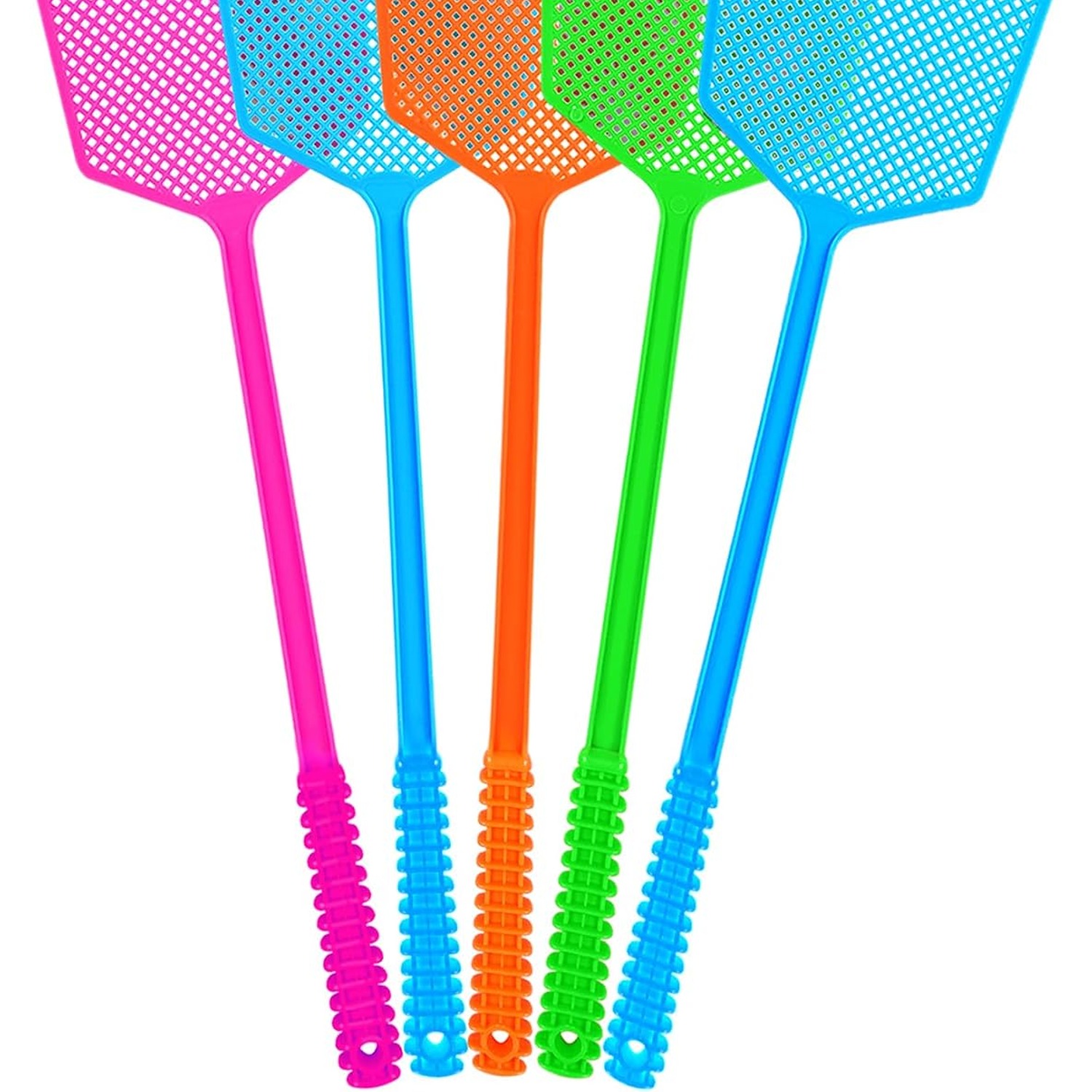
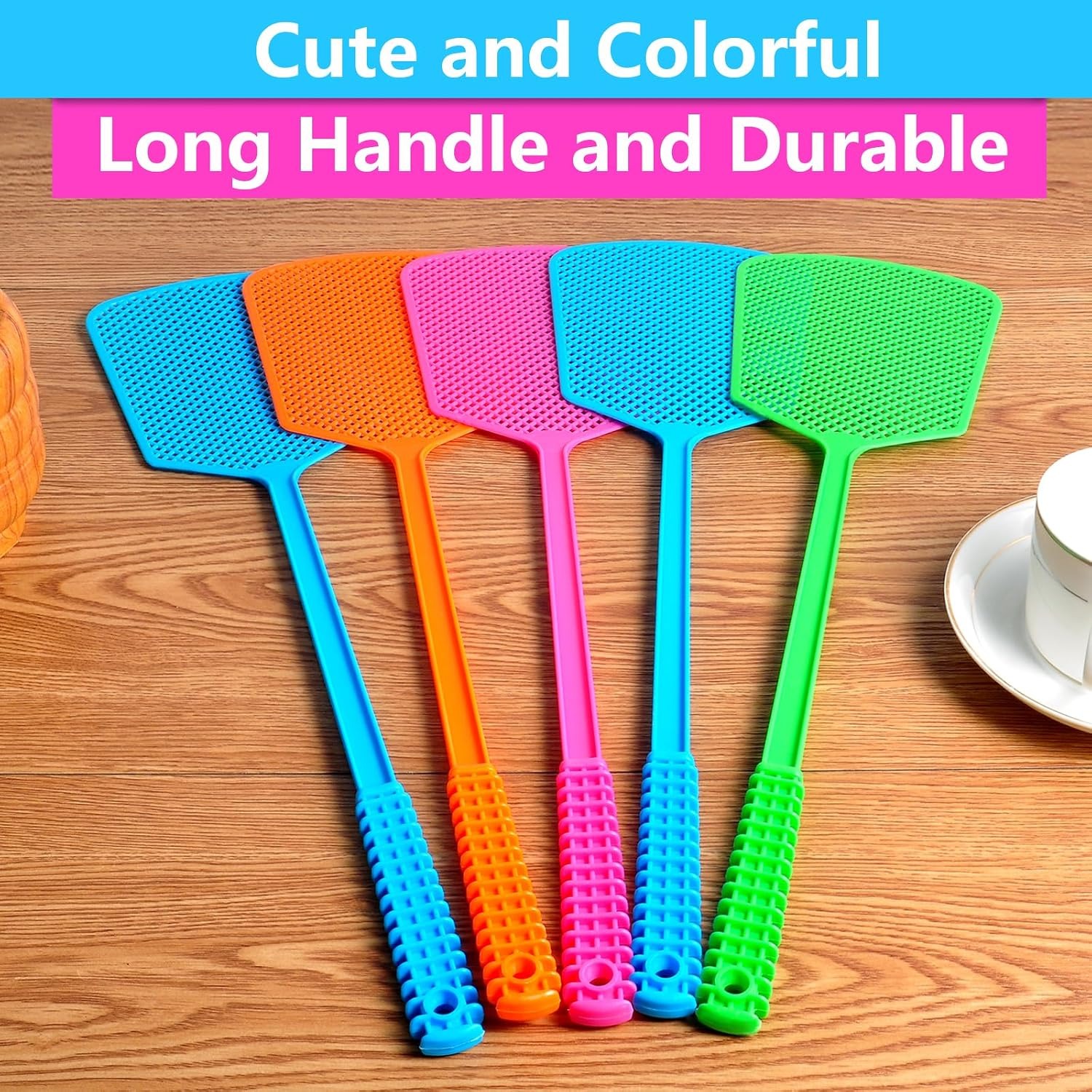
That is why a single swatter rarely solves the problem. One swatter means one location, and flies do not stay in one location. They follow food, warmth, bins, pets and open doors. If you want to actually reduce the number of flies in your house, the fix is less about the tool and more about where the tool lives. A plastic fly swatter 5 pack is a cheap way to make sure the tool is always within two steps.
How a mesh swatter works
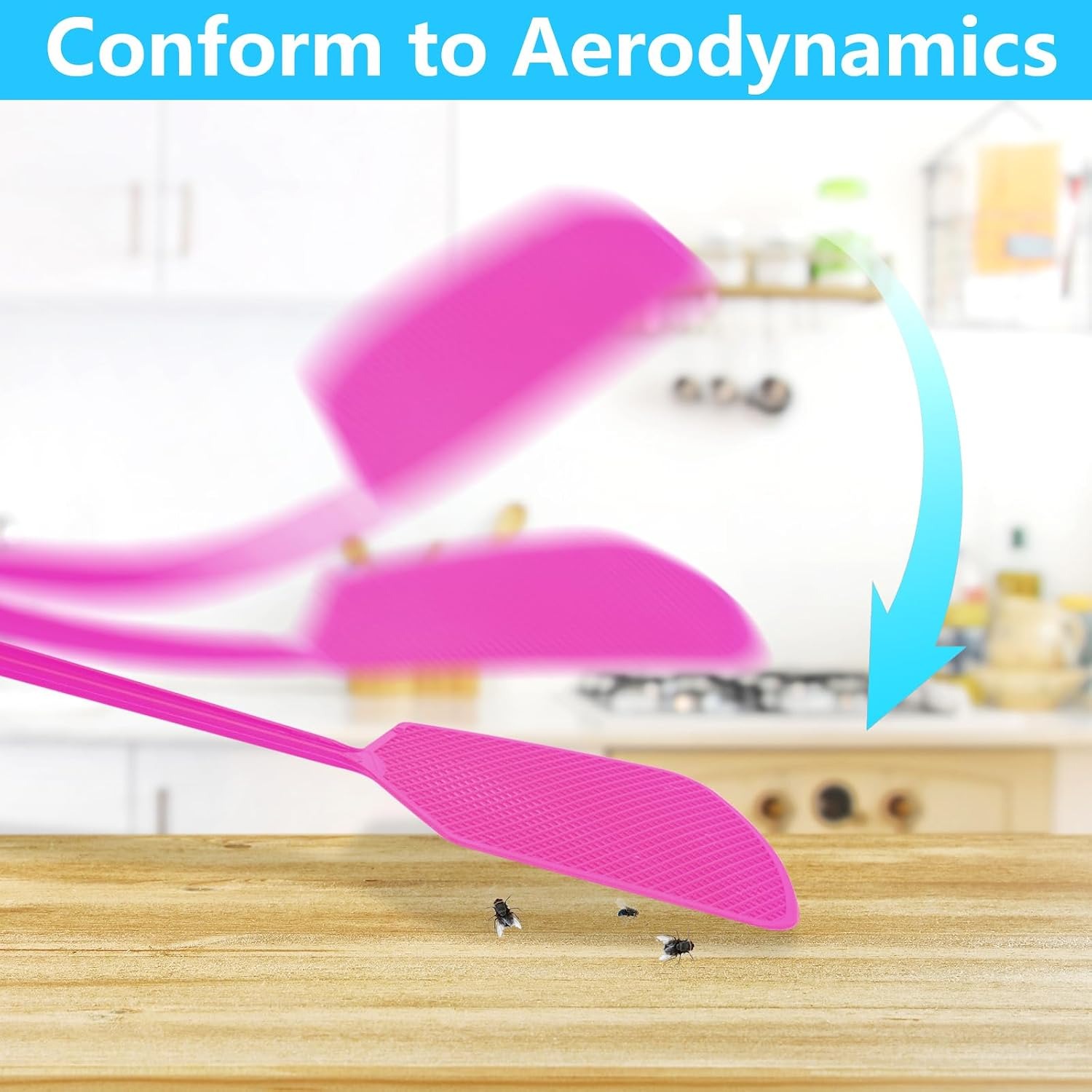
A fly's eyes are built to detect sudden changes in light and shadow, and its legs are quick. But what usually gives a swatter away is not the shadow, it is the air. Swing a solid paddle and you push a pocket of air ahead of it. The fly feels that pressure wave through fine hairs on its body and takes off before the paddle lands.
A mesh head changes the maths. Air passes through the holes instead of piling up in front, so the warning is weaker and the swing is faster for the same effort. The denser the grid, the more surface you have to make contact with, which is why a tight mesh beats a loose, floppy net. The head on these swatters is a dense plastic mesh, which keeps the strike surface firm without needing a heavy frame.
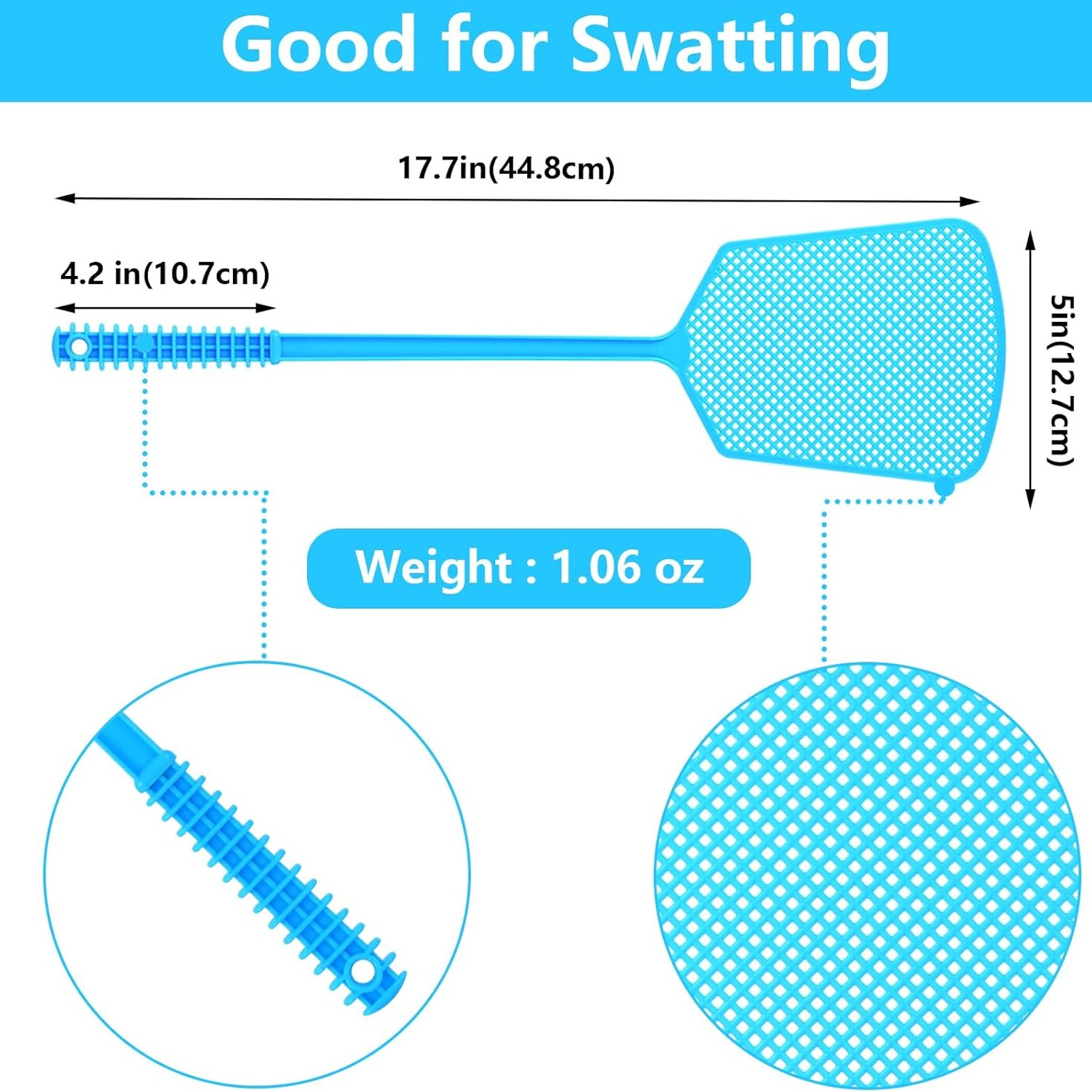
The handle matters just as much. A handle that bends and stays bent robs the swing of speed, because the head lags behind your hand. A reinforced handle flexes a little and snaps back, which adds a bit of whip to the tip. At 17 inches, there is enough length to get that whip without the swatter feeling unwieldy.
Who this kind of swatter suits
Households with kids are a good fit. There is no grid, no battery and no charging base, so a swatter can be left hanging by the back door without anyone worrying about it. Handing a child a plastic fly swat for the patio is a very different proposition from handing them an electric racket.
Anyone with an outdoor eating area will get their money's worth. Barbecues, picnic tables, verandas and pool areas are fly magnets, and the long handle means you can clear the table without hovering over the food. Caravan and camping users like them for the same reason, plus they weigh almost nothing and need no power at all.
They also suit people who have simply got tired of losing their only swatter. If you have ever bought a fly swatter twice in one summer because the first one vanished, a five pack solves that in one go.
What to look for when you compare swatters
Length. Short swatters force you to get close, which is fine for a wall but awkward over a plate of food. Something around 17 inches gives you reach to a ceiling corner or across a dining table while staying easy to control.
Head construction. Look for a dense grid rather than a loose, wide-hole net. Wide holes let small insects slip through, and a floppy head wraps instead of striking. A half-inch slim profile also means the swatter stores flat.
Handle rigidity. Pick it up and give it a gentle flex. You want it to spring back, not stay bent. A handle that has gone soft after one season is a swatter you will replace.
Material. Plastic throughout is gentler on your walls, windowsills and benchtops than a metal-rod handle. It is also easier to rinse clean and will not rust if you leave it outside after a shower of rain.
Storage. A hanging hole sounds like a small thing, but it is the feature that keeps a swatter usable. Hung up, the head stays flat and the swatter stays visible. Shoved in a drawer, the head takes a set and you forget it is there.
Quantity. One swatter solves one room. Think about how many doorways and food areas your home has and buy accordingly.
Getting a better hit rate
Approach slowly. A fly reacts to fast changes in its field of view, so a creeping swatter is far less alarming than a sudden lunge. Bring the head into position from a low angle rather than straight down from above, since a fly's escape reflex is to launch backwards and upward.
Aim slightly ahead of where the fly is sitting. Most flies jump before they fly, and that jump goes roughly in the direction they are facing. Hitting the patch of bench just in front of them catches more than hitting the fly itself.
Windows are your best friend. Flies drift towards light, so even if you miss three times in the kitchen, the fly will usually end up on the glass where there is nowhere left to hide. Swing flat and controlled there, with less force than you would use on a wall.
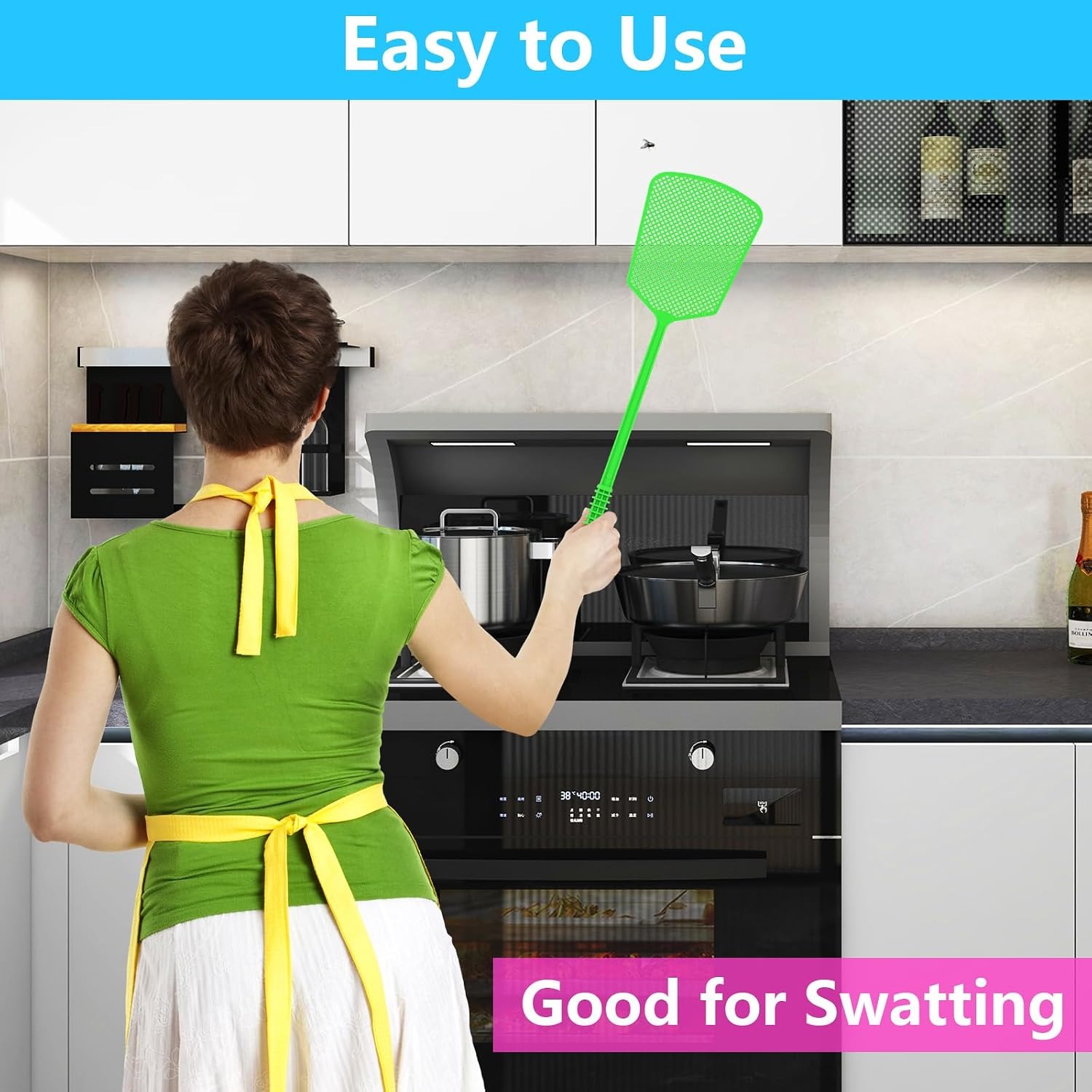
Keep your distance from food. This is the practical reason to want a long handle. If a fly has landed on the salad bowl, you do not want your hand, or the point of impact, anywhere near it. Step back, extend, and swing across rather than down.
Keeping them in good shape
Care here is simple, which is part of the appeal. Wipe the head with warm soapy water after any messy hit, rinse, and dry it before it goes back on the hook. Do not put the swatters in a dishwasher, and keep them away from the stovetop, a heater or a hot car dashboard for long stretches, because thin plastic can warp with sustained heat.
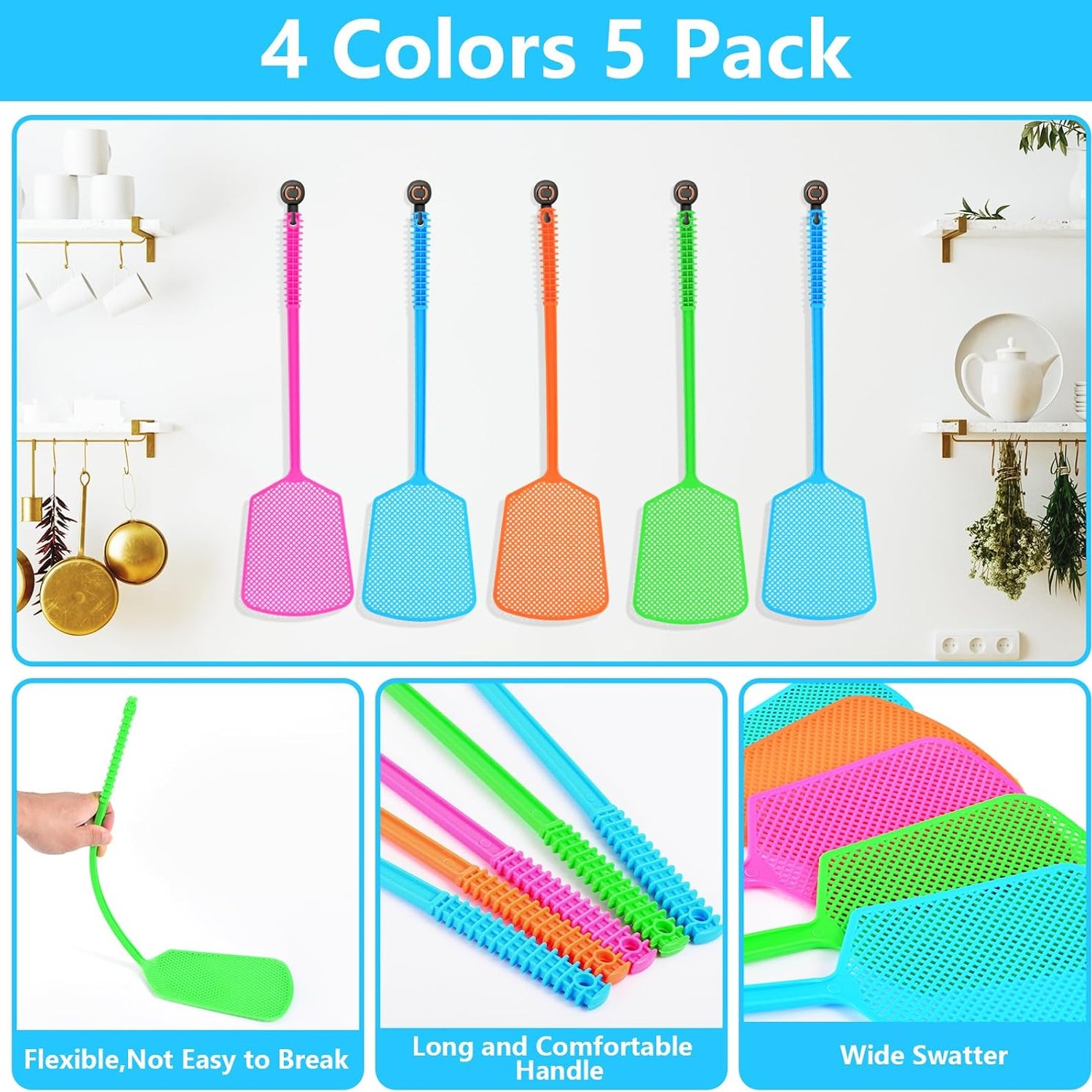
Hanging is the single best habit. Use the hole in the handle and put each swatter on a cup hook or nail in the room where it belongs. That keeps the head flat, keeps the handle straight and keeps the swatter where your hand expects to find it.
If one swatter gets rough treatment over summer, that is exactly why the set comes with five. Retire the tired one to the shed and bring a fresh one inside.
A note on what a swatter cannot do
A swatter handles the fly in front of you. It does not deal with the reason flies keep arriving. If you are seeing a lot of them, check bins, pet bowls, fruit left on the bench, compost buckets and any gaps around doors and windows. Fixing the source cuts the numbers far more than any amount of swatting.
Think of it as the fast response, not the whole plan. Screens and clean bins do the heavy lifting, and the swatter deals with the ones that slip through anyway.
The short version
A good fly swat is cheap, simple and only useful if it is close by. This set gives you five 17 inch plastic swatters with dense mesh heads, reinforced handles and hanging holes, at 0.15 kg each. No batteries, no cords, nothing to charge.
Spread them out so the kitchen, laundry, back door, shed and car each have one. Hang them rather than hiding them in a drawer. Rinse the head when it needs it. Do that and the next fly that lands on your lunch will be a five second problem instead of a ten minute chase.