
The complete guide
How To Choose And Use An Electric Fly Swatter
The problem with a fly in the house
A single fly is one of the few household problems that can take over an entire evening. It lands, you move, it goes. A rolled-up magazine means hitting it against a wall or a bench, which leaves a mark you then have to clean. Spray is worse, because now there is a chemical mist over the kitchen and you still have to find the body.
A handheld bug zapper solves this differently. Instead of needing a hard surface to squash against, you only need to touch the insect in the air. That one change makes the whole job faster, cleaner and far less frustrating.
How these rackets actually work
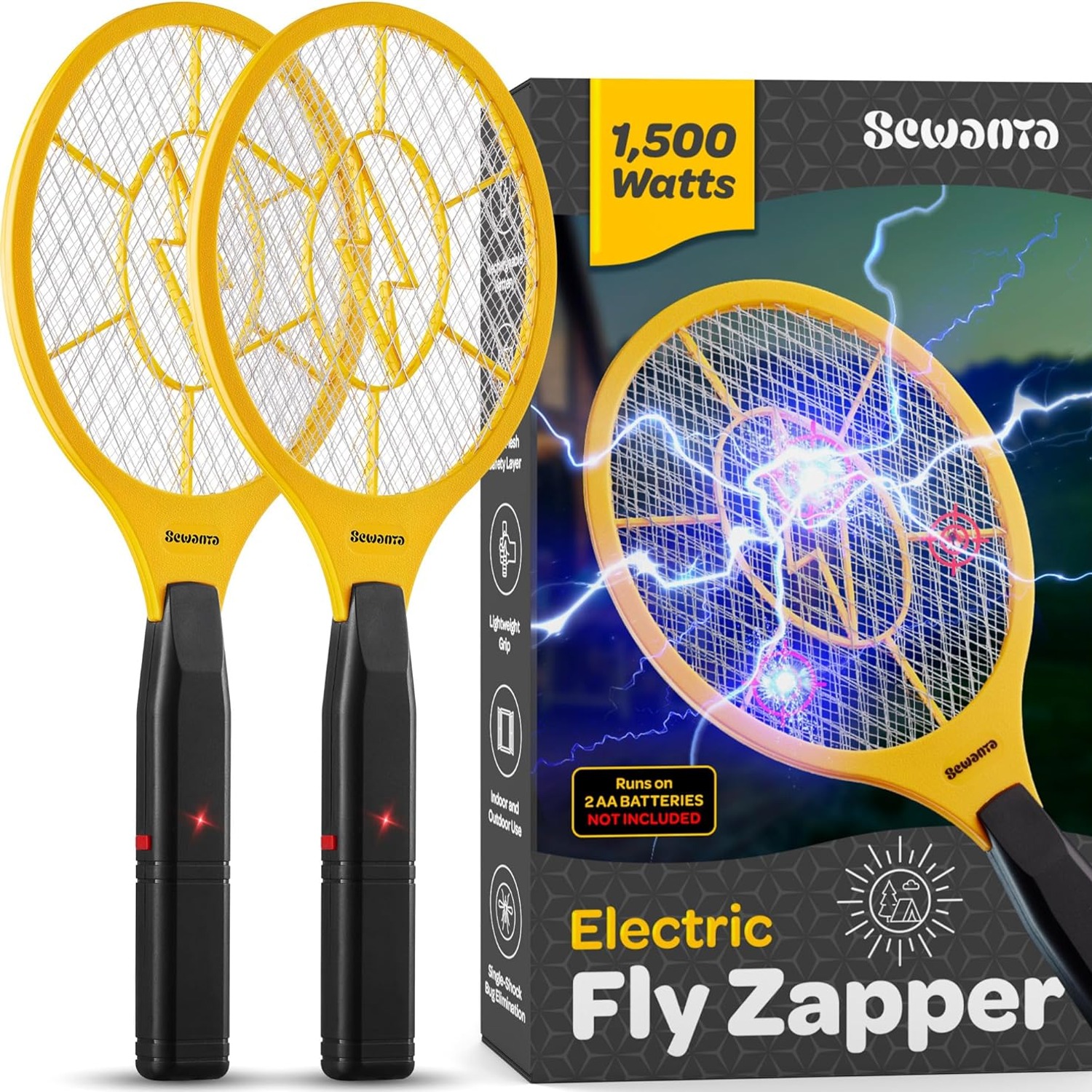
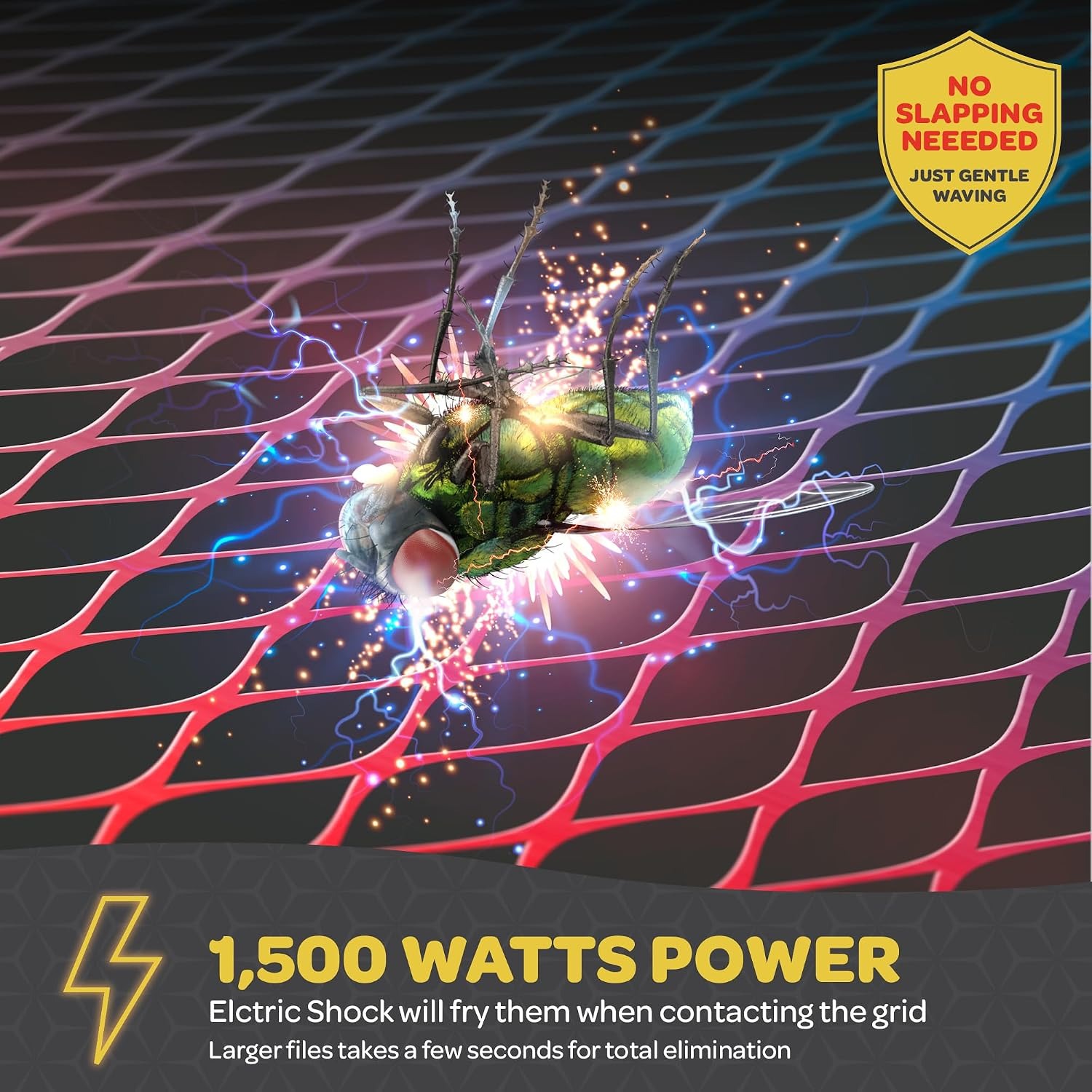
The head of the racket holds three layers of mesh. The middle layer carries the voltage, and the two outer layers sit either side of it as guards. When you press and hold the button on the handle, a circuit charges the centre grid to 1500 volts. An insect touching the grid bridges the gap, the circuit completes, and it is over instantly.
The voltage number sounds alarming, but the current behind it is tiny. It is the same principle as the static shock you get from a car door on a dry day, unpleasant for a second and then gone. What the voltage does is guarantee a clean kill on contact rather than a stunned insect that wakes up later.
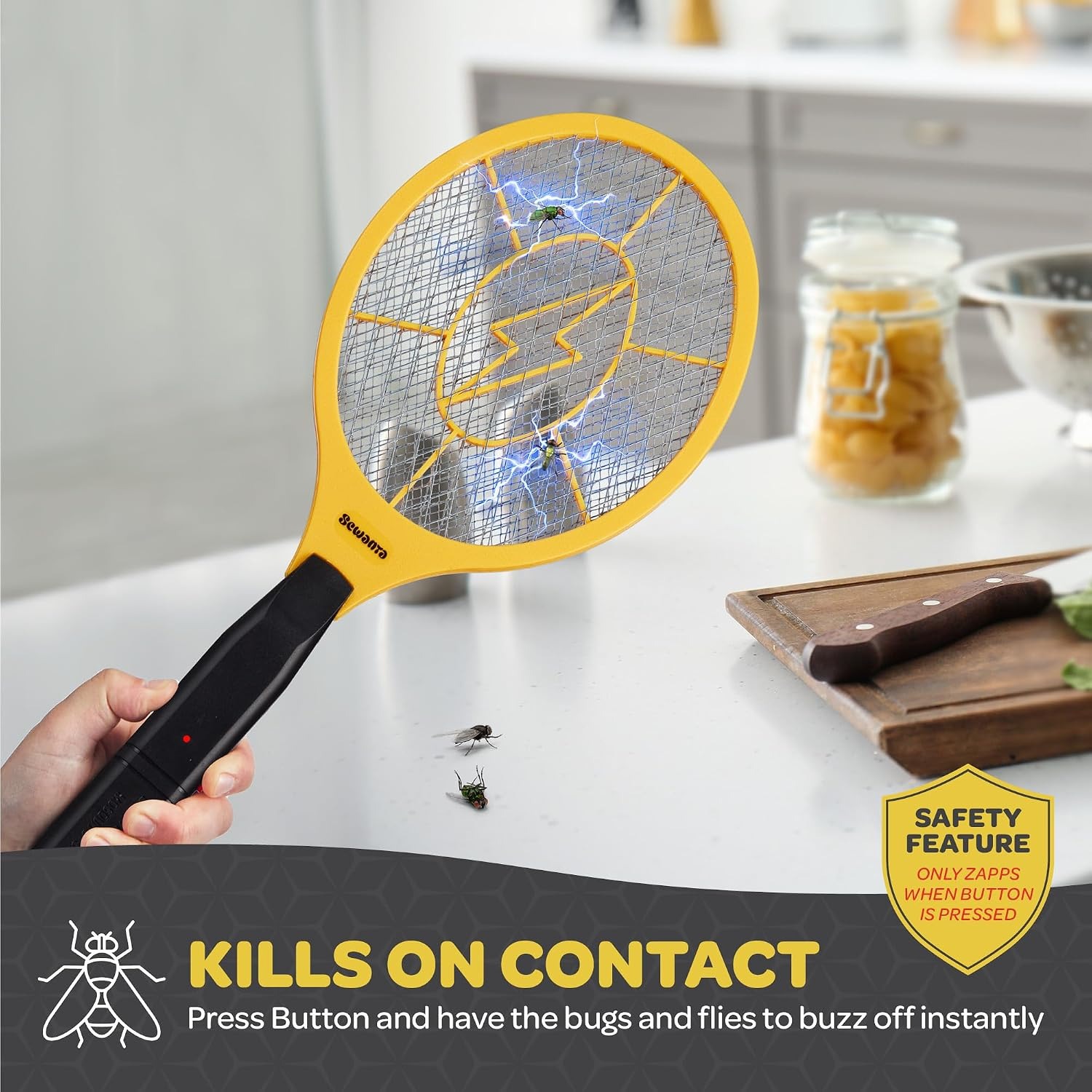
The press-and-hold design matters more than people expect. Some cheap rackets use a latching switch that leaves the grid live until you switch it off, which means the thing is sitting charged on your kitchen bench. Here, letting go of the button cuts the power. If the racket is down, it is dead.
Who this suits
If you have a back door that gets left open, a dog flap, a compost bin near the house or a barbecue area, you will get use out of this. Same for anyone who camps, caravans, keeps a boat or works a market stall.
It is also worth thinking about households that would rather not use spray. Families with young children, people with asthma, anyone preparing food on open benches. A racket leaves nothing behind. There is no residue, no smell and nothing to air out afterwards, which is why a lot of people treat it as the best bug zapper racket option for kitchens specifically.
Mosquito-heavy areas are another obvious fit. Mosquitoes fly slowly and predictably, so they are easy targets for a swung racket. An electric mosquito swatter gets rid of the one that is buzzing around your head at 11pm far faster than chasing it with a pillow.
What to look for when comparing
Mesh layers. Three is what you want. A single-layer grid is cheaper to make but puts the live mesh directly where your fingers go. Two outer guard screens make a real difference in a house where a child might pick it up.
Switch type. Press-and-hold is safer than a latching on/off switch. It also saves battery, because the circuit only draws power while you are actively swinging.
Head size. This set runs 17 inches wide and 6 inches high, which is a sensible middle ground. Bigger heads give you more margin for error on a fast fly but catch on furniture and door frames. Smaller heads are nimbler but you miss more.
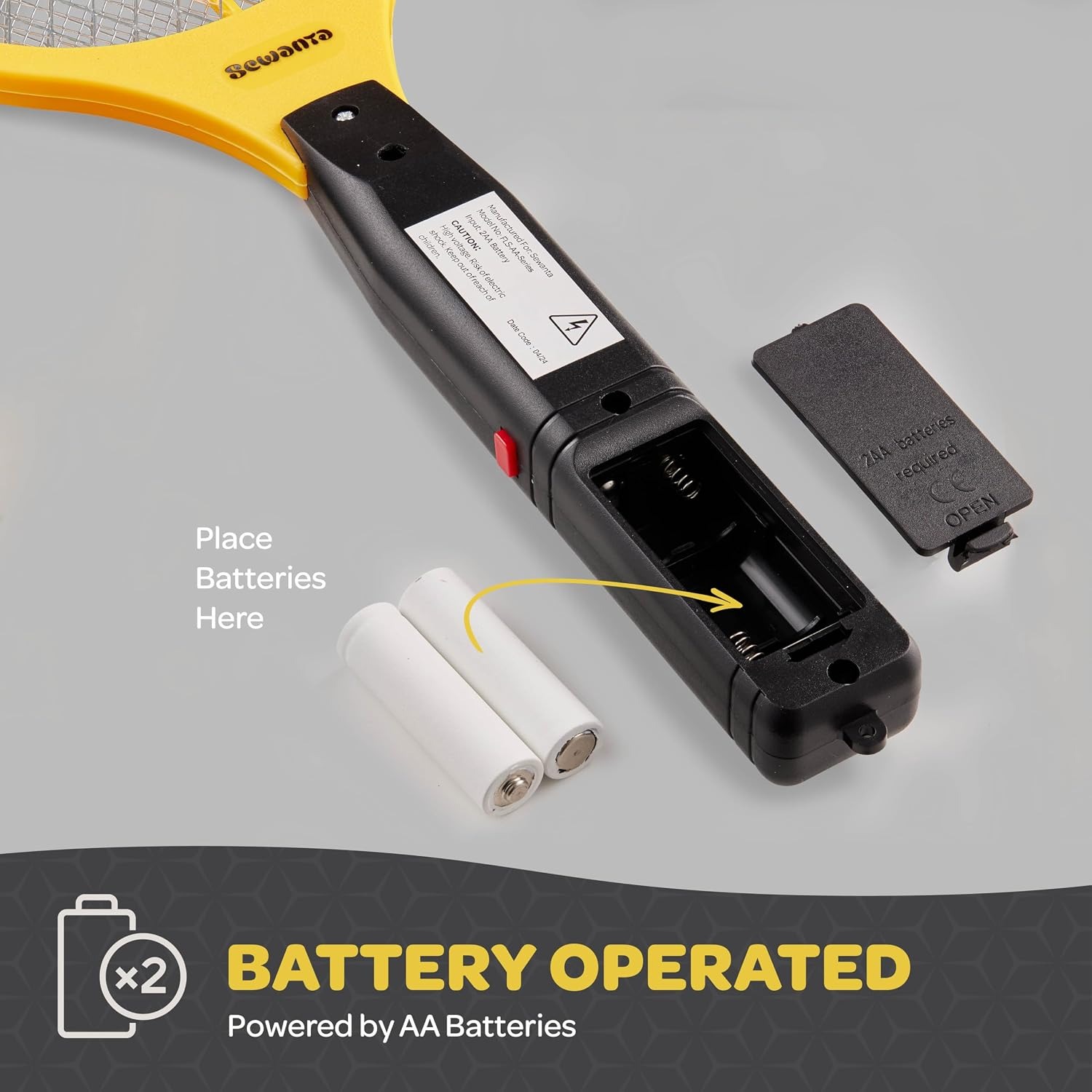
Power source. AA batteries versus rechargeable. A rechargeable racket is tidier day to day, but it needs a charger and it is useless when the battery dies on a camping trip. AA cells mean you can carry spares anywhere, and at up to 10,000 zaps a set, you are not replacing them often. For travel, a battery powered fly swatter wins every time.
Quantity. A single racket always ends up in the wrong room. Two solves that for not much more money.
Getting good at using it
There is a technique and it takes about five minutes to learn.
Hold the button down before you swing, not during. If you press as you swing, you will hit the fly before the grid is live. Charge first, then move.
Aim where the fly is going, not where it is. Flies take off backwards and upward, which means a direct downward swing at a resting fly almost always misses. Sweep through the air just above and behind it instead.
Swing through rather than at. A long, smooth sweep covers more air and gives the grid more chance to make contact than a short jab.
For mosquitoes, slow is better. They do not react quickly. Move the racket calmly through their flight path and you will get them with a lot less flailing than a fly requires.
Against a window, sweep sideways rather than pressing the racket flat on the glass. You want the insect to meet the mesh in open air.
Safety and sensible handling
Do not touch the mesh within ten seconds of releasing the button. There can be a small amount of residual charge in the grid for a moment after shutdown. Give it a count of ten and it is fine.
Keep it away from water entirely. No rain, no poolside, no rinsing it clean. Moisture and a charged grid do not mix, and water inside the housing can kill the circuit permanently.
Keep it away from anything flammable. Do not use it near curtains that are blowing around, near a gas burner or around fuel and aerosols.
Store it out of reach of small children. The guard mesh reduces the risk of accidental contact, but this is still an adult tool. If it is going into storage for the off-season, take the batteries out first. That protects the contacts from leaking cells and stops any slow drain.
Cleaning and upkeep
This is the easy part. Shake the racket over a bin and most of what you have caught falls straight out of the mesh. For anything stuck, a dry soft brush or an old toothbrush clears the grid in seconds.
Never run it under a tap. Never put it in a dishwasher, which should not need saying but apparently does. Remove the batteries before cleaning and let everything stay dry.
Check the mesh occasionally for dents. If the grid gets bent so the layers touch, it can short. A careful nudge back into shape usually fixes it, but avoid stacking heavy things on top of the racket in a cupboard.
Where to keep them
With two rackets, think about placement rather than storage. One lives wherever your fly problem is worst, which for most people is the kitchen. The second goes wherever you spend evenings, so the patio table, the deck box, the caravan or the car boot.
A hook by the back door works well. So does a hanging loop on the handle if the design allows. The point is that it needs to be within reach in the three seconds between spotting the fly and losing track of it.
The short version
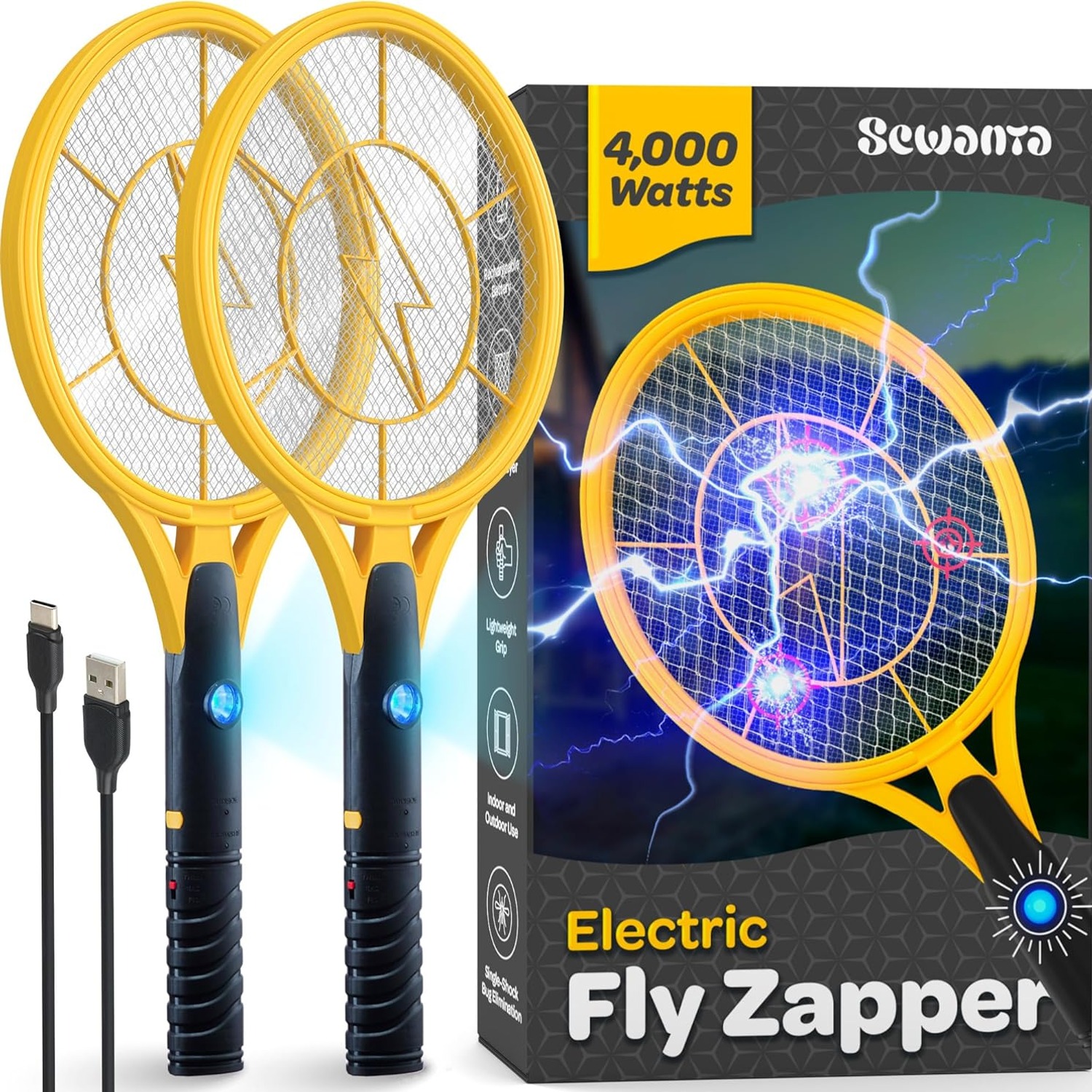
Two rackets, 1500 volts, three mesh layers, press-and-hold power, four AA batteries needed and not included. Up to 10,000 zaps per set of cells. Head is 17 inches wide, light enough for one hand.
Learn to sweep through the air rather than swat at a surface, wait ten seconds before touching the mesh, keep it dry, and shake it out over a bin. That is the whole thing. It is a simple tool that does one job properly, which is more than you can say for most of the fly-control products on a shelf.